Earlier this season, I gave my normal safety briefing before we left the dock. Afterward, a customer told me he had been on dozens of fishing charters and had never received a safety briefing — not even on offshore trips.
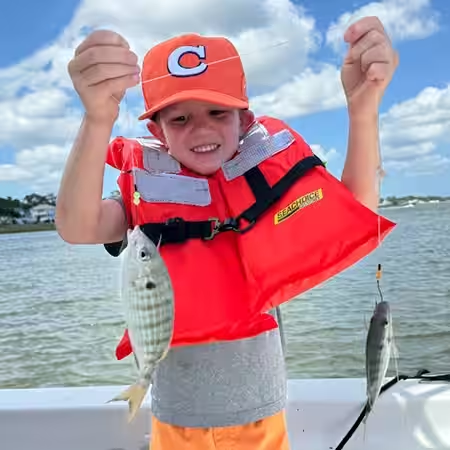
That stuck with me, because a safety briefing isn’t optional on my boat. It takes less than a minute, but it covers the things that matter if something unexpected happens. Kids under 13 are already in properly fitted life jackets before we ever leave the dock, and everyone else knows exactly where the wearable PFDs are stored, where the throwable life preserver is located, and where to find the fire extinguisher and first aid kit.
I also point out the VHF radio and explain how to use it in an emergency. My goal is simple: if something happens, no one is trying to figure things out for the first time when time is critical — you already know where the safety equipment is and what to do.
This entire briefing takes less than a minute, but it can absolutely save lives.
When you step onboard with me, your safety — and your family’s safety — comes before everything else. My job is not just to put you on fish — it’s to bring everyone back to the dock safely. That responsibility drives every decision I make before and during a trip.
My Responsibility for Your Safety on Every Fishing Charter
I have cancelled trips for safety and taken a bad online review because of it — and I will do it again without hesitation. I am responsible for your life, and in many cases your kids’ lives. I will not put anyone in harm’s way for the sake of “going anyway.” No fishing trip is worth your life.
If I cancel for weather or safety, you receive a full refund. Every time. You will never be asked to choose between your money and your safety on my boat.
Trips may be cancelled or adjusted when conditions create unnecessary risk — including lightning or approaching storms, sustained high winds or unsafe sea conditions, heavy rain that limits visibility, flooding or strong current changes, known mechanical or safety issues with the boat, or active safety concerns on the water such as debris, navigation hazards, or Coast Guard advisories. If it’s not safe, we don’t go. It’s that simple.
The Safety Systems on My Boat
Safety is not one item — it’s a layered system. Licensing, training, preparation, equipment, and real-time decision making all work together so there is no single point of failure. Meeting minimum safety requirements is not the goal — it’s the baseline.
I build redundancy into every part of my operation so there is always a backup plan if something goes wrong. Many of the safety measures I use are not required for my vessel, but I include them because when you’re responsible for people on the water, “good enough” is not good enough.
USCG License, Training, and Real Experience
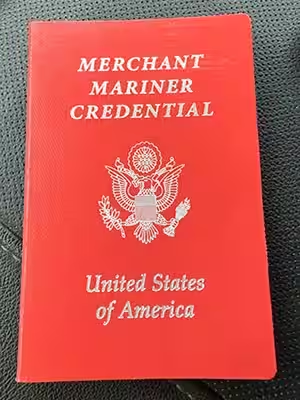
I am a United States Coast Guard–licensed captain holding a Master’s License. That means documented sea time and real-world experience, formal testing in vessel operation, navigation, charting, and safety, required certifications in First Aid and CPR, and passing federal background checks — all while operating under strict federal safety standards designed to protect passengers on the water.
Vessel Maintenance
Vessel maintenance is a critical part of boating safety. My charter boat stays on a strict preventative maintenance schedule based on manufacturer recommendations for both the boat and the outboard engine.
That means systems are serviced and checked before they become problems — not after. The goal is simple: eliminate avoidable failures and reduce the risk of ever being in a situation where you’re stranded on the water.
Pre-Trip Boat Inspections
Before every trip, I check critical systems so we don’t discover problems after leaving the dock. Bilge operation, electrical systems, safety gear readiness, and overall boat condition are verified before you ever step onboard.
Life Jackets for Every Guest — The Right Type and the Right Fit
Every guest onboard has access to a properly fitted wearable life jacket, including youth sizes for kids. I also carry offshore-rated Type I life jackets, which provide the highest flotation and turning ability in the water in a real emergency.
Each life jacket is equipped with a whistle and an automatic water-activated light, making it easier to signal for help and be located in low visibility conditions. While these features are not required for my vessel, I choose to use them because they add another layer of safety.
Multiple Ways to Call for Help
I don’t rely on a single method of communication — I build redundancy into my safety system so there is always a way to call for help.
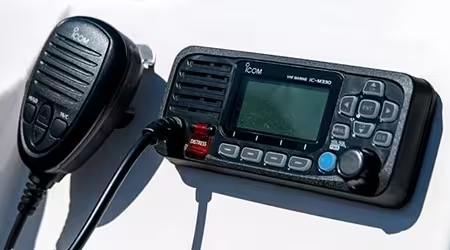
- Fixed-mount VHF radio with distress capability and AIS integration — Primary communication tool for contacting nearby vessels and the Coast Guard. The AIS feature displays the position, course, and speed of larger vessels directly on my chartplotter, providing real-time awareness of surrounding traffic and early warning of approaching or potentially dangerous vessels.
- Backup handheld VHF radio — Redundant communication in case of electrical or system failure.
- Personal Locator Beacon (PLB) — One-button satellite distress signal that alerts the United States Coast Guard with our exact GPS position anywhere in the world.
- Garmin inReach satellite communication — Two-way messaging device that allows communication and coordination even outside of cell service.
- Waterproofed cell phone — Additional backup when within cellular range (typically within 10 miles of shore).
- Visual distress signals (flares and electronic signaling lights) — High-visibility signals used to alert nearby vessels or rescuers to our location, especially in low light or emergency situations.
- Distress flags — Daytime visual signaling device used to indicate an emergency to other boats or aircraft.
First Aid, CPR, and Emergency Planning
I maintain current First Aid and CPR certifications and carry a USCG-approved marine first aid kit — not a basic bandage box. I am always aware of the closest safe harbor, boat ramp, and the fastest protected route if conditions change.
Weather Monitoring and Real-Time Decision Making
Every trip starts with multiple marine forecasts covering weather and sea conditions and continues with real-time radar monitoring. If conditions change, we move to protected water or return to the dock. There is no pressure to “just try it” when safety is on the line.
The Safety Briefing Every Guest Receives

Before we leave the dock, every group receives a quick safety briefing so you know exactly where equipment is located and what to do in an emergency — it takes less than a minute.
Safety Briefing Topics:
- Location of all wearable life jackets and throwable flotation devices
- How to use the VHF radio in an emergency
- Where to find the fire extinguisher and first aid kit
- Emergency procedures and what to do if something unexpected happens
- Basic awareness of the boat layout and safety equipment
One of my charter customers told me, “I’ve been on dozens of charters and never had a safety briefing — even offshore — until now.”
How to Choose a Safe and Legal Fishing Charter
Not all fishing charters operate at the same level. Here are a few simple things to look for to make sure you are booking a safe and legal trip.
- Research the charter before booking — A reputable charter should have a strong online presence and a track record of safe, successful trips. Read reviews and look closely at photos — they often tell the real story. For example, if you see kids on board without proper life jackets, that is a major red flag. If a captain does not prioritize safety for kids, they are not prioritizing safety at all.
- Verify your captain is properly licensed — It is absolutely okay to ask to see a captain’s license. A legitimate charter captain should have no problem providing it. Licensed mariners are required to have their original license (not a copy) in their possession while operating a vessel.
- Expect a safety briefing before departure — A safety briefing should be standard. If you don’t receive one, ask for one.
- Know where basic safety equipment is located — You should be shown the location of life jackets, fire extinguishers, first aid kits, and the VHF radio. If a captain cannot clearly point these out, that is a serious red flag. You have the right to know where all safety equipment is located and that it is onboard and ready to use.
- Do not stay on an unsafe or illegal charter — If a boat is operating without proper licensing or required safety equipment, do not go. Get off the boat and report the situation to the United States Coast Guard. Your safety is not worth the risk.
Safety Responsibilities of Charter Guests
Safety on the water is a shared responsibility. As your captain, I handle the operation of the vessel and overall safety planning — but there are a few simple things every guest can do to help ensure a safe and enjoyable trip.
- Choose a reputable, licensed charter — Make sure your captain is properly licensed, insured, and operates a professional, safety-focused business.
- Dress appropriately for the conditions — Non-slip shoes, weather-appropriate clothing, and sun protection go a long way in preventing accidents and keeping you comfortable.
- Wear sunglasses and protect your eyes — Hooks, lures, and lines are part of fishing. Eye protection is one of the simplest ways to prevent injury.
- Follow instructions from the captain — Whether it’s where to stand, how to fish, or how to move around the boat, those instructions are given with safety in mind.
- Avoid alcohol or substances that impair judgment — Do not arrive intoxicated or under the influence. If alcohol is allowed on the trip, it should be consumed responsibly and in moderation.
- Be aware of your surroundings — Pay attention to casting areas, moving lines, and other guests to avoid accidents.
- Communicate any concerns — If you feel unwell, uncomfortable, or unsure about something, speak up immediately so it can be addressed.
- Respect weather and safety decisions — If a trip is shortened, moved, or cancelled for safety, it is always done with your well-being in mind.
Your Safety Comes First — Every Trip, Every Time
When you book a fishing charter, you’re trusting someone with more than just your time — you’re trusting them with your safety. That responsibility is something I take seriously on every trip, with every group that steps onboard.
From pre-trip preparation to real-time decision making on the water, everything I do is built around keeping you safe while still delivering a great experience.
If you’re looking for a fishing charter where safety is not an afterthought — but the foundation — I’d be glad to take you fishing.

Tight Lines,
Captain Harvey Wall
Salty Dawg Fishing Charters
May 2, 2026
How to Book Your Fishing Charter

Booking your Fishing Charter with Salty Dawg Fishing Charters is easy! Here’s how:
- Option 1:
Book Instantly Online
- Option 2: Prefer to talk first or book by phone?
Call / text Captain Harvey directly at (910) 250-8459
Have questions? Feel free to Contact Captain Harvey or call anytime. He is happy to help you plan the perfect fishing trip for you!