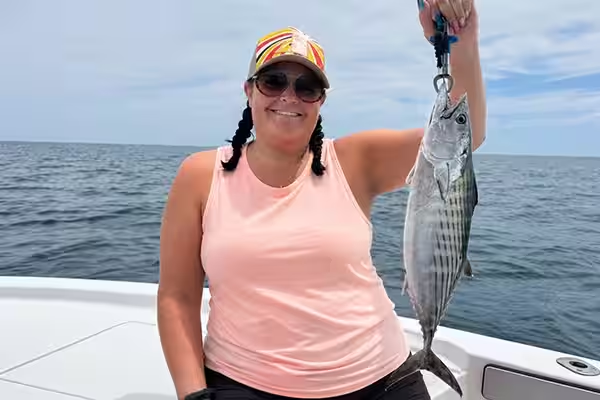
Clarkspoons are one of the most effective and consistent trolling lures you can run for fast-moving migratory species, including Spanish Mackerel, Atlantic Bonito, False Albacore, Bluefish, and even King Mackerel along the North Carolina coast. They’re simple, affordable, and when rigged correctly, they flat-out catch fish.
But here’s the truth—most people either overcomplicate them or run them wrong.
In this guide, I’ll break down exactly how I fish Clarkspoons on my charters, including the rigs I actually use, trolling speeds, when to run them, and how to adjust your setup to consistently produce across multiple species.
If you want to dial in your nearshore trolling and catch more fish, read on.
Best Clarkspoon Setup (Quick Answer)
This is the most consistent Clarkspoon trolling setup for Spanish Mackerel, Atlantic Bonito, False Albacore, and Bluefish.
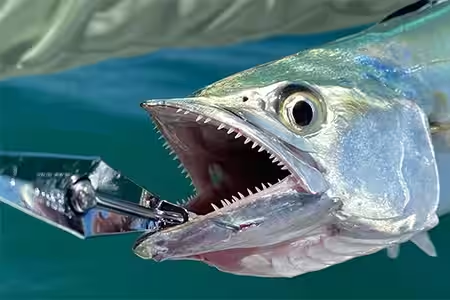
- Spoon: Size #00 Clarkspoon, Color: Chrome with Pink Flash
- Leader: 20–30 ft of 20–30 lb fluorocarbon
- Planer: #1 (use #2 for deeper fish)
- Speed: 6.5–7.5 mph
- Target Depth: 5 to 20 feet
This is the exact setup I run on my charters.
See This Exact Clarkspoon Setup on AmazonWhat Is a Clarkspoon
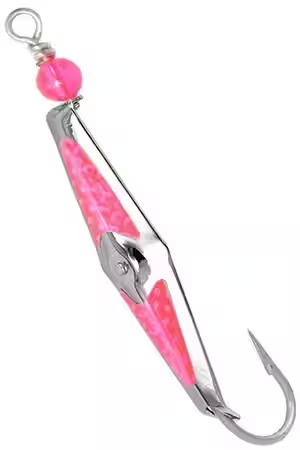
A Clarkspoon is a thin, metal trolling spoon designed to imitate small baitfish like glass minnows and silversides. It has a tight wobble and flash that triggers reaction strikes from fast-moving predators.
Clarkspoon has been around since 1927 and has earned a reputation as one of the most trusted trolling lures in the country. The company is based in North Carolina, and these lures are still built using time-tested processes that have been producing fish for generations.
Along the Carolina coast, Clarkspoons aren’t some niche lure. They’re part of the standard spread. Just about every captain that trolls for Spanish Mackerel, Albies, or Bonito has trolled a Clarkspoon at one point or another, and for good reason. They consistently produce fish.
Unlike bulkier lures, Clarkspoons work so well because they match the size and profile of the bait these fish are feeding on most of the time, especially in the spring and summer.
They’re most commonly used for trolling, but they can also be cast when fish are feeding on the surface.
What Fish Can You Catch on a Clarkspoon?
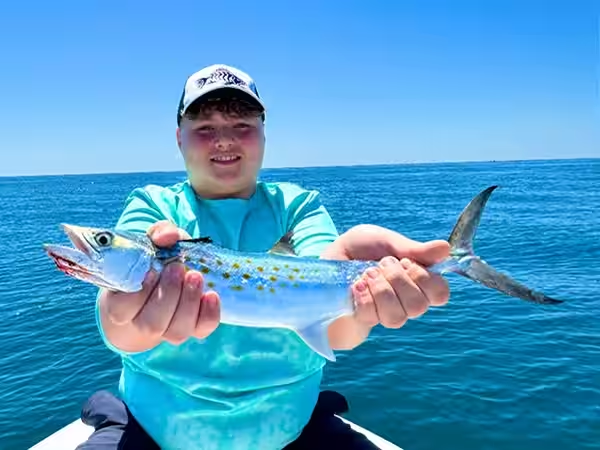
Clarkspoons are one of the most versatile nearshore trolling lures you can run. While they’re best known for Spanish Mackerel, they consistently produce across multiple fast-moving species.
Spanish Mackerel: This is the primary target and what Clarkspoons are known for. Smaller spoons (#00 to #1), 20–30 lb fluorocarbon leaders, and longer leader lengths around 20 to 30 feet work best. Trolling speeds around 6.5 to 7.5 mph consistently produce. My go-to for Spanish is a size 00 Clarkspoon with 30 feet of 30 lb fluorocarbon leader.
Atlantic Bonito: Bonito respond well to very similar setups as Spanish. Run spoons in the #0 to #1 range with 25–30 lb fluorocarbon leaders around 15 to 25 feet long. Maintain speeds in the 6.5 to 7.5 mph range. They tend to be a little less picky and will stay on the bite longer.
False Albacore: Albies will absolutely crush a Clarkspoon, but your setup needs to be dialed in. Smaller spoons (#00 to #0), longer leaders in the 25–40 lb range at 25 to 40 feet, and faster speeds closer to 7 to 8 mph work best, especially in clean water where presentation matters more.
Bluefish: Bluefish are aggressive and not nearly as leader shy. You can run spoons from #0 to #2 with 30–50 lb fluorocarbon or mono leaders around 10 to 20 feet long. They’ll hit in that 6 to 7.5 mph range without any problem, but if I’m specifically targeting Bluefish, I’ll slow down to around 4 to 5 mph.
King Mackerel: Kings will hit Clarkspoons, but if you’re targeting them specifically, you need to adjust your setup. Step up to larger spoons (#1 to #3), run 40–60 lb leader, and in most cases add a short section of wire (about 4 to 6 inches) to prevent cut-offs. Leader length is typically shorter, around 10 to 20 feet. Trolling speeds in the 5 to 7 mph range are a good starting point depending on how the fish are feeding.
Fishing a Spoon-Squid vs a Clarkspoon
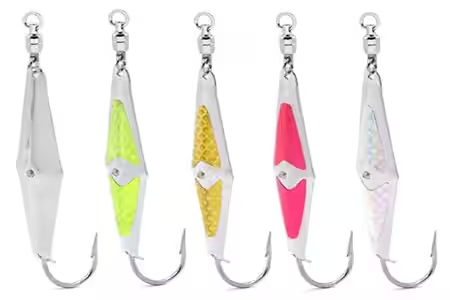
Spoon-Squids are made by Clarkspoon and look very similar to the original spoon. Both will catch fish, but in certain situations, one will clearly outperform the other.
If I’m starting fresh or searching for fish, I’m almost always starting with a Clarkspoon. It has a tighter, more natural wobble and does a great job imitating the small baitfish Spanish Mackerel and Bonito are usually feeding on.
Spoon-Squids have a wider, more exaggerated action. Because of that, I’ll switch to them when the bite is slow or when fish seem to want something that looks injured or erratic.
One advantage of a Spoon-Squid is the built-in swivel, which helps eliminate line twist without adding extra hardware. That’s a big plus when you’re targeting fish that are visually tracking your bait.
I rig and fish a Spoon-Squid the same way as a Clarkspoon, with one exception. For Clarkspoons, I typically use a small loop knot to attach the leader, but with a Spoon-Squid I switch to a Palomar Knot. The built-in swivel at the top gives a Spoon-Squid plenty of movement, so there’s no need for a loop knot.
On most days, both will get bit. But if I had to pick one to start with, it’s the original Clarkspoon every time. Then I’ll adjust from there if needed.
When to Fish a Clarkspoon
Clarkspoons really shine when fish are feeding on small bait and actively moving.
Around Ocean Isle Beach, this bite typically starts to show up in April as water temperatures climb and bait begins to push inshore. By May and June, it’s in full swing, with Spanish Mackerel, Atlantic Bonito, False Albacore, and Bluefish feeding along the beaches and over nearshore structure.
Clear water generally calls for longer leaders and smaller, more natural presentations. If the water is dirty or stained, you can get away with shorter leaders, slightly larger spoons, and even a little less speed.
Some of the most productive areas to run Clarkspoons include nearshore reefs, bait schools, and along the beachfront when fish are pushing bait to the surface.
One of the best signs to look for is a defined color change. Those transition lines between clean and dirty water often hold bait—and where there’s bait, there are usually fish.
How to Rig and Fish a Clarkspoon
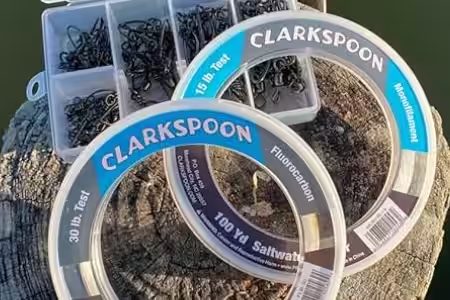
There are four main ways I fish a Clarkspoon:
- Casting to surface fish.
- Trolling with Trolling Sinkers
- Trolling with Planers
- Trolling with Bird Rigs
Which one of the above methods you use depends on how the fish are feeding and how deep they’re holding.
No matter which method you’re using, a few things don’t change:
- Never tie the spoon directly to your main line. Otherwise, it kills the action and costs you bites. Note: Even if you're running straight fluorocarbon or mono you will still want a swivel and leader to reduce line twist.
- Keep all your hardware up at the weight or planer and let the spoon run clean behind it. If you start getting line twist, add a small ball-bearing swivel about 12 to 18 inches up your leader. You don't need a big, heavy swivel. Use the smallest you can get by with, as the fish you're targeting with Clarkspoons have excellent eyesight.
- I keep sizes and colors simple. For most situations, I run a size #00 Clarkspoon almost exclusively. Silver with pink flash is my go-to, and gold is the only other one I really use. Between those two colors, you’re covered.
Casting Clarkspoons
When fish are feeding on the surface, casting a Clarkspoon can be extremely effective. This is a simple setup.
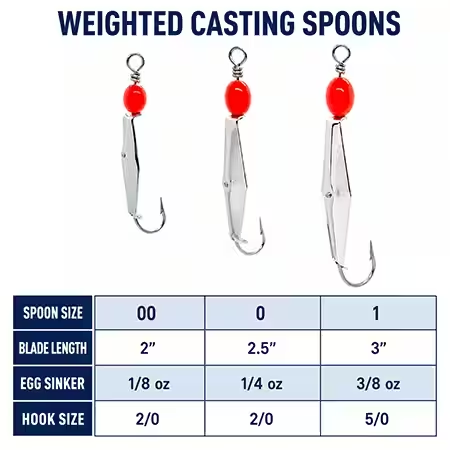
Clarkspoon makes weighted versions of their original spoons specifically for casting. Instead of the standard red bead, they use a small lead weight in the same position, which helps you get more distance and keeps the spoon tracking correctly on the retrieve. The main options are a size #00 with a 1/8 oz weight, a size #0 with a 1/4 oz weight, and a size #1 with a 3/8 oz weight. I still lean toward the smaller sizes most of the time, but that added weight makes a big difference when you’re trying to reach breaking fish.
Run a size #00 or #0 Clarkspoon on 20 to 30 lb fluorocarbon leader, around 3 to 5 feet long, tied directly to your main line. Keep it short so you can cast easily and maintain control.
Retrieve the spoon fast and steady. Spanish, Albies, and Bonito are speed-oriented feeders, and a quick retrieve will trigger more strikes.
Trolling Clarkspoons with Trolling Sinkers
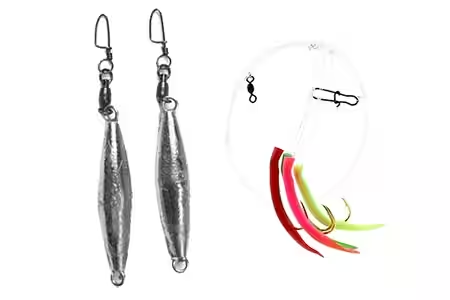
Trolling Sinkers are one of the easiest and most effective ways to fish a Clarkspoon. This is a great setup when fish are holding a little deeper but you don’t want to deal with planers.
Run braid to a trolling sinker (typically 1 to 3 oz), then a swivel, followed by 20 to 30 feet of 20 to 30 lb fluorocarbon leader, and a size #00 to #1 Clarkspoon.
My go-to setup is braid to a 2 oz trolling sinker, then a swivel, 30 feet of 30 lb fluorocarbon, and a size #00 Clarkspoon tied on with a small loop knot.
One of my favorite setups is a 2 to 3 ounce trolling sinker in front of a Mackerel Tree Rig, finished with a size #00 Clarkspoon. It’s simple and it flat-out catches Spanish Mackerel.
Trolling sinker rigs run clean, are easy to manage, and work well at trolling speeds around 6.5 to 7.5 mph. It’s one of the most consistent ways to catch Spanish Mackerel when they’re not right on the surface.
Trolling Clarkspoons with Planers
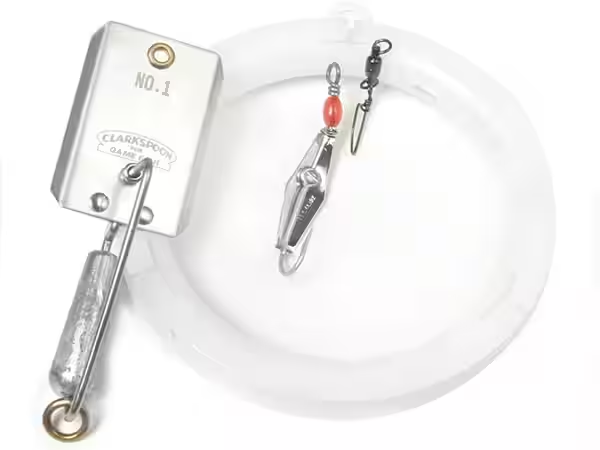
When fish are deeper or you need to cover more water, Planers are hard to beat. This is one of the most effective ways to keep your spoon in the strike zone.
For a planer setup, I run braid to a snap swivel, then to a #1 planer, and then to my pre-rigged leader and spoon.
I keep my leaders and Clarkspoons pre-rigged on a spool. My go-to is 30 feet of 30 lb fluorocarbon tied to a size #00 Clarkspoon, with a snap swivel on the other end. You can adjust that to 20 to 30 lb and 20 to 30 feet depending on conditions.
When you’re deploying the rig, let the spoon go in the water first and feed the leader out as you move forward. This helps prevent tangles. Once you reach the snap swivel, clip it to the back end of the planer.
The final setup looks like this: main line to snap swivel, to planer, to snap swivel, to leader, to Clarkspoon.
The planer gets the spoon down below the surface while the long leader allows it to move naturally. Trolling speeds in the 6.5 to 7.5 mph range consistently produce.
At those speeds, a #1 planer it will typically run in the 5 to 12 foot range depending on how much line you have out.
If fish are holding deeper or you’re not getting bites, stepping up to a #2 planer will usually get you down into the 10 to 20 foot range under the same conditions.
Depth isn’t exact. The more line you let out, the deeper it will run. Speed and current also play a role. Faster speeds or stronger current will keep it higher, while slower speeds and more line will let it dig deeper.
Trolling Clarkspoons with Bird Rigs
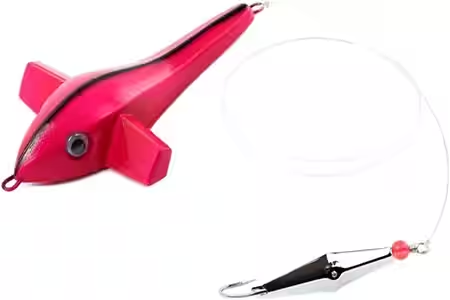
Bird Rigs are a great way to add flash, surface commotion, and visibility to your spread, especially when you’re trying to locate fish or get their attention in choppy conditions.
The bird creates splash and draws fish in, while the Clarkspoon runs clean behind it. This setup is especially effective for Spanish Mackerel, Bluefish, and Bonito when they’re scattered or not actively feeding on the surface.
I typically run a bird rig with a 15 foot, 30 lb fluorocarbon leader followed by a size #00 Clarkspoon. The shorter leader helps keep the spoon tracking properly behind the bird without tangling.
Trolling speeds are the same as your other setups, usually in the 6.5 to 7.5 mph range. This isn’t a finesse setup, it’s more about attracting fish and getting reaction strikes.
If fish are already feeding aggressively, I’ll often switch back to a cleaner presentation like a trolling sinker or planer. But when I’m searching or trying to trigger a bite, bird rigs can make a big difference.
Getting Started with Clarkspoons
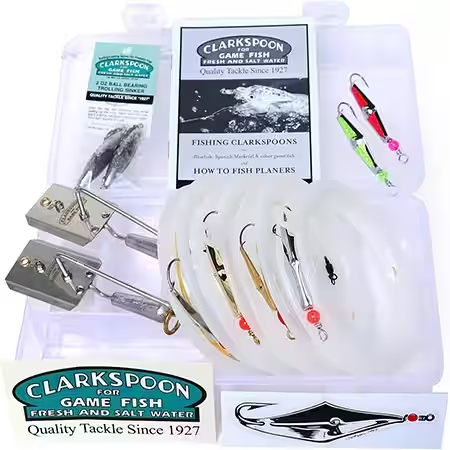
If you’re new to trolling Clarkspoons, the biggest hurdle is usually just getting all the right pieces together. You need the spoons, leaders, weights or planers, and a few basic connections. If you’re not sure what to buy, it’s easy to overthink it or miss something important.
A simple way to shortcut that learning curve is to start with a pre-built Clarkspoon Starter Kit. This kit is ready to fish right out of the box and covers the basics I recommend for getting started. You get several rigged Clarkspoons, a couple of flash spoons, trolling sinkers, and #1 planers, along with a simple instruction booklet and a reusable tackle box to keep everything organized.
Once you’ve got the basics in hand, you can always fine-tune your setup over time by adjusting spoon sizes, leader lengths, and weights based on what you’re targeting and the conditions you’re fishing in. But to start, a simple, complete setup like this will absolutely catch fish.
Once your gear is ready to go, the next step is learning how to run your lines effectively behind the boat without tangles or confusion.
Managing Your Trolling Spread
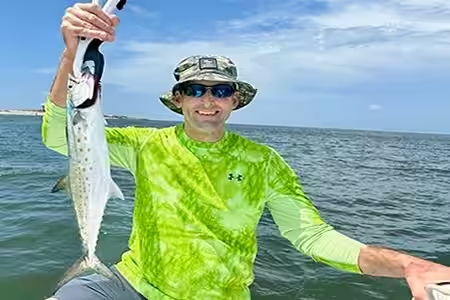
You don’t need a big offshore-style spread to catch Spanish Mackerel, Bonito, or Albies. In fact, most anglers are better off keeping it simple.
If you’re new to trolling, start with a single rod. Get comfortable with how your lure runs, how it looks in the water, and how fish are reacting to it. Once you’re confident, step up to two rods, and then eventually three. Even on my charters, I’m typically running two to three rods at a time.
When setting your spread, I like to start with my deepest presentation first and then work my way up. That usually means putting a planer out first, followed by a trolling sinker setup, and then finishing with a surface presentation like a bird rig.
Position matters. I almost always run planers outboard on the port and starboard sides so they track clean and away from the boat. Trolling sinkers can go either outboard or down the center depending on how many rods I’m running. Bird rigs are best run straight down the center, where they can create the most surface commotion and draw fish in.
Spacing your lines correctly helps prevent tangles and keeps your spread working efficiently. A simple way to do this is by counting seconds as you let line out. For example, your planer might go out 25 to 35 seconds behind the boat, your trolling sinker 15 to 25 seconds, and your bird rig 10 to 15 seconds. You can also mark your line if you want more consistency.
Rod holder placement makes a difference as well. I prefer using deck or gunwale-mounted rod holders instead of t-top holders, especially for anything that’s diving. You’ll get bites often enough that it becomes a hassle reaching overhead, and it’s much easier to keep an eye on your rods when they’re in your normal line of sight.
Finally, don’t overlook safety. If you’re running solo, wear a life jacket and always use your kill switch, and a Personal Locator Beacon (PLB) clipped to your life jacket is a smart piece of gear to have as well. Just as important is maintaining a watch. It’s easy to get caught up in the action when rods start going off, but you’re still operating a moving boat. If you have multiple people onboard, it’s best to have one person dedicated to driving and keeping a lookout for other vessels while the others fish. Even on my charters, if I’m working lines in the back, I may ask a client to keep a watch ahead until I get back to the helm.
Rod, Reel, and Line Setup for Clarkspoon Fishing
You don’t need anything fancy to fish Clarkspoons, but having the right setup makes it a lot easier.
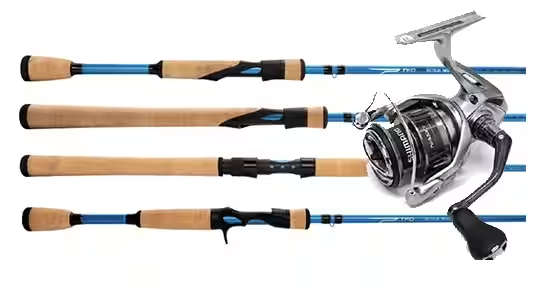
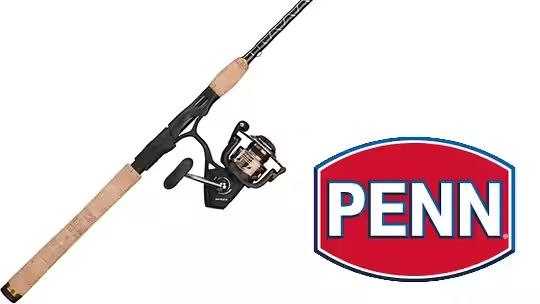
Most of the time, I’m running medium spinning setups spooled with braided line. Braid helps cut through the water and lets your planer or weight work more effectively.
You can also run conventional setups if you prefer, but spinning gear works great for trolling Clarkspoons nearshore for Spanish, Bonito, and Albies.
As for rods, a standard medium or medium-heavy rod with a little bit of flex is ideal. You don’t want something too stiff, especially when trolling for Spanish Mackerel, since they have softer mouths and can pull off easily.
That softer rod tip helps absorb head shakes and sudden runs, which keeps the hooks pinned instead of tearing out. It also makes it easier to keep steady pressure on the fish all the way to the boat.
From there, everything connects into your leader and spoon setup, which is where most of the fine-tuning happens.
The below fishing rod and reel combos are the exact same gear I run on my charters for trolling Clarkspoons.
Common Mistakes When Fishing Clarkspoons
A lot of anglers struggle with Clarkspoons, but it usually comes down to a few simple mistakes.
One of the biggest issues is running the spoon straight off the main line without a weight or planer. These lures are designed to run at depth, and if you’re not getting them down into the water column, you’re fishing above the fish.
Leader length is another common problem. In clear water, a short leader will absolutely cost you bites. I see this all the time—everything else is right, but the leader is too short and the fish won’t commit.
Another mistake is attaching a swivel directly to the spoon. It seems like a small thing, but it kills the action and makes the lure look unnatural in the water.
Trolling speed trips a lot of people up as well. Most anglers troll too slow, especially when targeting Spanish mackerel. These are fast, aggressive fish, and your presentation needs to match that.
And finally, not covering enough water. Clarkspoons are search baits. If you’re not moving and looking for fish, you’re leaving a lot of opportunities on the table.
Frequently Asked Questions About Fishing a Clarkspoon
What size Clarkspoon should I use?
For most situations, a size #00 Clarkspoon is all you need. It matches the small baitfish that Spanish Mackerel, Bonito, and Albies are feeding on and consistently produces. You can size up to a #0 or #1 if the bait is larger or you’re targeting bigger fish, but smaller is usually more consistent.
What is the best trolling speed for Clarkspoons?
The most consistent trolling speed is around 6.5 to 7.5 mph. These fish are speed-oriented feeders, and a faster presentation triggers reaction strikes. If the bite is slow, you can experiment slightly, but staying in that range will produce the most consistent results.
Do I need a planer, trolling weight, or bird rig?
It depends on how the fish are feeding. If fish are on the surface, you can cast or troll a clean setup. If they’re holding deeper, a trolling weight or planer will get your spoon into the strike zone. Bird rigs are best when you’re searching or need to create extra surface commotion to attract fish.
How long should my leader be when trolling a Clarkspoon?
A good starting point is 20 to 30 feet of 20 to 30 lb fluorocarbon. Longer leaders work better in clear water, while shorter and slightly heavier leaders can help in dirty water. That longer leader is key to getting a natural presentation and more bites.
What’s the best way to set up a trolling spread?
Keep it simple. Start with one rod, then work your way up to two or three as you get comfortable. A typical spread might include a planer outboard, a trolling sinker setup, and a bird rig down the center. Spacing your lines properly and keeping each presentation at a different depth will help you cover more water and avoid tangles.
Should I use a loop knot or tie directly to the spoon?
For Clarkspoons, a small loop knot works best because it allows the spoon to move naturally. For Spoon-Squids, a Palomar knot is usually better since the built-in swivel already provides the action. Avoid tying directly to your main line, as it can reduce movement and lead to more line twist.
What other fish can you catch on a Clarkspoon?
Clarkspoons will catch a variety of fast-moving species including Spanish Mackerel, Atlantic Bonito, False Albacore, Bluefish, and even King Mackerel. By adjusting your spoon size, leader, and presentation, you can target multiple species with the same basic setup.
Fish With the Captain Who Wrote This Guide
If you want to learn how to fish Clarkspoons the right way and catch more Spanish mackerel, I’d be glad to show you firsthand.
I run inshore and nearshore fishing charters out of Ocean Isle Beach, North Carolina, and this is the exact setup I use on a daily basis during the season.
Whether you’re new to trolling or just want to dial in your technique, I’ll put you on fish and show you how to replicate it on your own.
Let’s get you on the fish.
Book a Nearshore Fishing Charter
Tight Lines,
Captain Harvey Wall
Salty Dawg Fishing Charters
Updated: May 1, 2026

How to Book Your Fishing Charter
Booking your Nearshore Fishing Charter with Salty Dawg Fishing Charters is easy! Here’s how:
- Option 1:
BOOK MY TRIP - Option 2: (If you have questions or don't want to book online)
Call / text Captain Harvey directly at (910) 250-8459
Have questions? Feel free to Contact Captain Harvey or call anytime. He is happy to help you plan the perfect fishing trip for you!