If you’ve got a MirrOdine in your tackle box but you’re not 100% sure when to throw it, where it shines around Ocean Isle Beach, or how to work it without wasting casts — this guide will fix that. I’ll break down the when / where / how, dial in size and color selection, give you a gear setup that keeps fish pinned on trebles, and include a full troubleshooting section for the most common frustrations.
I'm a Charter Captain in Ocean Isle Beach NC, but make no mistake about it, these techniques will work from the Carolina Coast to the Gulf Coast for Redfish, Speckled Trout, Flounder, and even Snook.
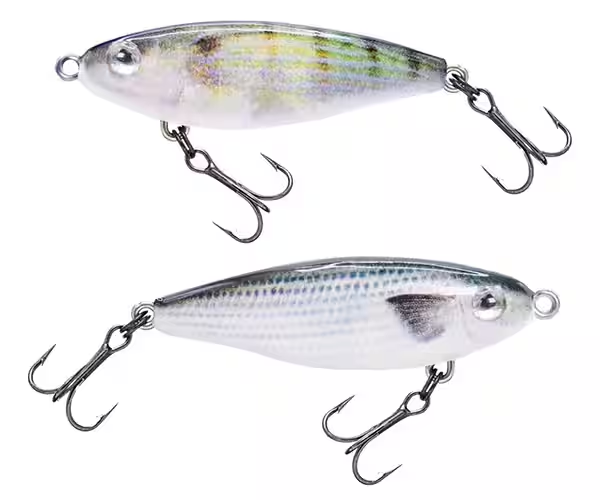
MirrOdine Quick Start Guide
If you just want the short version, here it is:
- Best starting size: 17MR. However, if you’re consistently seeing larger trout or redfish, dealing with wind, or need longer casts, step up to the 27MR.
- Leader length and size: At least 24 inches of 15-20 lb fluorocarbon. Use a loop knot allows the lure to swing and suspend more naturally.
- Best conditions: Clear to lightly stained water, cooler temperatures, post-front days, and pressured fish.
- Best places: ICW edges, creek mouths, dock lines with depth, deeper oyster edges (not the tops), and flats adjacent to deeper water.
- Best retrieve: Twitch–twitch–pause. Most strikes happen on the pause. The colder the water, the longer the pause — in winter, I’ll often pause five seconds or more.
Why the MirrOdine Works So Well in Inshore Waters
The MirrOdine is one of my favorite “tough day” lures because it hangs in the strike zone and looks like the exact baitfish our inshore predators feed on — especially around tidal creeks and ICW structure.
- It matches local forage: glass minnows, finger mullet, small menhaden
- It suspends: which matters in current seams, creek mouths, and ICW drop-offs
- It shines after cold fronts: when trout get picky and redfish won’t chase far
When to Fish a MirrOdine in North Carolina (Month-by-Month)
While this breakdown is written with North Carolina waters in mind, these seasonal patterns translate well anywhere from the Carolinas down through the Gulf Coast. The biggest variables are water temperature and day length. If your water warms earlier or cools later than it does here, simply shift these timing windows forward or backward to match local conditions.
January–February
Prime time for speckled trout in deeper holes and along ICW edges. Work it slow with long pauses.
March–April
Transitional period. Fish begin spreading out more. Docks, drop-offs, and creek mouths stay productive.
May–June
Still effective early and late, especially in clearer water around deeper structure. When fish get aggressive, soft plastics and topwater may outproduce it.
July–August
Yes, you can catch fish on a MirrOdine in summer — but your best odds are clear water + low light + deeper areas. Focus on deeper dock lines, creek bends, and ICW ledges.
September–November
The MirrOdine really comes alive as water temps fall and bait movement increases. This is one of the most consistent windows of the year for trout.
December
Cold water equals slower fish. Longer pauses and subtle twitches are the deal.
Where to Fish a MirrOdine Around Ocean Isle Beach

Around Ocean Isle Beach and the surrounding Brunswick County waters, I treat the MirrOdine as a “structure edge” lure — not something I throw randomly across featureless water.
- ICW drop-offs near the Ocean Isle Beach bridge area
- Creek mouths that dump into the ICW on moving water
- Oyster edges in the Shallotte River and Calabash River systems (edges, not the tops)
- Docks with depth (4–10 feet is a great starting zone)
- Jetty edges near Little River Inlet on calm days (controlled casts, controlled depth)
Shore Fishing with MirrOdines Around Ocean Isle Beach
Yes, MirrOdines work from shore — but you need the right access points and longer casts. Around Ocean Isle Beach, focus on areas where you can reach deeper water or fish along structure edges.
- Jetty access at Ocean Isle Beach and Sunset Beach (calm days only, watch footing and swell)
- Bridge areas where you can reach deeper water and pilings
- ICW access points with walkable banks near drop-offs
- Pier edges (where allowed) — cast parallel to structure, not away from it
A 7’6” rod helps with casting distance from shore, and early morning or late evening timing improves your odds when fish slide shallower.
If you want to fish these areas the right way and learn the lure on the water, check out my Inshore Fishing Charters.
How to Fish a MirrOdine (Retrieve Technique)
The Classic Twitch–Twitch–Pause
Make a long cast, let it settle for a second, then work a simple rhythm: twitch–twitch–pause. If it feels like you’re pausing too long, you’re probably doing it right.
Adjusting the Retrieve
- Cold water: longer pauses (often 3–5 seconds)
- Warm water: shorter pauses (often 1–2 seconds)
- More current: slightly tighter control, keep the lure in the seam
- Slack water: slower cadence, longer pauses
What a Strike Feels Like
A MirrOdine strike often feels like a tick, a mushy “nothing,” or just sudden weight. If you feel anything unusual during the pause, sweep into the fish and keep pressure steady.
MirrOdine Sizes Explained
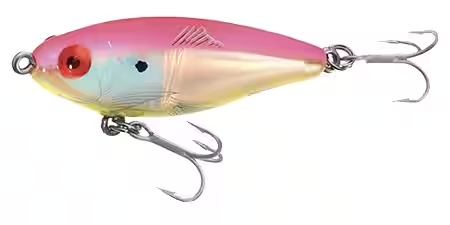
Which MirrOdine Size Should I Start With?
If you’re unsure which MirrOdine to use, start with the 17MR. It matches the most common baitfish in North Carolina, fishes well in 2–8 feet of water, and consistently catches speckled trout and slot redfish — especially in cooler months and clearer water.
Only move up to a 27MR if you’re fishing deeper water, stronger current, or targeting larger fish. Reserve XL models for situations where you’re specifically hunting trophy trout or bull redfish.
MirrOdine Size Selection Guide
| MODEL | LENGTH | WEIGHT | BEST FOR | EFFECTIVE DEPTH |
|---|---|---|---|---|
| MirrOdine Mini 14MR | 2" | 1/4 oz | Small trout, calm water, finesse bites | 1–5 ft |
| MirrOdine 17MR | 2.75" | 3/8 oz | Speckled trout, slot reds | 2–8 ft |
| MirrOdine 17MRBG | 2.75" | 3/8 oz | Low-light, stained water | 2–8 ft |
| MirrOdine XL 27MR | 3.5" | 1/2 oz | Larger trout, deeper water | 4–12 ft |
| MirrOdine XL 27MRBG | 3.5" | 1/2 oz | Stained water, wind, current | 4–12 ft |
| MirrOdine XXL 37MR | 4.5" | 5/8 oz | Trophy trout, bull reds | 6–15 ft |
Note: Effective depth can vary slightly based on line diameter and retrieve speed. Thinner line and slower retrieves allow a MirrOdine to suspend a bit deeper, while heavier line or faster retrieves keep it running shallower. Using fluorocarbon leaders also helps increase sink rate and overall running depth.
Best MirrOdine Colors for NC Water Conditions
Clear Water
- Chartreuse / Silver
- Bone
- Green Back / Silver
- Skin Series (14MR models)
Stained Water
- Pink Back
- Red Head
- Orange Belly Patterns
Broken Glass Series
In stained water, high-contrast patterns with flash outperform subtle colors. The 17MRBG and 27MRBG (“broken glass series”) models create a strong silhouette with lots of flash and stay visible longer in moving or dirty water.
Recommended Gear for Fishing MirrOdines
MirrOdine Lures
You don’t need every model and every color. For most inshore days here in coastal North Carolina, a small selection of 17MR and 27MR covers almost everything. If you want a smaller, hyper-realistic profile, the 14MR Skin Series is a great option.
Inshore Fishing Rods
Because MirrOdines use treble hooks, a slightly softer rod tip helps keep fish pinned. A great starting point is a 7’ to 7’6” Medium or Medium-Light spinning rod with a responsive tip and enough backbone for structure. My preferred rod is a Temple Fork Outfitters Intracoastal Inshore Series Rod. I like their ICS704-1 model for fishing MirrOdines with treble hooks.
Inshore Fishing Reels
A 2500–3000 size spinning reel with a smooth drag is more important than gear ratio. Trebles don’t need a “gorilla drag” — they need steady pressure. My preferred reel is a Shimano 21 Nasci 2500HG Reel. This reel is very smooth and doesn't wreck your wallet.
Line & Leader
- Main line: 15-20 lb braid. I prefer PowerPro Super Slick V2 Braided Line.
- Leader: 20 lb fluorocarbon. I prefer Yo-Zuri Clear 100% Fluorocarbon Fishing Line.
- Leader length: about 18–30 inches. I typically start with a 36 inch section, which allows me to clip it a couple times before habving to replace the leader.
Do you need a leader? Yes. It helps with abrasion around oysters and structure, and it’s also a stealth advantage in clear water.
Knots & Hardware
- A small loop knot helps the lure swing and suspend naturally
- Don't use snaps or clips, tie a quality knot directly to the lure and use no other terminal tackle
- You can swap out the treble hooks for stronger trebles or for single hooks. Most of the time, the hooks that come on your MirrOdine from the factory will work great. Don't change them unless you're having issues.
Troubleshooting Common MirrOdine Problems
One of the biggest mistakes with a MirrOdine is moving it too much. If you’re getting follows or light taps, slow down even more and lengthen the pause.
Why Am I Not Getting Bites?
- You’re working it too fast — slow down and lengthen the pause
- Water is too dirty — this lure shines in clearer water
- You’re not fishing it on structure edges — move to drop-offs, docks, and creek mouths
MirrOdine Keeps Getting Hung Up
- Change your casting angle so you’re working along the edge, not across the top
- Keep the rod tip up when you need to lift it over oysters
- Avoid dragging it into the rough stuff during the pause
Fish Are Short-Striking
- Lengthen the pause
- Use lighter twitches
- Downsize to the 17MR if you’re throwing bigger profiles. The 14MR is an even smaller option.
Lost Fish on the Hookset
- Sweep into the fish — don’t jerk like you’re setting a jig hook
- Keep the rod tip lower and maintain steady pressure
- Back your drag off slightly (trebles don’t need a locked drag)
Is a MirrOdine Worth the Price?
MirrOdines typically cost $10+ each, compared to $7 for a pack of most soft plastics. But a single MirrOdine can produce dozens of fish if you’re not hanging it in structure. That pack of soft plastics won't outlast a MirrOdine.
Factor in better hookup ratios from treble hooks and fewer missed strikes, and you’re catching more of what bites. When you look at fish-per-lure instead of price-per-lure, the cost difference narrows quickly.
It’s also tough to duplicate the suspending action of a MirrOdine with a soft plastic. You can get close with some fluke-style baits, but it’s hard to hit the same depths and truly suspend right in front of the fish the way a MirrOdine does.
A MirrOdine Can Save Your Day
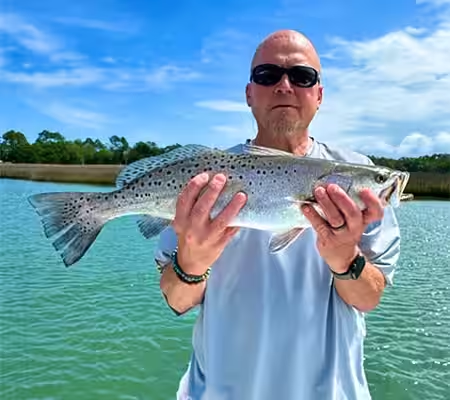
Earlier this year, I was fishing Saucepan Creek, just across from Shallotte Inlet, with a client who’d never thrown a MirrOdine. The water was clear, the tide had gone slack, and the fish weren’t responding to anything.
I handed him a rod with a 17MR tied on and told him to slow way down — four-second pauses, barely twitching it. On his third cast, right along the oyster edge, he felt a subtle “tick” during the pause. He swept into it and hooked a solid 22-inch trout (pictured here).
That fish came on a retrieve that felt painfully slow to him — but that’s exactly what it took. The MirrOdine let us keep the bait suspended right in front of fish that wouldn’t chase anything else that day.
When the bite slows down, a MirrOdine is often the reset button. Fish it slowly near structure with long pauses and give the lure time to work. Experienced anglers always have a backup plan — and while a MirrOdine can be your primary plan, it’s also a reliable relief pitcher when the bite needs saving.
MirrOdine Sinking Twitchbaits
In addition to the suspending MirrOdine models above, MirrOlure also offers a line of sinking twitchbaits. While I prefer suspending models most days (because they hang in the strike zone and trigger reaction strikes), sinking twitchbaits have their place when fish are holding deeper or you need to reach structure with fewer pauses.
| MODEL | LENGTH | WEIGHT | BEST FOR |
|---|---|---|---|
| Heavy Dine Sinking Twitchbait 18MR | 2-5/8" | 7/16 oz | Current seams, deeper troughs |
| Heavy Dine Skin Series | 2-5/8" | 7/16 oz | Deeper water with enhanced finish options |
| Heavy Dine XL 28MR | 3-1/8" | 5/8 oz | Bigger water, deeper structure |
| Spotted Trout Series TT | 3-5/8" | 1/2 oz | Deeper trout profiles |
Sinking twitchbaits don’t hang in the zone the way suspending models do. If fish aren’t rising or holding shallow, or if there’s significant current, a sinking model will get down quicker and let you control depth with cadence and retrieve speed.
MirrOdine vs Soft Plastics
Soft plastics are often better for dirty water and aggressive summer fish. The MirrOdine shines when fish are pressured, the water is clearer, and you need something that suspends in the strike zone — especially in fall and winter.
MirrOdine vs Other Suspending Baits
Rapala X-Raps and Yo-Zuri Crystal Minnows are also effective suspending baits around Ocean Isle Beach, but the MirrOdine has a tighter wobble and suspends more consistently in North Carolina’s tidal currents. For pressured trout in clear water, it’s the first bait I reach for.
MirrOdine Fishing FAQs
Can you fish a MirrOdine from shore?
Yes, a MirrOdine can be very effective from shore, especially when you can reach drop-offs, dock edges, bridge shadow lines, or deeper water near creek mouths. Long casts and slow retrieves are key when bank fishing, since most strikes happen on the pause as the lure suspends.
What pound test line should I use for a MirrOdine?
A 10–15 lb braided main line is ideal for fishing MirrOdines. It provides long casting distance and sensitivity, which helps you detect subtle strikes that often happen during the pause.
Do you need a leader when fishing a MirrOdine?
Yes, you should always use a leader with a MirrOdine. A 20–25 lb fluorocarbon leader protects against oysters and structure and is less visible in clear water, which improves your hookup ratio.
Is a MirrOdine good for winter trout fishing?
Absolutely. The MirrOdine is one of the best lures for winter speckled trout because it suspends in the strike zone and allows for a slow, controlled presentation when cold-water fish won’t chase.
Why do fish keep missing my MirrOdine?
Missed strikes usually happen when the retrieve is too fast or the pauses are too short. Slowing down, lengthening the pause, and using lighter twitches will help fish fully commit to the lure.
Should I use a snap or tie directly to a MirrOdine?
Both work, but a small loop knot or a high-quality snap will allow the MirrOdine to swing more freely and suspend naturally. Avoid large or bulky clips that can restrict the lure’s side-to-side action.
How deep can you fish a MirrOdine?
MirrOdines work best in 2–12 feet of water depending on the model. The 17MR is ideal for 2–8 feet, while the 27MR handles 4–12 feet. They suspend or slow-sink, so they’re not designed for really deep water.
Can you fish a MirrOdine in grass?
No — MirrOdines have exposed treble hooks and will snag in grass. Fish them along the edges of grass beds, oyster bars, and structure, not through heavy cover. That’s where ambush predators sit anyway.
Final Thoughts
The MirrOdine is one of those lures that rewards patience. Master the cadence, pick the right size, and fish it along structure edges — and it’ll flat out produce, especially when other presentations stall out.
If you want to take this approach further, I’ve put together a full Speckled Trout Fishing Guide that dives deeper into seasonal patterns, structure, and presentations. You can also browse recent trips and techniques in my NC Saltwater Fishing Blog.
If you want to learn this lure the fastest way possible, book an Inshore Fishing Charter with me and I’ll show you exactly how I fish it here in Ocean Isle Beach, NC.

Tight Lines,
Captain Harvey Wall
Salty Dawg Fishing Charters
Updated: December 31, 2025
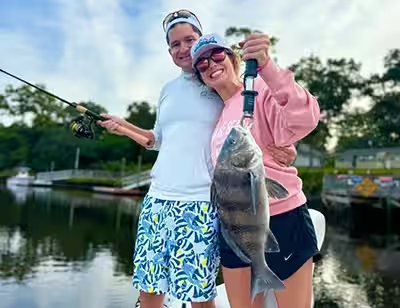
How to Book Your Fishing Charter
Booking your Fishing Charter with Salty Dawg Fishing Charters is easy! Here’s how:
- Option 1:
BOOK MY TRIP - Option 2: (If you have questions or don't want to book online)
Call / text Captain Harvey directly at (910) 250-8459
Have questions? Feel free to Contact Captain Harvey or call anytime. He is happy to help you plan the perfect fishing trip for you!