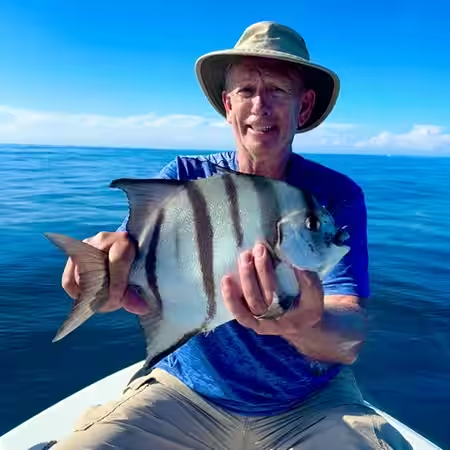
Spadefish are one of the most underrated nearshore fish we have off Ocean Isle Beach — and once you figure them out, they can be incredibly consistent. They’re powerful for their size, they school up tight, and they’ll often show up on the same reefs at the same time each year.
The catch is that spadefish are a “specialized” bite. You don’t accidentally stumble into good spadefish fishing unless you’re around the right structure at the right time and you have something they actually want to eat. This guide covers how to identify spadefish, when they show up off our beaches, what depths they’ll hold in, what to use for bait (including jellyfish and beach-collected bait), and how to fish them without harming the fishery.
If you’re reading this because you’re thinking about targeting spadefish on our local reefs — you’re in the right place. I’ll keep this practical, and I’m going to talk conservation too, because spadefish are one of those species that can get hammered fast when everybody finds them all at once.
Fish With the Captain Who Wrote This Guide
I’m Captain Harvey Wall, the author of this guide and the owner/operator of Salty Dawg Fishing Charters in Ocean Isle Beach, NC. If you want to target spadefish on our local reefs without spending a season learning the hard way, come fish with me — I’ll put you on the pattern and show you exactly how to do it.
View Nearshore Charters Book Instantly OnlineAtlantic Spadefish Identification
Spadefish aren’t hard to identify once you’ve seen a few, but correct identification still matters — especially if you’re fishing reefs where multiple “look-alike” species can show up in the same water.
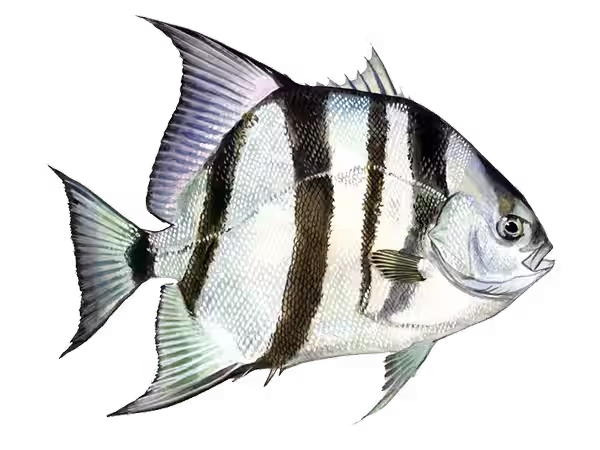
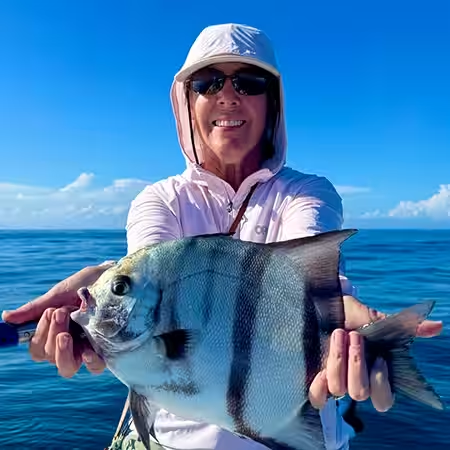
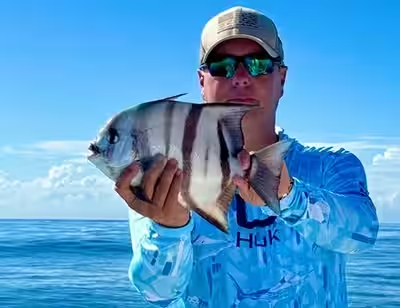
Atlantic spadefish typically have:
- A deep, tall, laterally compressed body (almost “pan-shaped”)
- Bold vertical dark bars on a silver/gray body (bars can fade in some fish)
- A small mouth with a short snout (not a big predator mouth)
- A blunt head profile (especially on thicker, older fish)
- A tendency to school tightly around structure
Quick behavior clue: When you’re over spadefish, you’ll often see a “stack” of fish on your sonar and then actually see them flashing and swirling behind the boat. They’re curious fish and they’ll come investigate your chum trail.
Spadefish vs Look-Alikes (What People Confuse Them With)
Around nearshore structure, spadefish most often get mistaken for angelfish by anglers who aren’t used to seeing them. Permit are technically possible in North Carolina, but they’re rare and not something you should expect to run into on Ocean Isle Beach reefs. The key differences are easy to spot once you know what to look for.
- Spadefish: very tall, round “pan-shaped” body, bold vertical bars, small mouth, and almost always found in tight schools off the down-current side of reefs, wrecks, or live bottom. If you see a whole group behind the boat, they’re spadefish.
- Angelfish (Gray / Banded juveniles): similar body shape at a glance, but they stay tight to the structure instead of suspending in open water, are usually alone or in small numbers, and have a more pointed face with a slightly larger mouth. You won’t see big schools of them following the boat like spadefish.
- Permit: longer, more diamond-shaped body, deeply forked tail, and no bold vertical bars. They’re a rare summer visitor in NC and not part of the normal nearshore reef fishery off Ocean Isle Beach.
Captain’s Tip: If you see a group of fish stacking in the water column and following your chum trail behind the boat, you’re usually looking at spadefish — most other species are much more likely to stay tight to the reef and not form those big “behind-the-boat” schools.
New to Spadefish Fishing? Start Here
If you’re brand new to spadefish, don’t overthink it. Spadefish fishing isn’t about running all over the ocean — it’s about timing, finding the right piece of structure that’s holding life, and presenting a small natural bait so it drifts naturally through the school. Once you understand that they suspend in the water column and feed by sight, the entire fishery starts to make sense.
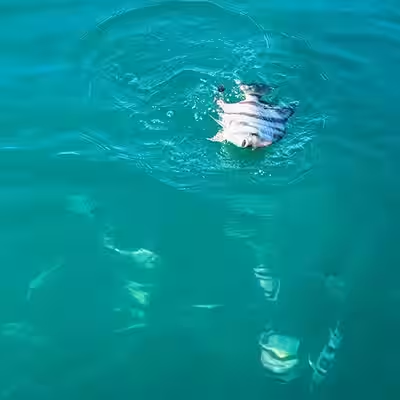
On my Nearshore Fishing Charters, we’re not “bottom fishing” for Spadefish. We’re looking for fish stacked off the down-current side of a reef, getting a light chum slick going just to pull the school into range, and then making short, controlled drifts through the fish. It’s visual, it’s hands-on, and it’s one of the most fun light-tackle bites we have off Ocean Isle Beach.
Your simplest “first trip” approach:
- Find reef structure holding life (bait, marks, and fish stacked in the water column)
- Chum lightly: For spadefish, the best chum is cannonball jellyfish. I rig several jelly balls on a looped leader and hang them over the side, and a few feet away from the boat, so they sit in the current, releasing a steady scent trail in the water. The goal is to pull the school into range and keep them there — not to fill them up.
- Fish small, natural baits that drift naturally
- Keep only what you need — spadefish are not a “fill the cooler” species in my book
If you can do those four things, you’re already ahead of most people.
When Do Spadefish Show Up Near Ocean Isle Beach?
Off Ocean Isle Beach, I treat spadefish as a late-spring into early-summer pattern. They show up when the nearshore reefs are holding life, the water has stabilized, and — most importantly — when I can consistently collect fresh cannonball jellyfish for bait. That’s the real trigger. When the jellies are there, the spadefish bite is worth building a trip around. When they’re not, I don’t force it.
Are Spadefish Only Here in May and June?
Around Ocean Isle Beach, Spadefish aren’t something I put on the calendar by date — I key off the conditions. When the nearshore reefs start holding abundant life, the water settles into a stable warm range, and fresh cannonball jellies are easy to collect, that’s when the fishery really lines up and becomes consistent.
Could one show up earlier or later? Sure. But the trips that are fun, repeatable, and worth planning around are the ones that fall inside that window when all the pieces come together.
In 2026, I began catching Spadefish reliably on our local nearshore reefs during the second week of May. That timing can shift a bit year to year depending on water temperature, bait, and overall conditions.
Where to Find Spadefish
The Type of Structure That Holds Spadefish
Spadefish are not randomly scattered — they’re tied to nearshore structure that’s holding life in the water column. I’m not just looking for a piece of bottom; I’m looking for a reef that’s got bait, marks, and current moving across it.
- Artificial reefs with vertical relief
- Wrecks that create a strong current break
- Live bottom that’s holding bait
- Structure where fish are suspended off the bottom — not glued to it
If the screen is full of life and you’ve got the right conditions, that’s a spadefish stop.
How I Search for Them Through the Season
Early in the season — when the first fish are moving in from offshore — I’ll start on the deeper nearshore pieces in that 10–15 mile range. That’s usually where the first consistent schools show up.
Once the closer reefs begin holding life, I start where the best conditions have been instead of running past active fish just to check deeper water. The goal is simple: find the first reef that’s alive and duplicate that pattern on similar structure in the same depth range.
Depth Range Off Ocean Isle Beach
You can absolutely see spadefish on mid-depth reefs in the 34–40 foot range when the conditions line up. They don’t require 60 or 90 feet of water — they require life on the structure and a steady food source.
As the season stabilizes, those mid-depth reefs are often the most consistent and most efficient for charter fishing.
Boat Positioning and Current
Spadefish set up on the down-current side of structure, so boat position matters as much as the reef you choose. I want to be far enough up-current to let the chum drift naturally back to the fish without running over the school.
If you anchor or spot-lock too close, you’ll often push the school down in the water column. Set up up-current, let the slick develop, and bring the fish to you instead of forcing the issue.
If the school drops deeper, I’ll start tossing small chunks of jellyfish or fresh shrimp overboard to get them actively feeding again and pull them back toward the surface. Once they rise, it turns into a visual sight-fishing game where you’re picking individual fish out of the school. That’s when the real fun begins!
Best Baits for Spadefish
Jellyfish are famous spadefish bait for a reason — they work. But spadefish also eat other soft, natural offerings, especially things that match what’s already in the water around the reef.
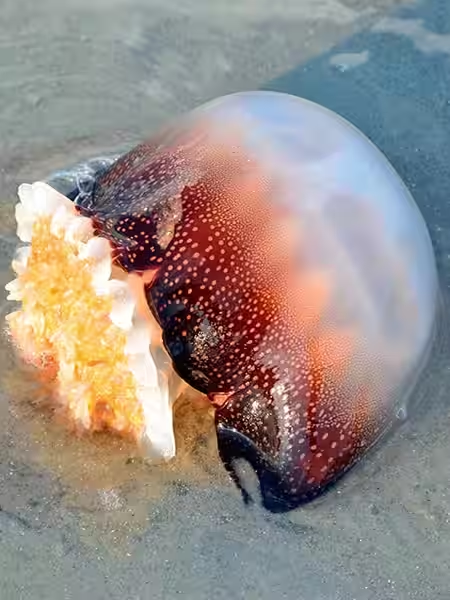
Reliable Spadefish baits include:
- Cannonball Jellies ("jelly balls")
- Fresh Shrimp
- Clams / Mussels
- Sand Fleas (Mole Crabs)
No matter which bait you choose, cannonball jellies are hard to beat for chum when they’re available. Whatever you use, keep your bait pieces small and present them naturally.
Beach-Collected Bait
If fresh cannonball jellies are washing up on the beach, there’s nothing wrong with putting them to use. When spadefish are keyed in on jellyfish, the most important thing is that your bait is fresh — and it definitely beats burning boat fuel running around looking for them. Just make sure you’re grabbing the right species. Cannonballs are generally non-stinging; a Portuguese Man o’ War is a completely different situation. If you're unsure of the difference, take a second and Google them both before you start picking them up.
Can You Freeze Jelly Balls for Later?
You can experiment with freezing them, but don’t expect frozen jellyfish to fish exactly like fresh. Freezing breaks down soft baits, and spadefish can get picky when the bait doesn’t drift naturally or starts falling apart. That said, it’s not a bad idea to put some away for later in the season when fresh jellies are harder to find. If you do freeze them, cut them into strips first and vacuum pack them so they hold together as well as possible.
Best Spadefish Rig and Gear
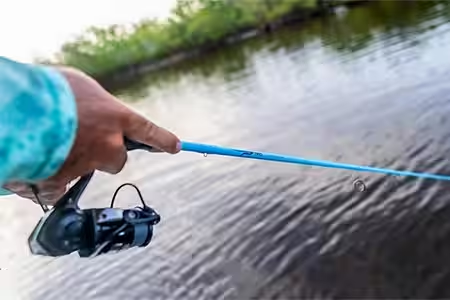
When we target spadefish, we’re fishing light spinning gear with a clean fluorocarbon leader and small hooks. It’s a finesse presentation, not a heavy-tackle bite.
Recommended Spadefish Setup
How to Catch Spadefish
Spadefish will humble people because they’ll show up behind the boat, inspect everything you send down, and then refuse to commit if the presentation isn’t right. They’re almost always visible when they’re there, which makes it even more frustrating — you know you’re in the right place, but they still won’t eat if the bait is too big, the weight is too heavy, or the drift doesn’t look natural. This is a light-tackle, precision bite where small adjustments make a big difference, and the anglers who slow down and fish clean are the ones who consistently hook up.
My practical spadefish checklist:
- Find the school: if you don’t see them on sonar or behind the boat, don’t waste your best bait
- Chum lightly: draw them in without feeding them
- Small bait wins: tiny strips/chunks that drift naturally
- Don’t horse them: steady pressure, keep them out of the structure
- When it’s tough: downsize first before changing everything else
Captain’s Tip: When spadefish are being picky, the answer is usually not “a new bait.” It’s almost always smaller bait and less weight.
Spadefish Regulations (State and Federal)
Regulations can change, and spadefish rules can be tied to broader reef-complex rules depending on where you’re fishing. Before you keep spadefish, verify the current rules for the exact waters you’re in (state vs federal).
North Carolina (State Waters)
In North Carolina, spadefish are included under the Snapper/Grouper Complex (listed as “Spadefishes” in the state’s recreational limits document). That means current rules may be governed by the most recent Snapper/Grouper Complex proclamation.
Before fishing, always verify current NCDMF Seasons, Size and Bag Limits.
Federal (South Atlantic)
In federal South Atlantic waters, spadefish are managed by the South Atlantic Fisheries Management Council (SAFMC). For the current regulations and the most accurate, up-to-date details, refer to the SAFMC rules for Spadefish Harvest.
- Spadefish bag limit: 10 per person per day
- Snapper-Grouper aggregate limit: 20 total fish per person per day (includes multiple reef species)
Important: Always confirm whether you’re fishing state waters or federal waters, because that line matters.
Spadefish Conservation
This is where I’m going to be blunt: just because a limit exists doesn’t mean it’s a good idea to hit it.
Spadefish can school up thick. That makes them easy to target — and it also makes them easy to over-harvest. If a handful of boats decide to keep “the limit” every time they find a school, you can absolutely wipe out a local seasonal aggregation.
My recommendation is simple: keep what you need for a fresh meal and let the rest go. If you want spadefish to be a reliable May/June pattern for years, we have to treat them like a fishery — not a one-time score.
Atlantic Spadefish Records
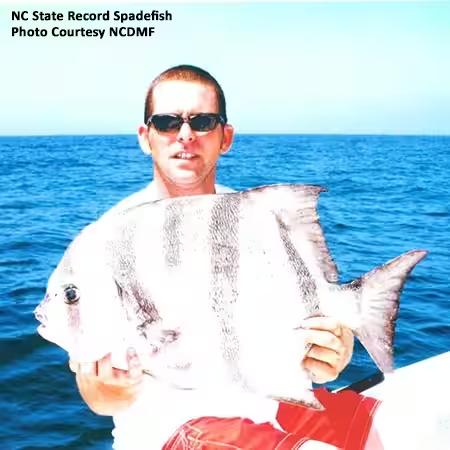
North Carolina State Record Spadefish
- NC State Record Atlantic Spadefish: 11 lbs 3 oz
- Location: Off Hatteras Village
- Year: 2009
- Angler: Steven C. Chadwick
That’s a solid reference point for what a true “trophy” spadefish looks like in North Carolina.
World Record Spadefish
- IGFA All-Tackle World Record Atlantic Spadefish: 14 lbs 14 oz
- Location: Virginia
- Year: 2009
- Angler: Roland Murphy
NC Spadefish Fishing FAQ
When do spadefish run in North Carolina?
In North Carolina, spadefish are most predictable in late spring through early summer on nearshore reefs and wrecks. Off Ocean Isle Beach, I treat it as a late-spring into early-summer pattern that lines up when reef life is active, the water has stabilized, and fresh cannonball jellyfish are easy to collect.
That last part matters more than dates on a calendar: if the jellies are there, the spadefish bite is worth targeting. If they’re not, it’s usually not worth forcing.
Are spadefish good to eat?
Yes — spadefish can be excellent table fare when they’re handled right. The fillets are mild, white, and firm. The biggest difference between “great” and “meh” spadefish is how fast you take care of them.
If you keep a few, bleed them, get them on ice, and clean them the same day. And like I said earlier in this guide: spadefish are not a “fill the cooler” species in my book — keep what you need for a fresh meal and let the rest go.
What is the best bait for spadefish?
Cannonball jellyfish are the best and most consistent spadefish bait on our nearshore reefs. Cut small strips or small chunks and fish them with as little weight as possible so they drift naturally through the school.
If you want to keep a school with you, chum lightly with several “jelly balls” rigged on a looped leader line and hung over the side. Let them sit in the current and release a steady scent trail. The goal is to pull fish into range and hold them there — not to feed them.
How deep do you catch spadefish in North Carolina?
Spadefish can show up across a range of nearshore depths, but off Ocean Isle Beach the most consistent water is often mid-depth reefs in the 34–40 foot range when the conditions line up.
They’re not strictly a “deep water” fish — they’re a structure-and-current fish. Find a reef that’s holding life, look for fish suspended in the water column, then use a light chum slick to bring the school up behind the boat.
What is the size limit for spadefish in NC?
Spadefish regulations can change, and the rules can differ between North Carolina state waters and federal waters. Before you keep spadefish, verify the current rules for the exact waters you’re fishing.
For North Carolina, check the NCDMF Recreational Size & Bag Limits. For federal South Atlantic waters, refer to the South Atlantic Fisheries Management Council rules for Spadefish harvest.
Spadefish Fishing Charters in Ocean Isle Beach
Spadefish can be one of the most fun nearshore bites we have — especially when they’re schooled up and feeding right. The key is timing it correctly, fishing the right structure, and having the right bait plan. When it comes together, it can be an excellent late-spring nearshore charter option.
If you want to target spadefish on our local reefs (and do it the right way), I run nearshore trips out of Ocean Isle Beach that can be tailored around spadefish season when the conditions line up. Info on how to book a Spadefish Fishing Charter with me is below.

Tight Lines,
Captain Harvey Wall
Salty Dawg Fishing Charters
May 21, 2026
How to Book Your Spadefish Fishing Charter
Booking your Spadefish Fishing Charter with Salty Dawg Fishing Charters is easy! Here’s how:
- Option 1:
Book Instantly Online
(select a 4 or 6 hour Nearshore Charter from mid-May through late Summer) - Option 2: Prefer to talk first or book by phone?
Call / text Captain Harvey directly at (910) 250-8459
Have questions? Feel free to Contact Captain Harvey or call anytime. He is happy to help you plan the perfect fishing trip for you!