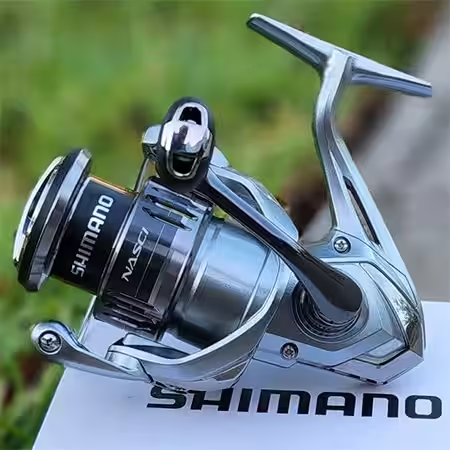
If you’re looking for the best inshore rod and reel combo, you’re in the right place. These are the setups I use as a full-time inshore fishing guide and charter captain in Ocean Isle Beach, North Carolina — based on what actually holds up on the water, not what looks good on a store shelf.
Inshore gear takes a beating. We’re constantly casting around docks, oyster beds, grass edges, marsh drains, and rock. Your rod and reel get exposed to salt, sand, and sun — so when I recommend a combo, it’s because it’s proven: reliable drag, smooth line management, good backbone, and it lasts.
The good news is: you don’t need five different setups to catch fish inshore. If you buy one solid combo that’s built right, you can catch redfish, speckled trout, flounder, and black drum all year right here in North Carolina — and these same combos will work anywhere you’re fishing inshore, from Florida to Texas. They also make a great freshwater spinning setup.
In this guide I’ll share my #1 do-it-all inshore combo, a budget-friendly backup option, and the exact braid + leader setup I recommend. I’ll also give you quick “buy it once” tips so you don’t waste money on the wrong size reel, wrong power rod, or a setup that doesn’t perform when it matters.
My Recommended Inshore Fishing Rod & Reel Combos
If you’re shopping for the best inshore rod and reel combo, here are my two recommended setups: a primary do-it-all combo for redfish, speckled trout, flounder, and black drum, plus a budget-friendly option that’s still tough and reliable for saltwater use. After the picks, I’ll break down exactly why these combos work so well for inshore fishing.
Already have a good spinning rod? If you're just looking for an inshore spinning reel, check out my guide to the Best Inshore Spinning Reels for 2026.
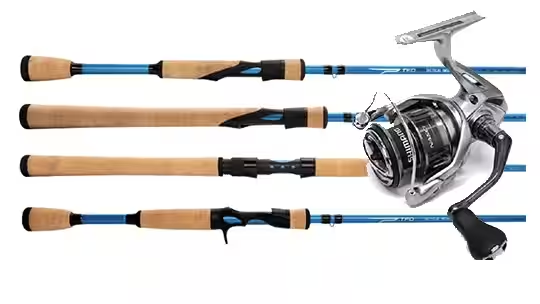
Recommended Inshore Combo
Best Overall “One Combo That Does It All”
- Rod: Temple Fork Outfitters Intracoastal Inshore Rod
- Reel: Shimano 21 Nasci 2500HG Reel
- Line: PowerPro Super Slick V2 Braided Line
- Leader: Yo-Zuri Clear 100% Fluorocarbon Fishing Line
- Covers 95% of inshore fishing
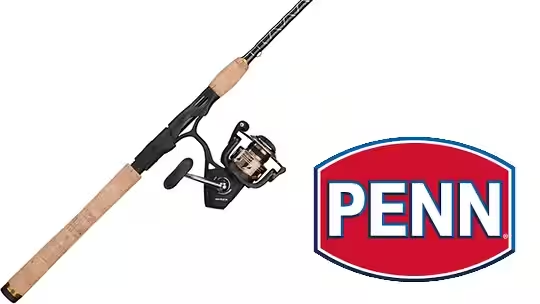
Best Budget Inshore Combo
Best Value “Buy Once and Go Fish” Setup
- Combo: Penn Battle 4 Rod & Reel Combo (2500 size)
- Line: PowerPro Super Slick V2 Braided Line
- Leader: Yo-Zuri Clear 100% Fluorocarbon Fishing Line
- Beginner-friendly • Tough and durable • Works inshore + freshwater

Fish With the Captain Who Wrote This Guide
I’m Captain Harvey Wall, the author of this guide and the owner/operator of Salty Dawg Fishing Charters in Ocean Isle Beach, NC. If you’d rather skip the blog and come try these rods firsthand, join me on the water.
Inshore Charter Info BOOK MY TRIPWhy I use these combos for my Inshore Fishing Charters
Medium + fast action is the sweet spot
Medium power gives you an all-around backbone, and a fast tip gives you sensitivity. You feel bites better, control lures better, and set hooks cleanly without ripping hooks out.
Smooth drag saves fish
A smooth drag is one of the most important parts of an inshore reel. It helps prevent pulled hooks on trout, saves leaders around structure, and keeps you from breaking off fish during hard runs. The Shimano NASCI reel has a very smooth drag. The drag on the Penn Battle series reels works great and the reel is built like a tank.
Braid makes inshore fishing easier
Braid helps you cast farther, feel more, and hook more fish. It’s especially useful when you’re fishing soft plastics and other artificials where sensitivity matters. I always use braided fishing line on my inshore spinning reels.
Which Reel Size is Better for Inshore Fishing?
Why I like a 2500 reel for most inshore fishing
A 2500 size reel is the best all-around balance of weight, comfort, casting ability, and line capacity. It’s perfect for trout, flounder, and slot redfish.
When a larger reel makes more sense
The next size that I move up to for inshore fishing is typically a 4000 size reel, which I will use for larger inshore fish like overslot reds, doormat sized flounder, and bigger black drum.
Captain recommendation: If you’re unsure of what size reel to buy, then buy a 2500. It’s the best overall choice for most inshore fishing.
Best Braided Fishing Line for Inshore Fishing
The braided fishing line I use on my inshore setups is PowerPro Super Slick V2 Braided Line. It casts smooth, holds up well around structure, is very sensitive, and it’s what I keep spooled on my charter reels year-round.

10 lb braid
Best casting distance and excellent for finesse fishing. Great if you mostly target speckled trout with lighter lures.
15 lb braid (best all-around choice)
15 lb braid is the best middle ground. It casts well, handles structure better than 10 lb, and works for almost all inshore situations.
20 lb braid
Best for heavy structure like docks, oyster beds, and barnacles. If you’re constantly pulling fish away from pilings, 20 lb braid is a solid move. I only use 20 pound braid on my inshore fishing charters in Ocean Isle Beach NC, as we regularly catch larger reds, flounder, black drum, etc...
Best Leader for Inshore Fishing (Strength + Length)
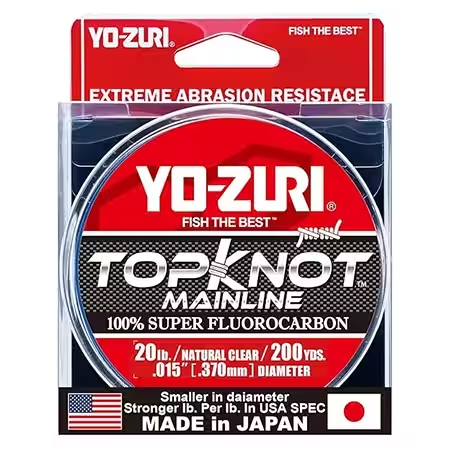
For inshore fishing with spinning reels, I’m a braid + fluorocarbon leader guy 100% of the time — I use Yo-Zuri Clear 100% Fluorocarbon Fishing Line as my leader material. I never fish straight braid to the lure or hook, and I never use monofilament inshore, because fluorocarbon gives you better abrasion resistance, stealth, and more consistent hookups around structure.
Why 20 lb fluorocarbon is the standard
20 lb fluorocarbon is strong enough for redfish and structure, but still light enough to get bites consistently from trout and other inshore fish.
When I’d use 10 lb, 30 lb, or 40 lb leaders inshore
- 10 lb: Clear water, picky trout, finesse presentations
- 30-40 lb: Heavy docks, jetties, big drum, and rougher structure fishing
Best Leader Length
Most of the time, a leader length of 18–24 inches is perfect. If the water is super clear or fish are spooky, you can run a longer leader. On my charter rods, I usually run a longer leader for stealth and convenience — it helps keep presentations natural and keeps me from tying on a new leader after a few break-offs.
Best Lures to Pair With This Inshore Combo
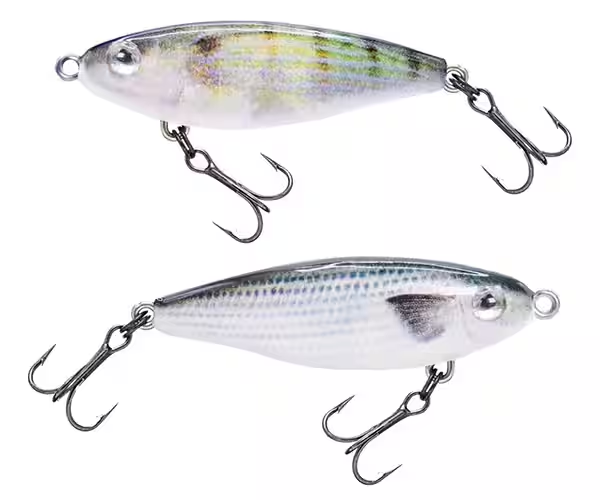
One reason I recommend this exact inshore rod and reel setup is because it matches the lures most people actually throw inshore — not just one specific technique. A medium / fast rod gives you the best mix of casting, lure control, and hook-setting power, and a 2500–3000 size reel with braid + fluoro leader gives you sensitivity without sacrificing strength around docks, oyster beds, and grass.
This combo shines with soft plastics on jigheads (paddle tails, shrimp imitations, jerk shads) because the fast tip loads and fires light baits easily, but the rod still has enough backbone to drive a hook home at distance. The braid helps you feel subtle bites — especially from trout and flounder — and the fluorocarbon leader gives you abrasion resistance when those fish take you across oysters or structure.
It also pairs perfectly with hard baits like MirrOdines because the rod tip has enough give to keep treble hooks pinned without ripping them out. A lot of people lose fish on treble-hook lures because their setup is too stiff. This rod action gives you just enough shock absorption to stay hooked up, while the braid keeps you connected and lets you work the bait cleanly with twitches and pauses.
For topwater lures, this setup gives you the control you need to “walk the dog” and work a plug properly without the rod feeling like a broomstick. When a big redfish blows up and surges, the smooth drag on this reel size protects light hooks and keeps the fight controlled — especially important when you’re fishing around grass edges or shallow structure.
And if you like covering water, this combo is excellent for gold spoons because it casts far, retrieves smoothly, and still has the backbone to turn a good fish. A spoon is simple — but it’s also one of the best lures for redfish in shallow water, and this setup makes it easy to throw all day without fatigue.
Bottom line: this inshore combo is built to fish the lures that catch the most inshore fish in North Carolina — and it gives you the right balance of casting performance, bite detection, hook-setting power, and fish-fighting control.
Will This Combo Work for Live Bait + Popping Corks?
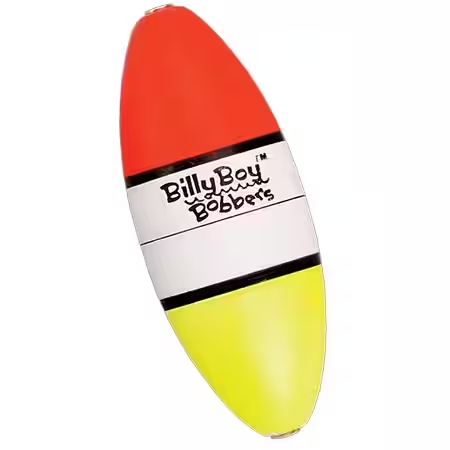
Yes — and honestly, this is one of the reasons I like this combo so much. A lot of people think you need a “bait setup” and a separate “lure setup,” but for inshore fishing in North Carolina, that’s usually overkill. A properly balanced inshore spinning combo can do both extremely well.
This rod has enough backbone to handle real bait rigs and bigger fish, but it’s still light and sensitive enough to fish a cork the right way (you can feel the weight, detect subtle bites, and set the hook without ripping it out of their mouth). Pair that with a smooth 2500 reel drag, and you’ve got a setup that protects your leader while still having the power to turn fish away from structure.
Here are a few live bait rigs this combo handles perfectly:
- Shrimp under a popping cork
- Carolina rigs with mud minnows
- Free-lined mullet
- Light bottom rigs
Bottom line: if you’re fishing inshore the way most people do — mixing artificial lures with live bait when it makes sense — this combo covers it all without needing extra rods cluttering up the boat.
How to Care for Your Rod & Reel After Saltwater Fishing
If you want your inshore rod and reel to last, the most important thing is what you do immediately after the trip.
Captain’s Tip: Give your rod and reel a quick rinse with clean saltwater as soon as you’re done fishing — before the salt dries and starts crystallizing.
Then, once you get home (or back to the dock), do a gentle rinse with fresh water. Don’t blast your reel with high pressure — the goal is to wash salt off the outside, not force water into the internals.
- Quick saltwater rinse immediately after fishing (keeps salt from drying and sticking)
- Light fresh-water rinse at home — low pressure only
- Wipe down and let everything dry before storing
- Loosen your drag after each trip so it doesn’t stay compressed
- Occasionally add a drop of oil to the handle knobs and moving parts (basic maintenance goes a long way)
If you do those simple steps, your combo will stay smooth, look better, and last way longer — especially in the harsh saltwater environment we fish in around Ocean Isle Beach.
FAQ - Buying the Right Inshore Fishing Rod Combo
What size rod and reel is best for inshore fishing?
A 7’ medium / fast spinning rod with a 2500–3000 reel is the best all-around inshore setup.
Is a 2500 sized reel the best for inshore saltwater?
For most anglers, a 2500 is the best balance for most situations.
What pound braid is best for inshore fishing?
15 lb braid is the best all-around choice. Use 10 lb for finesse and 20 lb for heavy structure.
What leader strength should I use for redfish and speckled trout?
20 lb fluorocarbon is standard. Drop to 15 lb in clear water and go to 30 lb around heavy structure.
Medium vs medium-heavy rod for inshore fishing — which is better?
Medium is best for most inshore lure fishing. Medium-heavy is only needed if you fish heavy structure constantly or throw larger baits regularly.
What rod length is best for inshore fishing (7’ vs 7’6”)?
7’ is the best all-around length for control and accuracy. 7’6” can add casting distance, but it isn’t required.
Can I fish live bait on this combo?
Yes. This setup works great for shrimp under a cork, Carolina rigs, and free-lined bait.
Can I use an inshore combo for freshwater bass fishing?
Absolutely. This is a great freshwater spinning setup and performs extremely well for bass fishing.
Final Thoughts
If you want one rod and reel combo that can handle inshore fishing in Ocean Isle Beach, NC — and just about anywhere else — this is it. The primary setup (TFO Intracoastal + Nasci 2500HG, 15 lb braid, and a 20 lb fluoro leader) covers almost everything you’ll do inshore. And if you want a simpler budget-friendly option, the Penn Battle 4 combo in 2500 size is tough, reliable, and catches plenty of fish.
If you ever want to fish these waters in person, book an inshore trip with me in Ocean Isle Beach and I’ll put this setup in your hands and show you exactly how to use it.
Tight Lines,
Captain Harvey Wall
Salty Dawg Fishing Charters
February 25, 2026
How to Book Your Fishing Charter
Booking your Fishing Charter with Salty Dawg Fishing Charters is easy! Here’s how:
- Option 1:
BOOK MY TRIP - Option 2: (If you have questions or don't want to book online)
Call / text Captain Harvey directly at (910) 250-8459
Have questions? Feel free to Contact Captain Harvey or call anytime. He is happy to help you plan the perfect fishing trip for you!