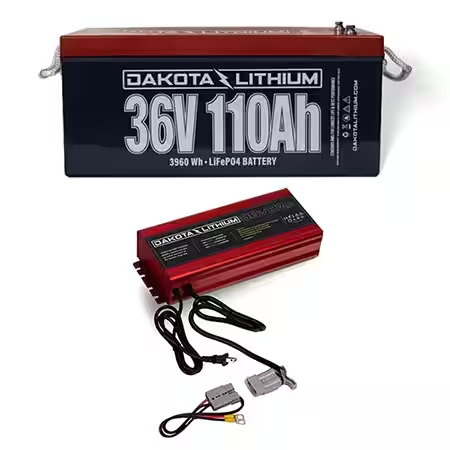
If you fish inshore saltwater long enough — or spend your days holding over reefs, jetties, or inlets — you eventually realize your trolling motor battery setup can make or break the day.
There are a few different types of trolling motor batteries out there — traditional lead-acid, AGM, and lithium — but this guide focuses specifically on lithium.
After running just about everything over the years, I can say without hesitation that lithium batteries are the best choice for serious saltwater anglers. They’re lighter, recharge faster, last years longer, and most importantly, they deliver consistent power from the first cast to the last.
For captains and anglers who fish current, structure, or long days in the wind, that reliability makes all the difference.
As a full-time charter Captain fishing more than 200 days a year, I’ve learned the hard way what works and what doesn’t. In this post, I’ll walk through what makes lithium batteries so effective, which models I’ve tested or trust, and what you should know before upgrading.
Quick Take: Lithium trolling motor batteries cost more up front, but they weigh less, recharge faster (charger amps matter), last many times longer, and hold steady power all day — which means you fish where you want without compromise.
What Used to Happen on Long Charter Days
Before I switched to lithium batteries, trolling motor battery fade was a constant issue on longer charter trips and anytime we were fishing strong current. Holding position over productive structure — drum holes, jetties, inlet edges — required continuous Spot-Lock corrections just to stay on top of the fish.
With traditional lead-acid and AGM batteries, the problem wasn’t a sudden shutdown — it was gradual power loss. Thrust slowly dropped throughout the afternoon. Spot-Lock corrections became weaker, response slowed, and holding power degraded until the batteries finally gave out.
Once that power fade started, options became limited. Anchoring or power-poling down works in shallow water, but it’s not a solution when you need to stay precisely positioned over tight structure in moving current or deeper water. More than once on trips, I had to change tactics or leave fish simply because the batteries could no longer hold the boat where it needed to be.
Lithium changed that completely. There’s no slow fade and no gradual loss of holding power. The trolling motor performs the same at the end of the day as it does on the first stop. Now, running Spot-Lock all day in current or wind isn’t a concern — I fish the spot as long as the bite lasts, not as long as the batteries allow.
Why Lithium Beats Lead-Acid (AGM) for Saltwater Use
For saltwater fishing, especially when you rely heavily on your trolling motor, the differences between lithium and traditional lead-acid (AGM) batteries show up fast. AGM batteries are the sealed, maintenance-free version of old-school lead-acid batteries — the standard trolling motor batteries most boats have used for years. In current, wind, and long fishing days, weight, voltage stability, recharge time, and long-term reliability matter more — and these are the areas where lithium clearly separates itself.
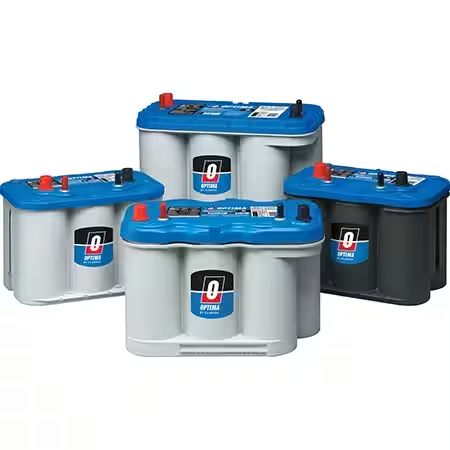
- Consistent Power: Voltage stays steady until nearly empty, so your trolling motor thrust doesn’t fade halfway through the day.
- Weight Savings: One lithium pack can weigh less than a single AGM, replacing three 12-volt batteries in most 36-volt systems.
- Longevity & Warranty: Quality LiFePO₄ packs routinely deliver 3,000–5,000 charge cycles — roughly ten times what a lead-acid battery can handle — and most marine-grade lithium batteries are backed by 8–11 year warranties, compared to just 1–2 years on most AGMs.
- Maintenance-Free: No acid leaks, corrosion, or topping off water — just charge and fish.
- Fast Recharge: They recharge much faster than AGMs — but actual charge time depends on the amp rating of your charger. A higher-amp lithium-specific charger will dramatically shorten charge time on larger 120–150Ah packs.
- No Memory Effect: Lithium doesn’t have to be fully drained before charging — top it off anytime without hurting performance or lifespan.
AGM batteries fail gradually when you need power most. Lithium doesn’t.
Best Lithium Trolling Motor Batteries for Saltwater Boats (2026)
There are a lot of lithium batteries on the market, but only a few consistently deliver real-world performance, reliability, and durability in saltwater conditions.
Below, I’ve narrowed it down to what I believe are the two best options available this year. Dakota Lithium is a proven premium option with long-term warranty coverage, but the TCBWorth 36 V 150 Ah lithium battery is the setup I personally run on my charter boat.
While it’s marketed as a golf cart battery, I’ve been running it for over a year with hundreds of fishing trips under its belt, using Spot-Lock constantly, without a single issue. The Bluetooth app confirms the cells remain perfectly balanced, and in real-world use it has outperformed every battery setup I’ve owned.
That experience is exactly why battery choice matters more than brand hype or spec sheets. The recommendations below are based on real-world performance in current, long fishing days, and heavy Spot-Lock use — not just lab numbers.
Why I Run a 150Ah Lithium Battery
After years of watching traditional batteries fade under real charter conditions, I stopped sizing batteries for “average use.” A 150Ah lithium setup gives me consistent thrust, zero power fade, and the confidence to run Spot-Lock all day in current without changing how I fish.
My Lithium Battery Recommendations
Both lithium battery options that I recommend below outperform traditional lead-acid batteries in both performance and cost. If you rely on Spot-Lock or fish long days, go for at least 100Ah — ideally 150Ah if space and budget allows.
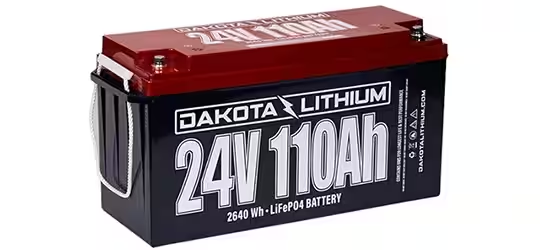
Dakota Lithium Battery
- Voltage: 24V or 36V
- Capacity: 60 – 100 Ah
- Weight: 53 lb - 80 lb
- Bluetooth: Yes
- Price: $1,125 - $2,699
- Warranty: 11 years
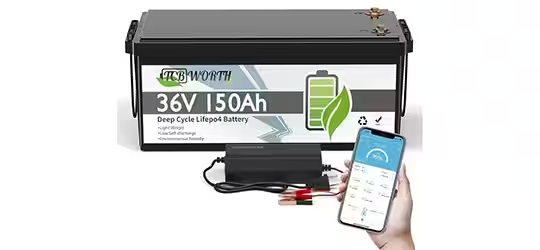
TCBWORTH Lithium Battery
- Voltage: 24V or 36V
- Capacity: 60 – 150 Ah
- Weight: 55 lb - 98 lb
- Bluetooth: Yes
- Price: $249 - $699
- Warranty: 11 years
Note: This is the battery I run on my boat (36V 150ah)
Key Features to Look For in a Lithium Battery
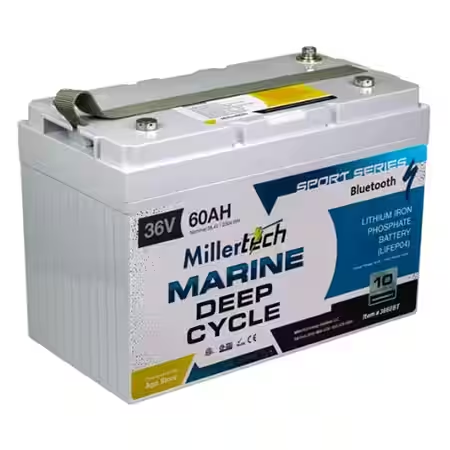
Not all lithium batteries are built the same. Beyond voltage and amp hours, there are a few key features that separate true marine-grade lithium batteries from cheaper alternatives. If you’re shopping for a lithium battery for saltwater use, these are the details that matter most for performance, longevity, and reliability on the water.
- Battery Management System (BMS) for protection against overcharge, short circuit, and overheating.
- Low-Temperature Charging Protection to prevent damage below freezing.
- Bluetooth Monitoring for real-time status on voltage and state of charge.
- Marine-Grade Build with IP65+ waterproof housing and stainless hardware.
- Cycle Life & Warranty — look for 3,000+ cycles and 8–11 years of coverage.
- Skip unknown rewrapped batteries: Many budget lithium packs aren’t built for marine vibration, moisture, or long-term support. If you do use a “golf cart” style battery, make sure it has a proven BMS, low-temp protection, and real warranty coverage.
Every lithium battery recommended on this page meets the criteria above. I’ve intentionally excluded products that lack proper battery management, marine-grade construction, or long-term warranty support, even if they appear cheaper up front.
Understanding How Amp Hours Affects Battery Runtime
Don’t skip reading this part — this might be the most important part of the decision when choosing the right lithium battery for you.
| BATTERY SIZE | BEST FOR |
|---|---|
| 50-60 Ah | Kayaks, jon boats, small 12 V systems |
| 100 Ah | Standard Battery |
| 150 Ah | Captains / Tournament Anglers |
Amp hours (Ah) are basically your fuel-tank size — but real-world runtime depends on how you actually fish. Trolling motors rarely run at full draw continuously. Between Spot-Lock cycling, repositioning, drifting, and idle time, average current draw is far lower than peak numbers suggest.
In practice, a larger battery doesn’t just add hours — it adds days. On my charter boat, my 36 V 150 Ah lithium battery routinely delivers 5–7 full fishing days of runtime before needing a recharge, even with heavy Spot-Lock use.
Before switching to lithium, I ran top-of-the-line AGM batteries that were completely drained after just 8–10 hours. My current lithium battery lasts so long that I actually have to remind myself to charge it — and the built-in Bluetooth app makes it easy to track real-time battery percentage at a glance.
I almost bought a 100 Ah battery to save money, but upgrading to 150 Ah was one of the best decisions I’ve made. The extra capacity gives peace of mind and consistent thrust no matter the conditions.
Takeaway: If you can afford the upgrade, go bigger. Amp hours equal runtime, and runtime equals confidence.
Battery Charger Compatibility: A Necessary Upgrade
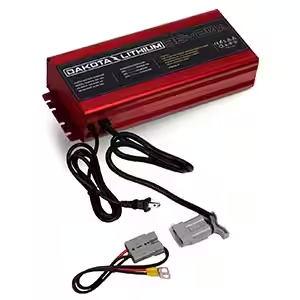
Upgrading to lithium isn’t just about the battery itself — your charging setup matters just as much. Lithium batteries require a different charging profile than traditional AGM or lead-acid batteries, and using the wrong charger can reduce performance, shorten lifespan, or damage the battery altogether.
Before you upgrade, make sure your charger is designed to handle lithium safely and efficiently. Lithium batteries should not be charged directly by an outboard alternator unless a proper DC-to-DC charger or lithium-approved charging system is installed, as standard alternator systems lack the battery-management controls lithium batteries require.
When choosing a lithium charger for marine batteries, here’s what to look for:
- Use a LiFePO₄-compatible charger — lead/AGM chargers can damage lithium cells.
- Match voltage (12 V / 24 V / 36 V) and look for a proper CC/CV lithium profile.
- Automatic shutoff — no float or trickle charging required.
- Higher-amp chargers reduce charge time on 120–150 Ah packs.
My Lithium Battery Charger Recommendations
Choosing the right charger is just as important as choosing the right battery. A lithium-specific charger ensures proper charging profiles, protects the battery’s BMS, and dramatically shortens recharge time on larger 24V and 36V packs. The chargers below are reliable, LiFePO₄-compatible options that I trust for real-world saltwater use.
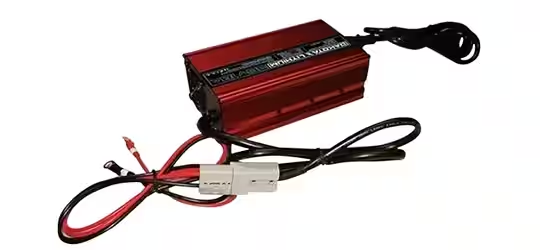
Dakota Lithium Battery Charger
- Voltage: 12, 24, 36 volts
- Charge Rate: 3 – 20 Ah
- Price: $40 - $255
- Warranty: 1 year
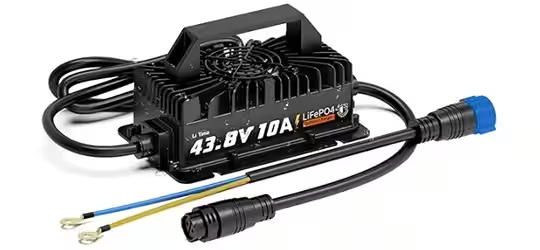
LiTime Lithium Battery Charger
- Voltage: 12, 24, 36 volts
- Charge Rate: 5 – 20 Ah
- Price: $69 - $279
- Warranty: 1 year
Note: I use the LiTime 36 volt 10 Ah charger on my boat
Charging & Maintenance Tips
One of the biggest advantages of lithium batteries is how little maintenance they require compared to traditional AGM batteries. That said, following a few simple best practices will maximize lifespan, protect your warranty, and keep your battery performing at its best for years.
- Marine lithium batteries should be stored around 50–60% charge when sitting unused for extended periods.
- Disconnect once fully charged — lithium batteries do not require trickle charging.
- Avoid regularly running the battery down to the low-voltage cutoff.
- Keep battery terminals clean, tight, and dry to prevent corrosion.
FAQ - Lithium Trolling Motor Batteries
How long do lithium trolling motor batteries last?
Most quality LiFePO₄ packs deliver 3,000 to 5,000 cycles (often 8–10 years). Some marine lithium batteries come with 11 year warranties.
Can I replace three 12 V AGMs with one 36 V lithium?
Yes — as long as total voltage and amp-hour capacity meet your trolling motor’s requirements.
Do I need a special charger for lithium batteries?
Absolutely. Use a lithium-specific charger only; it preserves lifespan and warranty.
Are lithium batteries safe for saltwater boats?
Yes. LiFePO₄ chemistry is sealed, stable, and well-suited for marine use.
Will lithium batteries work with Minn Kota Spot-Lock?
Yes — lithium batteries are ideal for Spot-Lock because they maintain consistent voltage under repeated load cycles.
What size lithium battery is best for all-day Spot-Lock?
For saltwater fishing with heavy Spot-Lock use, 100 Ah or higher delivers the most consistent full-day performance. 150 Ah is recommended.
What other resources exist for learning more about lithium batteries?
If you’d like to dig deeper into lithium battery safety, chemistry, and general marine use, the following resources provide solid background information:
Final Thoughts on Lithium Batteries
After running lithium batteries in real saltwater conditions — heavy Spot-Lock use, current, wind, and long charter days — the difference is undeniable. Lithium doesn’t just last longer on paper; it changes how you fish. No voltage fade, no managing power late in the day, and no adjusting your strategy because the trolling motor is running out of steam.
For anglers who rely on their trolling motor, especially in saltwater, upgrading to a properly sized lithium battery and charger setup isn’t a luxury — it’s a performance upgrade that pays off every single trip. As a full-time charter captain, moving to a 150 Ah lithium battery was one of the best investments I’ve made in my boat.
If your trolling motor performance dictates where or how long you can fish, it’s time to upgrade. A properly sized lithium battery and charger setup removes that constraint and lets you fish the conditions instead of managing power. Start with the battery options above, size it for your style of fishing, and build the system once — the right way. If you have any questions, message me using my Contact Page.

Tight Lines,
Captain Harvey Wall
Salty Dawg Fishing Charters
Updated: January 8, 2026
How to Book Your Fishing Charter
Booking your Fishing Charter with Salty Dawg Fishing Charters is easy! Here’s how:
- Option 1:
BOOK MY TRIP - Option 2: (If you have questions or don't want to book online)
Call / text Captain Harvey directly at (910) 250-8459
Have questions? Feel free to Contact Captain Harvey or call anytime. He is happy to help you plan the perfect fishing trip for you!