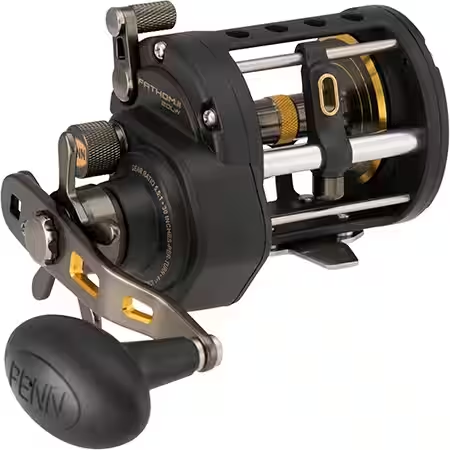
If you’re looking for the best saltwater conventional reel, you’re in the right place. Rather than giving you a list of 15 or 20 reels and leaving you more confused than when you started, I’ve narrowed this guide down to three recommendations: the best budget reel, the best overall reel for most saltwater anglers, and the premium reel I’d buy if money wasn’t the deciding factor.
I’m Captain Harvey Wall, a full-time fishing guide and charter captain in Ocean Isle Beach, North Carolina. I use conventional reels for shark fishing, trophy bull redfish, nearshore bottom fishing, trolling, and other heavy-duty applications where line capacity, drag performance, cranking power, and durability matter. These recommendations are based on real time on the water—not just a manufacturer’s specification sheet.
My goal is simple: help you choose the right reel without overwhelming you with unnecessary options. After my recommendations, I’ll explain star drags versus lever drags, level-wind versus non-level-wind reels, sizing, line choices, and which types of fishing each reel is best suited for.
My Recommended Saltwater Conventional Reels
Most anglers do not need dozens of options. If you want an affordable and proven level-wind reel, start with the Abu Garcia Ambassadeur 6500 C3. If you want the conventional reel I would recommend to the largest number of saltwater anglers, choose the Penn Fathom II Level Wind. If you want to move into premium two-speed lever-drag performance, my upgrade pick is the Shimano Talica 12II.
Decide which buyer sounds most like you. The Ambassadeur is the good, proven budget choice. The Fathom II is the better all-around choice for most fishermen. The Talica is the premium choice for the angler who wants more offshore capability and is willing to pay for it.
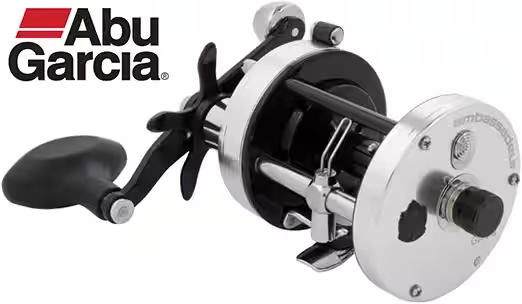
Best Budget Conventional Reel
Abu Garcia Ambassadeur C3 7000
- Best For: Sharks • Bull Reds • Bait Fishing
- Type: Star Drag • Level Wind
- Gear Ratio: 4.1:1
- Max Drag: 20 lb
- Bearings: 2 Stainless Steel + 1 Roller
- Line Capacity: 17/325 • 20/250 • 25/230 (mono)
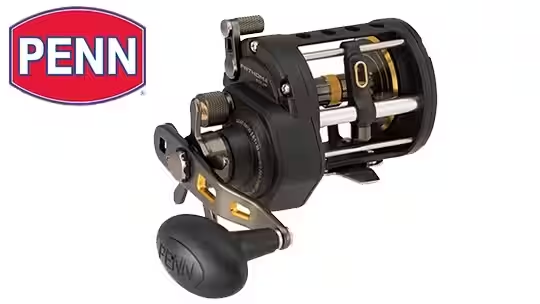
Best Overall Conventional Reel
Penn Fathom II 20 LW
- Best For: Kings • Snapper • Grouper • Sharks • Bull Reds
- Type: Star Drag • Level Wind
- Gear Ratio: 5.5:1
- Max Drag: 30 lb
- Bearings: 4+1 Stainless Steel
- Line Capacity: 15/475 • 20/315 • 25/290 (mono)
Captain Harvey’s Premium Recommendation
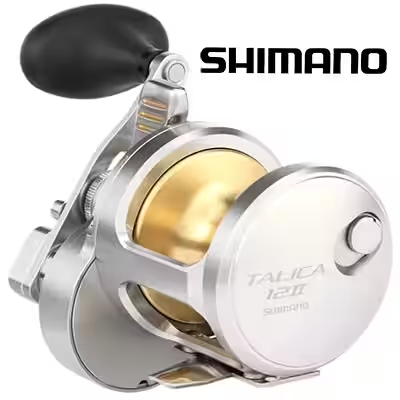
If you regularly target king mackerel, wahoo, tuna, amberjack, grouper, snapper, and other hard-fighting offshore fish, the Shimano Talica 12II is one of the finest saltwater conventional reels on the market.
It is a compact two-speed lever-drag reel built for anglers who want smooth operation, serious fish-fighting power, and offshore capability in a reel they are unlikely to outgrow.
Buying a Talica makes sense when you spend more days offshore, want the advantages of a two-speed lever-drag reel, appreciate premium equipment, and would rather buy one high-end reel than upgrade later.
Captain’s verdict: If budget is not the deciding factor and you want the highest-performing reel in this guide, this is where I would spend my money.
Why I Chose These Saltwater Conventional Reels
Abu Garcia Ambassadeur C3 7000: the proven budget choice
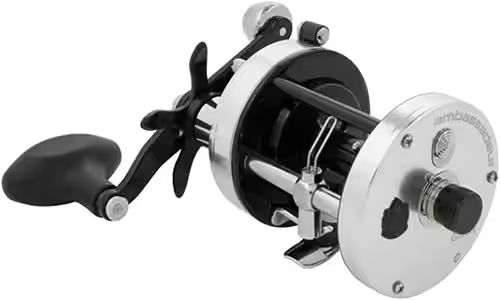
The Ambassadeur C3 7000 earned the budget position because it has been catching big fish for decades without requiring anglers to spend several hundred dollars. It is not the newest or most advanced reel in this guide. That is part of its appeal. The design is simple, familiar, easy to service, and proven on countless sharks, bull reds, catfish, stripers, and other hard-fighting fish.
I chose the 7000 over the smaller 6500 because the extra line capacity and drag make it a better fit for the saltwater fishing most readers of this guide will be doing. It still has the easy-to-use level wind that many anglers appreciate, but it offers more room for heavier line and larger fish without stepping into expensive offshore reel territory.
I have used Ambassadeurs for years, including for sharks and trophy bull reds. They may have earned much of their reputation in freshwater catfishing and striper fishing, but the same qualities that made them famous there—durability, simplicity, and reliability—translate well to saltwater when the reel is properly rinsed and maintained.
Who should buy it: The angler who wants a dependable level-wind reel for sharks, bull reds, pier fishing, soaking bait, or general saltwater use without spending much more than the cost of a quality spinning reel.
Who should skip it: The angler who regularly targets king mackerel, tuna, wahoo, grouper, or other offshore fish that benefit from higher drag, greater cranking power, faster gear ratios, or the advantages of a modern star-drag or lever-drag reel.
Penn Fathom II Level Wind: the best choice for most anglers
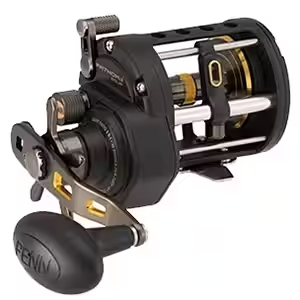
The Penn Fathom II Level Wind gets my best-overall recommendation because it sits in the practical middle of this page. It is a meaningful step up from the Ambassadeur in heavy-duty construction and fish-fighting capability, but it does not require the premium investment of a Talica.
I especially like the level-wind version for anglers who soak bait, bottom fish, or regularly hand a rod to someone who may not be experienced with conventional reels. A level wind automatically distributes line across the spool, which removes one more thing the angler must think about during a fight.
Penn also gives buyers choices within the Fathom family. That is why the button above will lead to a short list of recommended models rather than forcing every reader into one exact size. My starting point for many anglers is the Fathom II 20LW, but a different size or a non-level-wind Fathom may make more sense depending on line capacity, target species, and how the reel will be used.
Who should buy it: The angler who wants one quality conventional reel for sharks, bull reds, nearshore fishing, bottom fishing, and other heavy saltwater applications — especially if easy line management matters.
Who should skip it: The dedicated caster who strongly prefers a completely open spool, or the offshore angler who specifically needs a two-speed lever drag for large pelagic fish.
Shimano Talica 12II: the premium upgrade
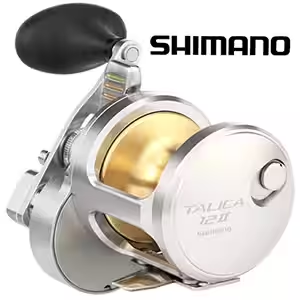
The Talica 12II occupies a different slot from the first two reels. It is a compact, premium, two-speed lever-drag reel designed for serious fish-fighting work. The Talica is not the economical choice, and it is not the reel I would tell every saltwater angler to buy. It is the reel for the buyer who understands why a premium lever drag and two-speed gearbox matter.
High gear helps with fast line pickup and normal fishing. Low gear gives you more mechanical advantage when a strong fish settles into a hard fight. That ability becomes much more valuable as target species, tackle, drag pressure, and fishing depth increase.
Who should buy it: The angler who fishes offshore, targets powerful fish, wants two-speed capability, and plans to keep the reel for many years.
Who should skip it: The angler who mostly soaks bait for moderate-sized coastal fish and would never use the Talica’s offshore capability. For that buyer, the Fathom II is the more sensible purchase.
Star Drag vs. Lever Drag Conventional Reels
How a star drag works
A star-drag reel uses the star-shaped control beside the handle to increase or decrease drag pressure. Star drags are familiar, simple, and often excellent for casting, bait fishing, trolling, and bottom fishing. Both the Ambassadeur C3 7000 and the Penn Fathom II Level Wind use star-drag systems.
A star drag is usually the easiest place to start if you want a versatile conventional reel and do not need to move instantly between precise preset drag positions. For most coastal and nearshore anglers, a quality star drag is more than enough.
How a lever drag works
A lever-drag reel uses a lever to move through defined drag positions. The angler can establish a strike setting and move the lever in a controlled range rather than turning a star by feel during the fight. Lever drags are especially popular in offshore trolling and heavy fish-fighting applications.
The Shimano Talica 12II combines a lever drag with two gear ratios. That makes it a much more specialized and capable offshore tool than the first two reels, but it also adds cost and complexity that the average angler may not need.
Captain’s recommendation: Choose a star drag for general saltwater fishing, bait fishing, casting, sharks, bull reds, and most nearshore work. Choose a two-speed lever drag when offshore fish, heavier drag settings, trolling, or deep-water fights make the additional control and low gear worthwhile.
Level-Wind vs. Non-Level-Wind Conventional Reels
Why many anglers prefer a level wind
A level-wind mechanism moves back and forth as line enters the reel, laying the line evenly across the spool. This makes conventional reels easier to use because the angler does not need to guide line manually with a thumb.
Level winds are especially useful for beginners, charter customers, anglers who fish stationary baits, and anyone who wants simple line management while fighting a fish. That is one reason both the Ambassadeur and Fathom II Level Wind fit this guide so well.
Why experienced anglers may prefer no level wind
A non-level-wind reel has fewer moving parts in the line path and allows the angler to control line placement manually. Many experienced conventional-reel anglers prefer that design for casting, heavy offshore work, or any situation where maximum simplicity and direct line flow matter more than convenience.
The tradeoff is that the angler must remember to spread line across the spool during the retrieve. If line piles heavily on one side, it can create an uneven spool, reduce usable capacity, and interfere with smooth operation.
Captain’s recommendation: If you are unsure, choose the level-wind version. If you already know you prefer an open spool and are comfortable guiding line, choose the non-level-wind reel that best fits your fishing.
Captain's recommendation: Most of these reels perform best with braided main line paired with a monofilament or fluorocarbon leader. Braid offers greater line capacity, sensitivity, and hook-setting power, while mono remains a good choice for trolling and anglers who prefer additional stretch. Match your line to the reel, rod, drag setting, and target species rather than simply using the heaviest line that will fit.

Fish With the Captain Who Wrote This Guide
I’m Captain Harvey Wall, the author of this guide and the owner/operator of Salty Dawg Fishing Charters in Ocean Isle Beach, NC. I use conventional reels for sharks, bull redfish, trolling for king mackerel, and bottom fishing for sea bass, snapper, and grouper. If you’d rather skip the blog and see how this gear performs on the water, join me for a private fishing charter.
Nearshore Charter Info BOOK MY TRIPHow to Care for a Conventional Reel After Saltwater Fishing
Saltwater is tough on every reel, regardless of price. A few minutes of routine maintenance after each trip will help keep your reel performing smoothly and extend its lifespan. My rods and reels get rinsed after every charter, and it's one of the easiest ways to protect your investment.
- Lightly rinse the reel with fresh water after each trip.
- Wipe it dry and let it air dry before storage.
- Back the drag off before storing the reel.
- Inspect the reel regularly for salt, sand, and signs of wear.
- Service the reel according to the manufacturer's recommendations.
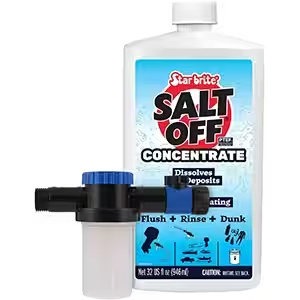
Captain's Tip: Never assume a reel is maintenance-free just because it's built for saltwater. Even the best reels will last longer and perform better with routine cleaning, inspection, and lubrication. After rinsing my reels with fresh water, I occasionally use Star Brite Salt Off to help remove salt deposits, especially after long stretches of fishing. It's inexpensive, easy to use, and one of the few maintenance products I consistently recommend.
FAQ — Buying the Best Saltwater Conventional Reel
What is the best saltwater conventional reel?
For most anglers, my best-overall choice is the Penn Fathom II Level Wind. It offers an outstanding balance of durability, power, versatility, line management, and value for general saltwater fishing.
What is the best budget saltwater conventional reel?
The Abu Garcia Ambassadeur 7000 C3 is my budget pick. It is a proven level-wind reel that is well suited for sharks, bull reds, bait fishing, and many other general saltwater applications when properly maintained.
What is the best premium saltwater conventional reel?
If you're looking for a premium saltwater conventional reel, it's hard to beat the Shimano Talica 12II. Its compact size, two-speed lever drag, and exceptional fish-fighting power make it an outstanding choice for serious offshore anglers.
Is the Penn Fathom II better than the Shimano Torium?
Both are excellent reels. I gave the Penn Fathom II the edge because it offers an outstanding combination of durability, performance, value, and the availability of a level-wind model. If you prefer Shimano or want a non-level-wind star-drag reel, the Torium remains an excellent choice.
Are level-wind reels good for saltwater fishing?
Yes. Level-wind reels are an excellent choice for bait fishing, bottom fishing, sharks, bull reds, and anglers who prefer automatic line distribution. They do contain additional moving parts, so regular rinsing, inspection, and maintenance are important.
Is a star drag or lever drag better?
A star drag is the best choice for most saltwater anglers. A lever drag becomes more valuable for offshore trolling, precise drag settings, heavier tackle, and larger fish. Two-speed lever drags also provide additional cranking power during long fights.
Can you cast a conventional reel?
Yes, but casting performance depends on the reel, rod, line, lure or bait weight, and the angler's experience. Non-level-wind reels generally cast farther, while level-wind reels are easier to use and automatically distribute line across the spool.
Can I put braided line on a conventional reel?
Yes. Braided line is commonly used on conventional reels because its thin diameter increases line capacity and sensitivity. Match your braid to the reel, rod, drag setting, leader, and target species for the best overall performance.
What size conventional reel should I buy?
Buy enough reel for your target species, line capacity, fishing depth, and drag requirements—but don't automatically buy the largest model available. Bigger isn't always better.
What is the difference between a conventional reel and a baitcaster?
A conventional reel is designed for greater line capacity, heavier tackle, trolling, bottom fishing, and larger fish. Low-profile baitcasters are built primarily for repeated casting with lighter lures and are most commonly used for freshwater and light inshore fishing.
Final Thoughts
You do not need a list of 20 conventional reels to make a good decision. You simply need to choose the reel that best matches the way you fish, the species you target, and your budget.
If you want a proven budget reel, choose the Abu Garcia Ambassadeur 7000 C3. If you want the reel I would recommend to most saltwater anglers, start with the Penn Fathom II Level Wind. If you regularly fish offshore and want a premium two-speed lever-drag reel, it's hard to beat the Shimano Talica 12II.
No matter which reel you choose, buy the right size, pair it with the right rod and line, and take care of it after every trip. A quality reel that's properly maintained will provide years of dependable service.
If you'd like to see how I use conventional tackle for sharks, bull reds, king mackerel, and other saltwater species, book an Ocean Isle Beach Fishing Charter. I'll show you the gear, techniques, and tackle that have earned a permanent place on my boat.
Tight Lines,
Captain Harvey Wall
Salty Dawg Fishing Charters
August 2, 2026
How to Book Your Fishing Charter
Booking your Fishing Charter is easy! Here’s how:
- Option 1: Book Online
BOOK MY TRIP - Option 2: Have questions or prefer not to book online?
Feel free to E-Mail Captain Harvey or call (910) 250-8459 if you have any questions. He's happy to help you plan the perfect fishing trip.