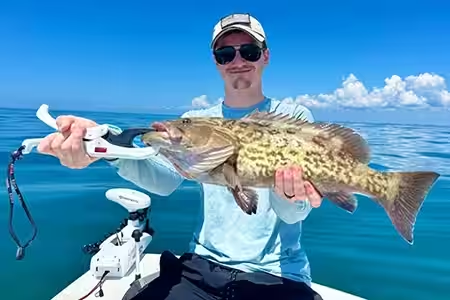
Gag Grouper regulations in North Carolina are federally managed and can change from year to year based on stock assessments and fisheries management decisions.
If you’re bottom fishing for reef species in North Carolina, it’s important to understand the current season dates, size limits, bag limits, vessel restrictions, and for-hire rules before keeping a fish.
The 2026 recreational gag grouper season applies in both North Carolina state waters and South Atlantic federal waters, but possession limits and special rules still apply depending on how and where you’re fishing.
The current 2026 North Carolina gag grouper regulations are summarized below.
NC Gag Grouper Regulations: The recreational gag grouper season in North Carolina state waters and South Atlantic federal waters is open from May 1, 2026 through August 1, 2026 (93 days).
- Minimum Size: 24 inches total length
- Bag Limit: 1 gag grouper or black grouper per person per day (within the 3-grouper aggregate limit)
- Vessel Limit: Maximum 2 gag grouper per vessel per day
- For-Hire Rule: Captain and crew may not retain gag grouper on federally permitted for-hire vessels
Verify Current Rules: NOAA Fisheries Southeast | NCDMF Recreational Size & Bag Limits
2026 Gag Grouper Size Limit in North Carolina
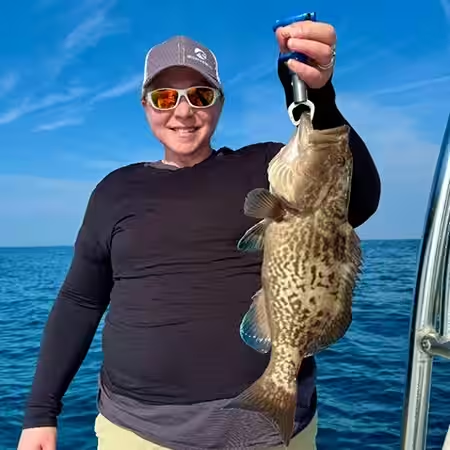
The 2026 recreational gag grouper minimum size limit in North Carolina state waters and South Atlantic federal waters is 24 inches total length (TL).
Total length (TL) is measured from the very tip of the snout to the very end of the tail, with the tail fin compressed (pinched) to get the maximum measurement.
Accurate measurement matters, especially when a fish is close to the legal minimum size.
Always measure gag grouper flat on a rigid measuring board with the mouth closed and the tail compressed (pinched) to get the maximum total length. Flexible tape measurements over the curve of the fish can be inaccurate and may make a short fish appear legal when it isn’t.
Because fisheries regulations can change from year to year, anglers should always verify current rules before fishing.
Why Gag Grouper Seasons Are So Limited
Gag grouper are a slow-growing, long-lived species that form predictable spawning aggregations during late winter and spring. These aggregations make them especially vulnerable to overharvest if fishing pressure is not carefully controlled.
Strict season lengths, harvest limits, and size restrictions are designed to protect spawning fish, control total harvest, and support long-term stock rebuilding.
Because gag grouper populations can take years to recover, fisheries managers typically use conservative regulations rather than risk long-term declines from overfishing.
How to Identify a Gag Grouper (Gag vs Black Grouper)
Because gag grouper are often caught incidentally while bottom fishing for reef species, correct identification is important.
Key characteristics of gag grouper include a gray to brown body color with darker mottling, faint irregular blotches rather than bold spots, and a more streamlined body compared to black grouper.
Black grouper, which are far less common in North Carolina waters, are typically darker overall, heavier-bodied, and marked with more obvious rectangular or blotchy patterns.
Because both gag grouper and black grouper are regulated species with shared harvest limits, proper identification helps anglers stay compliant with current regulations.
You can also view NOAA’s Gag Grouper Identification webpage for official species identification details.
When in doubt, it’s safest to release the fish.
Proper Handling and Release Practices for Gag Grouper
In North Carolina, gag grouper are often caught while bottom fishing for reef species like black sea bass, vermilion snapper, and other structure-oriented fish on nearshore reefs, ledges, live bottom, and artificial reefs. Because these fish are commonly hooked in deeper water, proper handling and release techniques are critical, especially for undersized fish or any fish caught outside the open season.
If you catch a gag grouper that must be released, careful handling improves survival and helps protect the long-term health of the fishery.
When handling a gag grouper, always wet your hands first and avoid using towels, rags, or gloves. Dry or rough surfaces can remove the fish’s protective slime layer, making it more vulnerable to infection after release.
Never gaff a gag grouper and avoid lifting large fish vertically by the jaw. Holding a heavy fish vertically by the mouth can cause serious internal injuries to the jaw, spine, and organs. If the fish must be supported briefly, use two hands — one under the belly and one controlling the head — and keep it as horizontal as possible.
Gag grouper caught from depth often suffer from barotrauma, which can cause the stomach to protrude or the fish to float on the surface. In these cases, using a descending device is the recommended release method. Descending devices return the fish to depth quickly, allowing pressure to equalize and significantly increasing survival rates.
Minimize air exposure whenever possible. Unhook the fish quickly, avoid unnecessary photos, and return it to the water as soon as it’s safely released. Responsible handling ensures these fish survive to contribute to future stocks — and helps protect the limited gag grouper fishery in North Carolina.
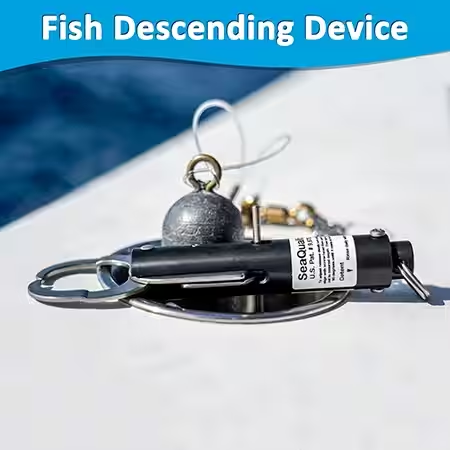
Captain’s Recommendation: When bottom fishing in deeper water, especially 80 feet or more, I strongly recommend having a Descending Device on board and being prepared to use it.
Gag grouper are highly susceptible to barotrauma when brought up from depth, and improper releases can significantly reduce survival rates. Using a descending device allows the fish to be returned quickly to depth, helping it recompress and swim off naturally.
This isn’t specialty gear or optional equipment — it’s a simple tool that makes a real difference in release survival, especially when gag grouper are caught incidentally during black sea bass fishing on nearshore and offshore reefs. If you regularly fish in water depths of 80 feet or more, having a descending device on board and being prepared to use it should be considered standard practice.
Gag Grouper FAQ – North Carolina (2026)
Is gag grouper open in North Carolina in 2026?
Yes. The 2026 recreational gag grouper season in North Carolina state waters and South Atlantic federal waters is open from May 1, 2026 through August 1, 2026.
What is the 2026 gag grouper size limit in North Carolina?
The minimum recreational size limit for gag grouper in 2026 is 24 inches total length (TL). Measure the fish flat on a rigid measuring board with the mouth closed and the tail compressed (pinched) for the most accurate measurement.
What is the gag grouper bag limit in North Carolina?
Recreational anglers may keep 1 gag grouper or black grouper per person per day, within the 3-grouper aggregate limit. There is also a 2 gag grouper per vessel per day maximum.
Can captain and crew keep gag grouper on charter boats?
No. On federally permitted for-hire vessels, the captain and crew may not retain gag grouper during the recreational season.
Can I keep a gag grouper if I catch one while sea bass fishing?
Yes, but only if the gag grouper season is open, the fish meets the 24-inch minimum size limit, and retaining it does not exceed the applicable bag or vessel limits. Outside the open season, gag grouper must be released immediately.
Do I need a descending device for gag grouper?
If you fish for reef species in deeper water, a descending device is strongly recommended. Gag grouper commonly suffer from barotrauma when brought up from depth, and descending devices significantly improve survival for released fish.
What happens if I keep a gag grouper out of season?
Keeping gag grouper outside the legal season or violating size and bag limits can result in citations, fines, and other enforcement action depending on the circumstances.

Tight Lines,
Captain Harvey Wall
Salty Dawg Fishing Charters
Updated: May 22, 2026
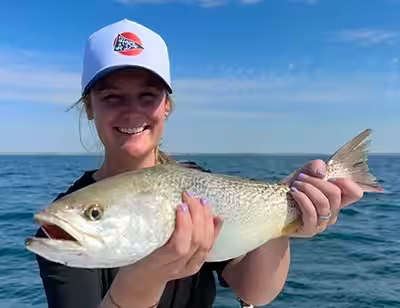
How to Book Your Fishing Charter
Booking your Fishing Charter with Salty Dawg Fishing Charters is easy! Here’s how:
- Option 1:
BOOK MY TRIP - Option 2: (If you have questions or don't want to book online)
Call / text Captain Harvey directly at (910) 250-8459
Have questions? Feel free to Contact Captain Harvey or call anytime. He is happy to help you plan the perfect fishing trip for you!