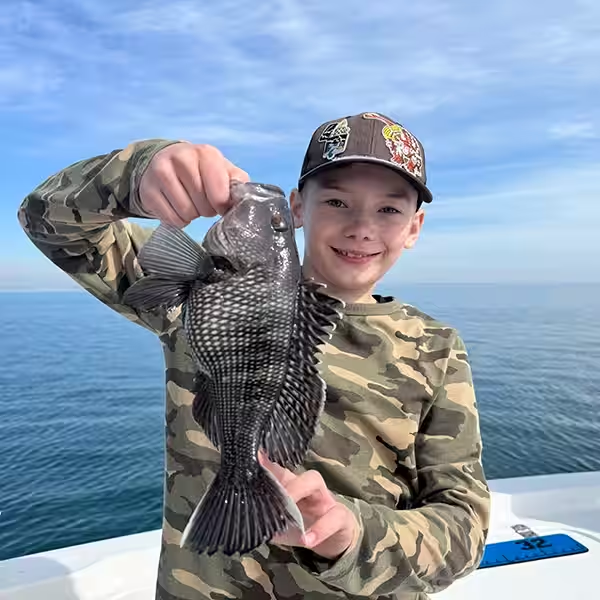
For the first time in more than a decade, black sea bass anglers are seeing meaningful regulatory momentum — and this time, it’s backed by long-standing science.
During a recent joint meeting, the Mid-Atlantic Fishery Management Council (MAFMC) and the Atlantic States Marine Fisheries Commission (ASMFC) approved a 20% increase in the black sea bass harvest limit for the 2026–2027 fishing seasons.
This marks the first positive change since 2012, despite black sea bass stocks increasing steadily for well over a decade.
Why This Is a Bigger Deal Than It Sounds
Since roughly 2008, black sea bass biomass has:
- Increased consistently
- Remained well above rebuilding targets
- Continued trending upward year after year
According to recent stock assessments, biomass is now at its highest level since 1990.
Anglers, divers, and charter captains have known this for years — black sea bass have been thick on reefs, wrecks, and hard bottom throughout the Mid-Atlantic and South Atlantic.
What’s changed is not the fishery — it’s management finally acknowledging the reality on the water.
What Changed at the Council Level
This decision was driven by the use of a percent change approach, which adjusts harvest levels based on:
- Stock biomass
- Long-term population trends
- Projected recreational and commercial harvest
When biomass continues to climb year after year while harvest pressure remains stable, managers can justify increasing access rather than maintaining restrictive measures “just in case.” In this case, the math finally supported a meaningful increase instead of another year of status quo.
This represents a subtle but important shift: allowing rebuilding success to translate into angler access.
What This Means for North Carolina Anglers
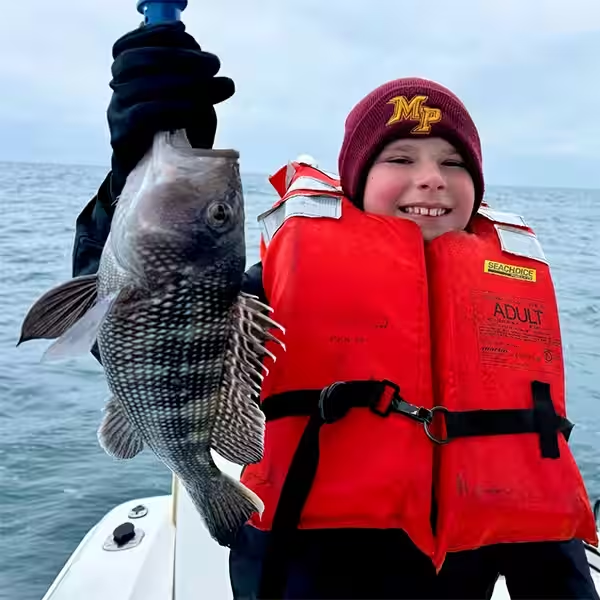
North Carolina manages black sea bass differently than many other Mid-Atlantic states.
Rather than a single statewide rule, black sea bass regulations in NC vary by management area, with differences depending on:
- Where you are along the coast
- Management zone
- Whether you’re fishing ocean waters or joint waters
In recent years, much of North Carolina has operated under largely year-round access, particularly for recreational ocean anglers. Because of that, this 20% harvest increase is not about opening a season in NC.
Stability Is the Real Win
For North Carolina anglers, this decision:
- Reinforces existing access where it already exists
- Reduces the risk of future area-specific closures
- Gives managers more flexibility without tightening restrictions
- Makes rollbacks far less likely if harvest fluctuates year to year
In short, this isn’t about expanding access — it’s about protecting it.
Why This Matters Beyond Black Sea Bass
This decision sets an important precedent.
For years, anglers have watched rebuilt fisheries remain locked behind overly cautious regulations long after recovery goals were met. Most anglers can think of other fisheries — like flounder — where stocks showed improvement long before regulations reflected it, making this decision an important signal for how future management may evolve.
That shift matters — not just for black sea bass, but for how future management decisions may balance conservation success with reasonable angler access.
The Bottom Line
After years of stock growth and repeated assessments showing a healthy fishery, black sea bass management is finally reflecting what anglers have been seeing on the water.
- Black sea bass stocks are thriving
- Biomass is at a multi-decade high
- Science has supported increased access for years
- Management is finally acting on that data
For North Carolina anglers, the takeaway is simple:
Current access is supported by strong science — and it’s now more secure than it’s been in over a decade.
That’s real progress, and it’s long overdue.
FAQ
Will North Carolina black sea bass bag limits change in 2026–2027?
Possibly by management area, but the approved harvest increase is more likely to support regulatory stability rather than higher daily bag limits across all areas of the state.
When do the new black sea bass rules take effect?
The increased harvest specifications apply to the 2026–2027 fishing years. Final recreational regulations are set later at the state level and may vary by management area.
Are black sea bass regulations the same statewide in North Carolina?
No. Black sea bass regulations in North Carolina vary depending on where you’re fishing, including differences by management zone and whether you’re fishing in ocean waters or joint waters.
What is the current black sea bass limit in North Carolina?
As of current North Carolina regulations, recreational black sea bass limits differ by area:
- North of Cape Hatteras: Bag limit: 15 fish per person per day; Minimum size: 13 inches total length
- South of Cape Hatteras: Bag limit: 7 fish per person per day; Minimum size: 13 inches total length
Regulations can change through state proclamations, so always confirm the most up-to-date rules with the North Carolina Division of Marine Fisheries before fishing: https://www.deq.nc.gov/marine-fisheries/recreational-size-and-bag-limits

Tight Lines,
Captain Harvey Wall
Salty Dawg Fishing Charters
Updated: December 26, 2025
How to Book Your Fishing Charter
Booking your Fishing Charter with Salty Dawg Fishing Charters is easy! Here’s how:
- Option 1:
BOOK MY TRIP - Option 2: (If you have questions or don't want to book online)
Call / text Captain Harvey directly at (910) 250-8459
Have questions? Feel free to Contact Captain Harvey or call anytime. He is happy to help you plan the perfect fishing trip for you!