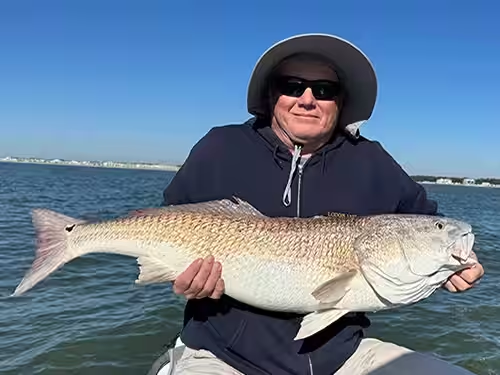
A new satellite-tagging study led by the North Carolina Marine & Estuary Foundation (NCMEF) in partnership with the North Carolina Division of Marine Fisheries (NCDMF) is helping answer one of the most debated questions in North Carolina saltwater fishing: where adult bull red drum actually go, how they move, and why their appearances near shore are so brief, seasonal, and mostly predictable. By tagging large, mature red drum with satellite and acoustic transmitters, researchers are now able to observe offshore residency, long-distance movement, and habitat use that were previously inferred only through seasonal patterns and angler experience.
I’ve spent more than 25 years fishing and guiding these same waters as a North Carolina charter captain, and much of what this study is now confirming aligns closely with what experienced anglers have observed for decades — particularly the short, repeatable windows when true bull reds become accessible inshore and nearshore before disappearing again.
Readers who want to explore the research directly can view full details on the tagging effort, study goals, and ongoing updates at the NCMEF Red Drum Tracking Project page.
Why the Red Drum Life Cycle Matters with Satellite Data
Satellite tags show where fish go, but they do not explain motivation. To understand why bull red drum move the way they do — and why anglers see them when they do — satellite data must be interpreted through the lens of red drum life history and maturity.
Juvenile red drum spend their lives in estuaries and nearshore waters, but mature bull reds operate on an entirely different biological clock. Once red drum reach spawning age, their movements are driven less by feeding opportunity and more by seasonal spawning requirements, offshore habitat preference, and environmental conditions.
Without that context, fall and winter movements are easily misread as simple feeding migrations or inshore spawning events. Satellite tagging helps correct that misunderstanding by showing that many bull red drum are transitioning toward offshore spawning zones rather than remaining near beaches, inlets, or estuaries.
The Early Life of Red Drum: An Inshore Beginning
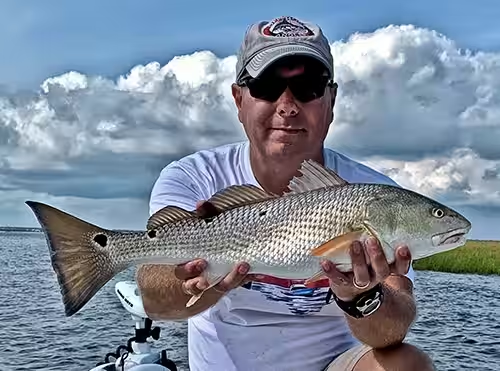
Red drum begin life offshore, but their survival depends on estuaries. After spawning occurs in nearshore and offshore waters, fertilized eggs and larvae drift landward on coastal currents and are funneled through inlets into rivers, creeks, marshes, and sounds. These estuarine systems provide abundant food, protection from predators, and the stable conditions young red drum need to survive.
Juvenile and Sub-Adult Residency
For the first several years of life, red drum live almost entirely inshore. During this phase, they grow, mature, and form the resident redfish populations anglers encounter year-round in marshes, rivers, and sounds.
Because these fish remain accessible to anglers and sampling programs, their inshore behavior is well documented. This long inshore residency is why estuarine health plays such a critical role in sustaining red drum populations — and why early life movement patterns are not the focus of satellite tagging research.
The Shift Offshore: When Red Drum Become Bull Reds
As red drum reach sexual maturity and true bull size — often exceeding 40 inches — their habitat use changes fundamentally. At this stage, mature fish are no longer dependent on estuaries and transition away from inshore systems toward a primarily nearshore and offshore existence.
Offshore-Oriented Adult Life
Fully mature bull reds spend much of their adult lives on the inner continental shelf, where stable salinity, consistent temperatures, and depth provide conditions better suited to large, powerful, highly mobile fish. This offshore orientation explains why true bull red drum can appear scarce or unpredictable to inshore anglers for much of the year.
Once red drum reach this adult phase, traditional inshore sampling and angler observations become incomplete. It is this life stage — beyond routine inshore access — where satellite tagging becomes critical for understanding where bull reds actually live and how they move throughout the year.
The Long-Standing Assumptions About Bull Red Behavior
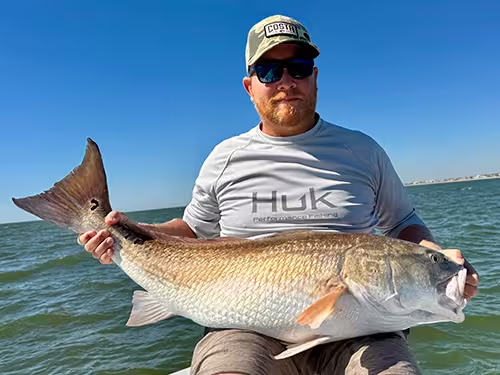
Before satellite tracking, most understanding of bull red drum movement came from seasonal inshore sightings, limited tag-and-recapture data, and angler observations. From this information, it was widely assumed that bull reds moved inshore to spawn each fall or migrated along the beaches following large concentrations of bait.
Why Those Assumptions Made Sense
Bull reds appear suddenly, feed aggressively, and often concentrate near inlets during the peak spawning season. To anglers fishing from shore or boats limited to nearshore waters, this pattern strongly suggested inshore spawning activity or long stretches of along-the-beach migration.
Without any practical way to observe adult red drum once they moved offshore, these assumptions went largely unchallenged for decades. The data simply did not exist to confirm where bull reds spent most of their time — only where they were briefly visible.
What the Satellite-Tagging Study Is Tracking
The NCMEF and NCDMF red drum tracking program uses a combination of satellite and acoustic tagging to monitor the movement of mature red drum over long distances and extended periods. Unlike traditional tagging methods that rely on recaptures, these tags continue collecting data even after fish leave inshore waters.
Satellite tags record depth, temperature, and location data while attached to the fish, allowing researchers to determine where adult red drum spend most of their time, how deep they travel, and when they transition between nearshore and offshore habitats. Acoustic receivers supplement this data when tagged fish pass through monitored inshore areas.
Together, these tools allow scientists to document offshore residency, seasonal timing, and broad movement patterns that were previously invisible — especially once bull reds moved beyond the range of anglers and traditional surveys.
What the Tagging Data Is Beginning to Confirm
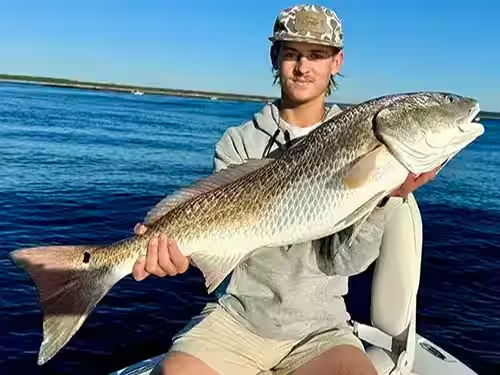
While the study is ongoing, early satellite-tagging results are already reinforcing a consistent pattern: mature bull red drum are primarily offshore-oriented adults. Their appearances in nearshore and inshore waters represent short, transitional phases rather than extended residency.
This distinction matters. Without offshore tracking data, brief seasonal windows near inlets, beaches, and reefs were often interpreted as migrations or spawning events occurring close to shore. The tagging data shows those assumptions were incomplete.
Offshore Residency Is the Norm
Once red drum reach full sexual maturity, they spend the majority of their time beyond the estuaries and sounds where they grew up. Satellite depth and location data indicate long stretches of offshore residency, with movements concentrated along the inner continental shelf rather than inside coastal rivers or marsh systems.
When bull reds do approach the coast, their movements are brief, purposeful, and closely tied to seasonal biological windows — not a return to an inshore lifestyle.
Fall Staging: Why Bull Reds Show Up Near Inlets and Reefs
Why Bull Reds Stage Near Inlets Each Fall (Not Inshore Spawning)
In southeastern North Carolina, true bull reds reliably appear near inlet-adjacent systems from late September through early November. This timing aligns closely with spawning-related movement rather than simple bait availability.
Bull reds do not spawn in rivers or inlets. Instead, they stage near these areas while waiting for offshore spawning conditions to align.
Inlets as Transition Corridors
Inlets provide strong current, stable salinity, and immediate access to offshore waters, making them ideal transition zones for offshore-oriented fish.
In Brunswick County, Shallotte Inlet, Lockwoods Folly Inlet, and Tubbs Inlet all serve as primary staging corridors for fall bull reds, with nearshore structure like Jim Caudle Reef and Jolly Mon Reef acting as holding areas just outside these inlets.
The Role of Nearshore Reefs in the Fall Transition
Satellite tagging data has helped clarify why mature bull red drum consistently appear on nearshore reefs during the fall, even though their long-term residency is offshore. These reefs serve as transitional habitat — not spawning grounds — during the narrow window when fish shift from summer feeding patterns to offshore spawning behavior.
Rather than moving directly from inshore waters to deep offshore spawning areas, bull reds often stage briefly on structured nearshore bottom. This behavior aligns with satellite-tagged depth profiles that show repeated use of mid-depth zones before final offshore movement.
Why Areas Like North Carolina’s Nearshore and Artificial Reefs Hold Bull Reds
Nearshore structure — including North Carolina’s artificial reefs and natural hard bottom located a few miles offshore in roughly 30–50 feet of water — offers a combination of conditions that suit large, mobile adult red drum. These areas provide consistent salinity, moderated temperatures, predictable current flow, and concentrated forage, all of which allow fish to feed efficiently while minimizing energy expenditure.
From a biological standpoint, these reefs function as energy-loading zones. Satellite tagging shows that bull reds do not linger indefinitely, but instead use nearshore structure as a final staging area before moving to deeper offshore spawning habitat. Their presence on reefs reflects preparation, not residency — a short, purposeful phase in a much larger offshore-oriented life cycle.
What Conditions Must Line Up Once Bulls Are Staged
Satellite-tagging data suggests that once mature bull red drum reach nearshore staging areas, their movement is no longer driven by location or feeding opportunity. At that point, fish are effectively positioned and waiting for a narrow set of environmental conditions that signal the start of offshore spawning activity.
This explains why bull reds can remain concentrated for days or weeks and then seemingly disappear overnight. The decision has already been made — the timing simply has not aligned yet.
Multiple environmental cues appear to work together to trigger the offshore movement of staged bull reds. Sustained cooling into the low-to-mid 70s, shortening day length, favorable offshore current patterns, and calm weather windows all play a role in initiating spawning migration.
Satellite-tagged fish show abrupt, directed offshore movement once these conditions align, rather than gradual dispersal. This supports the idea that spawning is not opportunistic or bait-driven, but instead tightly synchronized to environmental windows that maximize reproductive success.
What the Tagging Data Suggests About Nearshore Staging
Satellite-tagging results do not reveal intent, but they do reveal timing, location, and duration. When mature bull red drum are tracked approaching nearshore areas in the fall, their movements consistently show short-term use of inlet-adjacent and nearshore zones rather than extended inshore residency.
When this movement pattern is viewed alongside established red drum spawning biology, it strongly suggests that nearshore appearances represent transitional staging behavior — not a return to estuarine living, and not prolonged coastal migration.
The tagging data itself shows where bull reds go and how long they remain there. The interpretation comes from pairing those observations with decades of fisheries research showing that mature red drum spawn offshore. Taken together, the most reasonable conclusion is that once adult fish move into nearshore staging areas, they are positioned for offshore spawning movement rather than feeding-based or long-term habitat use.
Can Bull Reds Be Caught Inshore in Marshes and Estuaries?
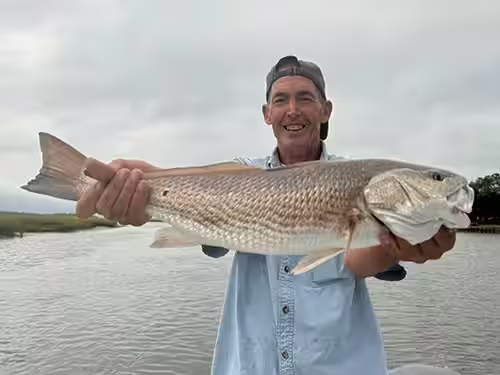
Yes — mature bull red drum can and do enter marshes, rivers, and estuarine systems at times. Anglers occasionally encounter true bulls well inside inshore waters, most often during fall transitional periods or when strong tidal flow, favorable salinity, and concentrated bait briefly draw fish landward.
What the satellite-tagging data clarifies is not that bull reds never enter estuaries, but that they do not reside there. For fully mature fish, estuarine waters function as temporary corridors, feeding opportunities, or short-term staging areas — not primary habitat.
This distinction helps explain why inshore encounters with bull reds are often short-lived and inconsistent. When conditions change or biological priorities shift, tagged fish quickly exit estuarine systems and return offshore.
Captain’s Perspective: What I’ve Seen on the Water
In more than 25 years of guiding in North Carolina waters, my experience has been that bull redfish typically begin showing up around inlets and nearshore structure in late September or early October and can remain present through at least early November. Their overall presence during that window is fairly consistent year to year, but how accessible and concentrated they are can change dramatically.
What anglers often experience as a short, explosive “run” is usually not the entire population arriving or leaving at once, but shifts in staging behavior, feeding intensity, and positioning. Individual waves or the main body of fish may briefly stack up, feed aggressively, and become highly catchable, then spread out, reposition, or slide back offshore when conditions change. Those peaks can be brief, even though bull reds are still in the general area for weeks.
The mistake many anglers make is assuming poor fishing means the fish are gone. In reality, they may still be nearby — just less concentrated or less willing to feed. Understanding that difference is key to interpreting both on-the-water experience and what satellite-tagging data is beginning to reveal.
Why Bull Red Behavior Looks Different Along the NC Coast
Bull red drum do not behave fundamentally differently from one end of North Carolina to the other — but the way their offshore-oriented life intersects with coastal geography can make their movements appear very different to anglers. Shelf distance, inlet layout, and nearshore structure all influence where and when mature fish become visible from shore.
Brunswick County’s Clean Inlet System
In Brunswick County, expansive marsh systems sit directly behind the beach and are separated from the ocean by a small number of clean, well-defined inlets and the Intracoastal Waterway (ICW). As bull reds transition inshore during fall staging, they tend to concentrate tightly near those inlets and adjacent nearshore reefs. When offshore conditions align, their departure can appear abrupt, creating the impression of a short, intense window of opportunity.
The Outer Banks Shelf-Adjacent Coastline
Along the Outer Banks, deep water and offshore-quality habitat lie much closer to shore. Mature bull reds can remain in preferred depth, salinity, and temperature ranges while still appearing in the surf zone. This proximity allows offshore-oriented fish to be encountered more consistently from the beach across longer portions of the year, even though their underlying behavior is similar to fish elsewhere along the coast.
Why Large Schools of Redfish Appear in the Surf in Winter
During winter, anglers often encounter massive schools of red drum just beyond the breakers. These schools frequently include slot-size fish, upper-slot reds, and occasional bulls. While they may resemble fall bull red staging at first glance, they are driven by very different biological and environmental factors.
Winter Surf Schools Are Mixed-Age, Feeding-Driven Aggregations
Winter surf schools are not spawning-related. They are typically dominated by sub-adult and upper-slot red drum that have outgrown shallow marsh systems but have not fully transitioned to an offshore adult life. As water temperatures drop, shallow estuaries become less hospitable, compressing fish into more thermally stable environments.
The surf zone provides consistent temperature, salinity, and oxygen levels due to constant wave mixing. Combined with winter baitfish concentrations — such as menhaden and glass minnows — this creates predictable feeding lanes along sandbars and troughs just off the beach.
How Winter Surf Reds Differ From Fall Bull Red Staging
Fall bull red staging is driven by spawning readiness and involves primarily mature adults holding briefly near inlets and nearshore structure before moving offshore. Winter surf schools, by contrast, are survival- and feeding-driven aggregations made up of mixed age classes that may remain accessible for extended periods depending on conditions.
Fall bull reds are staging to spawn. Winter surf redfish are staging to survive and feed.
Practical Takeaways for Bull Red Fishing in Brunswick County
What This Means for Targeting Bull Reds in Brunswick County
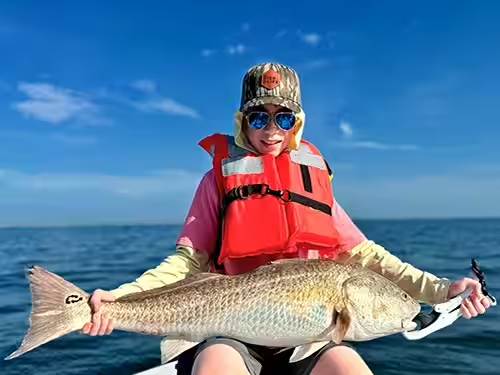
Understanding offshore residency and fall staging behavior fundamentally changes how anglers should approach bull red fishing along the Brunswick County coast. Mature bull reds are not randomly moving through inlets — they are following a biological schedule shaped by life stage, environmental conditions, and spawning readiness.
Timing is everything. Bull reds become accessible only during brief transition periods when offshore-oriented fish move within range of inlets and nearshore structure.
Fish the transition zones. Inlet mouths and nearshore reefs such as Jim Caudle are not just productive locations — they are natural convergence points where offshore fish briefly stage before moving back out.
Weather windows matter more than effort. Bulls do not leave because feeding slows; they leave because offshore spawning conditions align. Miss that window and the fish are simply gone.
Winter surf schools are different fish. Red drum caught along the beach in winter are typically sub-adults and upper-slot fish — not the same mature bulls that staged briefly during the fall.
Seasonal Timing: When Bull Reds Are Most Accessible
September: Early staging begins as water temperatures fall into the mid-70s. Bulls may appear sporadically near inlets and nearshore reefs but are not yet consistently concentrated.
October: Peak staging window. This is the most reliable month to encounter mature bull reds near Tubbs Inlet, Shallotte Inlet, Lockwoods Folly Inlet, and adjacent nearshore structure such as Jim Caudle Reef.
November: Late-season opportunity. Success depends heavily on whether offshore spawning conditions have already triggered departure. Some years offer extended access; others shut down abruptly.
December–August: Mature bull reds are primarily offshore. Red drum encountered inshore during these months are juveniles and sub-adults rather than true bulls.
What the Satellite Data Still Can’t Fully Explain (Yet)
Satellite tagging has dramatically improved our understanding of adult red drum movement at the population level, but it does not eliminate individual variability. Even within the same season and region, mature bull reds do not behave as a single synchronized group. Some fish stage longer, some depart early, and others briefly push farther inshore before returning offshore.
Part of this variability is likely tied to individual condition and biological readiness. Spawning does not occur on a single calendar date, and not all mature fish are physiologically prepared at the same time. As a result, fall runs can stretch over weeks in some years or compress into a much shorter window in others, even when environmental conditions appear similar.
There is also growing speculation — though not yet definitive proof — that sex-based differences may influence staging behavior. Male and female bull reds may use nearshore and inlet-adjacent areas differently, or remain offshore for different durations, but larger sample sizes and longer tag deployments are needed to confirm this.
Local geography further complicates the picture. Strong tidal flow, stable salinity, inlet shape, and bait compression can pull some fish farther inland than others. This helps explain why certain estuaries occasionally hold true bull reds well inside the marsh while neighboring systems do not.
Finally, learned behavior cannot be ruled out. Large, old red drum are survivors. After decades of pressure, some individuals may avoid predictable patterns or heavily fished areas, creating additional variability that satellite data alone cannot yet separate from environmental drivers.
Offshore Spawning and the Next Generation of Redfish
Once offshore spawning conditions align, mature bull red drum move into deeper water where pelagic eggs can remain suspended in the water column and disperse effectively. After hatching, larvae are transported landward by prevailing currents, eventually settling into estuaries, rivers, and marsh systems that serve as nursery habitat for the next generation of red drum.
This offshore-to-inshore connection highlights why adult movement, spawning success, and estuarine health are inseparable. What happens far offshore ultimately determines the strength and stability of inshore redfish populations years down the road.
For ongoing updates, maps, and summaries from actively tagged fish, visit the NCMEF Red Drum Tracking Project .
FAQ: Bull Red Drum Satellite Tagging in North Carolina
Who is conducting the redfish satellite tagging study in North Carolina?
The satellite tagging effort is led by the North Carolina Marine and Estuary Foundation (NCMEF) in collaboration with marine scientists, fisheries researchers, and regional partners. The goal of the program is to better understand red drum movement, habitat use, and offshore residency using modern satellite technology.
How many red drum have been satellite-tagged so far?
10 mature red drum were fitted with satellite tags in 2024 and 32 more in 2025. While the total number continues to grow as new fish are tagged, even a relatively small sample size has already produced valuable insight into large-scale movement patterns that were previously impossible to observe.
What type of tags are used on the redfish?
The study uses pop-up satellite archival tags (PSATs). These tags record depth, temperature, and location data while attached to the fish, then release and transmit that information via satellite after a programmed period of time.
Can anglers see the satellite tracking data?
Yes. NCMEF makes summarized tracking results and maps publicly available, allowing anglers and the public to see general movement trends without revealing sensitive or exploitable real-time locations.
Where can I view updates from the redfish satellite tagging study?
Updates, background information, and published tracking results can be found directly on the NCMEF Red Drum Tracking Project page. This is the best source for following new tag deployments and emerging findings from the study.
Why is satellite tagging important for understanding bull red drum?
Traditional sampling methods are limited to where fish are caught. Satellite tagging allows researchers to follow mature red drum beyond the reach of anglers, revealing offshore movements, seasonal patterns, and habitat use that cannot be observed from inshore data alone.
Related Reading and Planning Your Trip
If you want to go deeper into seasonal patterns and fishing conditions along the Brunswick County coast, these resources may help:
- A Day on the Water Chasing Bull Redfish in OIB
- North Carolina's World-Record Redfish
- Understanding NC Redfish Size and Bag Limits
- Fall Bull Drum Fishing in OIB
- How to Tie a Livebait Rig for Redfish
- How to Catch Winter Redfish in North Carolina
- How to Catch Redfish in NC
Want to experience the fall bull red staging window firsthand? Trips during this period focus on timing, tides, and near-inlet structure when mature fish are briefly accessible. Choose from my Bull Redfish Charters or my Inshore Fishing Charters.
Final Takeaway: What the Study Confirms — and Why It Matters
When viewed through life history, geography, and real-world experience, the satellite-tagging study confirms that bull reds are offshore adults whose brief fall appearance near inlets and reefs represents a narrow transitional phase. The fish haven’t changed. Our ability to understand them has.

Tight Lines,
Captain Harvey Wall
Salty Dawg Fishing Charters
Updated: December 17, 2025

How to Book Your Fishing Charter
Booking your Redfish Fishing Charter with Salty Dawg Fishing Charters is easy! Here’s how:
- Option 1:
BOOK MY TRIP - Option 2: (If you have questions or don't want to book online)
Call / text Captain Harvey directly at (910) 250-8459
Have questions? Feel free to Contact Captain Harvey or call anytime. He is happy to help you plan the perfect fishing trip for you!