
Winter is one of the most overlooked times to target black sea bass off Ocean Isle Beach. While a lot of folks are putting their boats away, I’m gearing up for some of the easiest nearshore bottom fishing of the year.
Here’s what most people don’t realize: when the water temps drop below 60°F along the Carolina coast, black sea bass move closer to shore. Instead of running 20+ miles offshore, we’re often catching limits just 3-5 miles out from Ocean Isle Beach, Holden Beach, and Sunset Beach.
I’ve been fishing for sea bass in the winter out of Ocean Isle Beach for years, and these fish stack up on nearshore structure — reefs, wrecks, and ledges in 30+ feet of water. Once you find them, you can stay on them, catch them steadily, and usually run into bigger fish mixed in. Many days, we’re back at the dock by lunch with enough fresh fish for several family dinners.
Always confirm current size limits, bag limits, and open seasons before fishing. For the most up-to-date information, see the NC Division of Marine Fisheries size and bag limits page. You can also review my breakdown of how NC black sea bass size and bag limits may change for 2026–2027.
This guide reflects how I’m targeting black sea bass off Ocean Isle Beach during the winter 2026 season.
Where to Find Sea Bass Near Ocean Isle Beach This Winter
When targeting Black Sea Bass near Ocean Isle Beach in the Winter, location is everything. These fish won't be roaming in open water, they stay tight to structure where they can find food and safety. If you're launching from Shallotte Inlet, Lockwood Folly Inlet, or Little River Inlet, you're already in range of some of the best Sea Bass reefs along the Brunswick County coast.
Best Nearshore Reefs and Wrecks for Winter Sea Bass

- AR-460 "Jolly Mon Reef" or "Fisherman's Reef": Just offshore from Ocean Isle Beach, this artificial reef holds plenty of Winter Sea Bass. The reef's concrete pipes and rubble provide excellent habitat in 35-40 feet of water.
- AR-455: A productive reef near Sunset Beach and Shallotte Inlet, great for bottom fishing. The mix of concrete structures and steel creates diverse habitat zones that attract different sizes of fish. 40-45 feet depth.
- AR-465: A very productive reef that has over 2 million pounds of concrete rubble, a 180 foot sunken vessel, and 200 reef balls. Average depth is over 80 feet. This one is over 30 miles off the coast, so make sure to plan accordingly for safety.
- Little River Offshore Reef: A reliable spot for Black Sea Bass accessible from Little River Inlet. The reef's varied structure provides excellent fishing opportunities in 30-35 feet of water.
- Natural ledges and hard-bottom areas: These unmarked spots in 30-100 feet of water can be even better than reefs when you find the right structure. Look for areas with 3-5 feet of relief and scattered rock outcroppings.
GPS Coordinates for Artificial Reefs in NC
Using Technology to Find Fish
If you have a good fish finder setup, look for ledges, sunken debris, and rocky outcroppings. Side-scan, when set to the maximum distance to each side, can help a lot in locating new spots. Pay attention to things like sudden depth changes of a few feet with hard returns indicating a rocky bottom, bait balls near structure, and suspended fish marks near bottom structure
Some of the best fishing comes from less-pressured spots that aren't on every chart. Mark waypoints on your chart plotter and keep note of productive areas and the conditions when you found fish there.
Best Bait and Tackle for Black Sea Bass
One reason Black Sea Bass fishing is so popular is that you don't need complicated gear. A simple bottom rig with natural bait is usually enough to get steady bites. However, having the right setup can significantly improve your success rate.
Rod and Reel Setup

- Recommended Rod / Reel: PENN Spinfisher VII Spinning Rod / Reel Combo - 4500
- Recommended Line: I like to use braided line for sensitivity and durability in deep water. The exact brand and model I use is Power PRO Super Slick V2 in 30 lb test.
Best Baits for Winter Sea Bass
Note: Always use fresh bait when possible. Frozen bait just doesn't have the same appeal to the fish. However, if you must use frozen due to lack of availability of fresh bait, don't let that stop you from fishing. And I do often use frozen squid, but I insist on other baits being fresh, particularly shrimp.
- Squid strips: The #1 bait choice — easy to use and very effective. Cut into 1-inch strips for best results.
- Cut bait (mullet, menhaden): Works well for targeting larger sea bass.
- Shrimp: A great natural bait option that's super easy to rig and fish with and is available everywhere along the coast year-round.
- Jigs: Effective when worked close to the bottom. Jigs in the 2-3 oz range work well. Here's one of my preferred Sea Bass Jigs.
- Scented Soft Plastics: The Berkley Gulp Minnow, fished on a jig head or on a dropper rig. 3" or 4" sizes on jig heads and 2" sizes on dropper rigs work well. I prefer white or chartreuse colors.
Rigging Tips

I like using double or triple dropper rigs (double rig pictured here) for fishing multiple baits, using just enough weight to get the bait down - usually 1-2 ounces is plenty. You can also use the below materials to make your own rigs, but be sure to minimize terminal tackle to reduce snags, tangles, and cost. You can also customize your rigs by adding beads or small strips of red or orange surgical tubing above the hooks for added attraction. If you'd prefer to buy a good quality pre-made rig then try this Pre-Made Double-Dropper Rig.
- Hooks: Mustad 9174 Live Bait Hooks or Owner 5314 Mutu Light Circle Hook in 1/0 or 2/0 sizes.
- Leader: Seaguar Blue Label Leader in 40 lb test
- Swivels: AFW Ball-Bearing Swivels in in black, 65 lb test
- Sinkers / Weights: 2-4 Oz Bank Sinkers
- Scents: Consider using scent attractants like Pro Cure Scent on your artificial lures
Techniques for Catching More and Bigger Sea Bass

Finding the fish is only half the battle — how you fish matters. Here's how to increase your catch rate:
- Stay on the structure: If you drift off the reef, you'll lose the bite. Use GPS anchoring "spot-lock" if available, anchor up, or manually maintain your position.
- Use a slow jigging motion: Using a slower motion helps to trigger bites from bigger fish. A subtle lift-and-drop typically works better than aggressive jerks.
- Fish at the right depth: If you're getting bites but only catching small fish, find a deeper area nearby. Larger Sea Bass often hold near the bottom of structure.
- Time your trips: Early morning and late afternoon typically produce better results, but check the weather and use that as your primary factor over time of day.
- Watch the tide / currents: Moving water often triggers more aggressive feeding
Cleaning and Storing Your Catch
Proper handling of your fish from the time it is caught up until the time you eat it is important, not just for taste, but also for food safety. Here's what I recommend:

Sea Bass Cleaning Tips
- Scale the fish (optional - skin can be removed)
- Make a cut behind the gills
- Cut along the backbone from head to tail
- Remove the fillet and trim away any red meat
- Remove any remaining bones
- Rinse in cold water
Sea Bass Storage Guidelines
- Keep fish on ice immediately after catching
- Clean the same day the fish was caught
- Store cleaned fillets in cold water in sealed containers
- Use within 2-3 days or freeze
- When freezing, vacuum seal or wrap tightly in plastic wrap and foil
- Frozen fillets last up to 6 months
I also recommend using a super sharp, flexible filet knife like the Bubba 9" Tapered Flex Filet Knife.
Winter Weather Considerations and Safety When Fishing
Winter fishing can be incredibly rewarding, but safety is key. Cold fronts, high winds, and rough seas can turn a good day bad quickly. Consider downloading the "Windy" Mobile App, which is what I use for current and future wind, waves, and sea conditions. NOAA is also a great source for sea conditions.
Ideal Conditions for Winter Sea Bass
- Wind speeds under 12 knots
- Seas 2-3 feet or less
- Wave period of 5+ seconds (shorter periods tend to feel much rougher)
- Stable barometer or slight rising trend
- Water temperatures between 50-60°F. Water temperatures between 50–60°F. As of mid-January 2026, our nearshore water temps are sitting around 55 degrees.
- Clear to slightly stained water - generally not an issue in the Winter when the water is very clear.
Best Local Fishing Resources
NC Fishing License: You'll need a Coastal Recreational Fishing License (CRFL) from the NCDMF (not required on guided fishing charters).
Local Bait and Tackle Shops:
- Ocean Isle Beach: Ocean Isle Fishing Center at 65 Causeway Dr, Ocean Isle Beach, NC 28469
- Sunset Beach: Dave's Outpost at 205 Sunset Blvd N, Sunset Beach, NC 28468
- Holden Beach: Rigged and Ready Fishing Center at 1096-7 Sabbath Home Rd SW, Holden Beach, NC 28462
Local Boat Ramps:
- Ocean Isle Beach Boat Ramp (beside OIFC)
- Brick Landing Boat Ramp at 2000 Bricklanding Rd SW, Shallotte, NC 28470
- Holden Beach Boat Ramp at 0 Jordan Boulevard Holden Beach, NC 28462
- Sunset Beach Boat Ramp at 101 Sunset Blvd N, Sunset Beach, NC 28468
Sea Bass Fishing Charter for Ocean Isle Beach (also Sunset Beach & Holden Beach): Salty Dawg Fishing Charters
Common FAQs for Sea Bass Fishing in Winter
Do I need a fishing license?
Yes, a North Carolina Coastal Recreational Fishing License is required, but your license is included when you fish with Salty Dawg Fishing Charters.
Should I book a charter or take my own boat?
If you’re new to the area or to nearshore fishing, booking a charter is usually the better choice. You’ll learn productive spots, safe routes, and proven techniques. Also keep in mind that navigating our area inlets, especially Shallotte Inlet and Little River Inlet, can be treacherous if you’re not familiar with them.
Can I catch sea bass from the beach or pier in winter?
Not usually. Winter sea bass typically hold on structures 3–10 miles offshore. During winter it is effectively a nearshore fishery here in Brunswick County. Your best bet is booking a nearshore fishing charter or using your own boat that is capable of safely handling winter ocean conditions.
Is winter sea bass fishing good for kids and first-timers?
Absolutely. Winter sea bass fishing is great for families and beginners. The fish are concentrated on specific structures, bite readily, and usually provide steady action. Shorter runs to the fishing grounds—often 3–10 miles—also mean less time traveling and more time with lines in the water.
What’s the difference between summer and winter sea bass fishing?
Winter fishing often provides better opportunities for bigger sea bass. In summer, most keeper-sized fish are typically 20 or more miles offshore in deeper water. During winter, those larger fish move nearshore where they’re more accessible. The trade-off is that winter fishing requires more attention to weather windows and sea conditions.
What’s a realistic expectation for our catch during a winter sea bass trip?
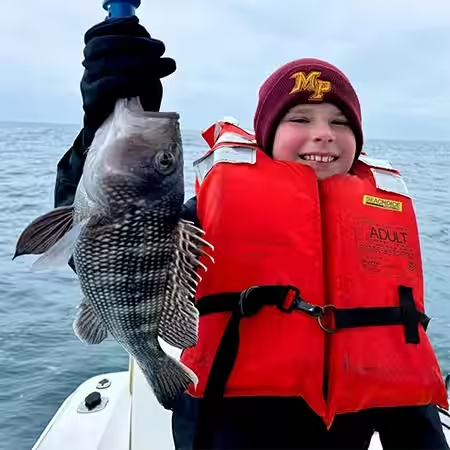
On a decent winter day out of Ocean Isle Beach, an angler can expect to catch several sea bass with a good number of keepers over 13 inches. The bigger fish commonly run 2 or more pounds, and occasionally we see larger ones. Most importantly, when we’re on a good spot you can usually expect steady action. On a recent 4-hour nearshore trip in February 2025, a father and son caught over 150 sea bass. Not every trip is that productive, but when you find them, staying on the spot and fishing it thoroughly can lead to an excellent day. Regulations can change—always confirm current size and bag limits before your trip.
What’s the advantage of artificial reefs versus natural bottom for winter sea bass?
Artificial reefs like Jolly Mon Reef and AR-465 tend to hold more fish consistently, which makes them very reliable for steady action. Natural bottom spots, on the other hand, often produce fewer but larger fish. Artificial reefs offer predictability, while natural bottom usually requires more searching but can reward you with trophy-class sea bass. A common strategy is to start on the artificial reefs to get some fish in the boat, then slide off to nearby natural bottom when conditions allow.
If we catch our limit of sea bass early, what other species might we target in winter?
When clients limit out on sea bass, I often switch gears and target black drum or sheepshead on nearby structures. If the weather and tide allow and you’d like to move inshore, we can also look for redfish or speckled trout. I keep multiple rigs ready so we can adjust quickly to whatever opportunities we find.
Final Thoughts: Why Winter Sea Bass Fishing is Worth It
If you're looking for consistent action, great-tasting fish, and an easy Winter fishing trip, nearshore fishing for Black Sea Bass in North Carolina is hard to beat. With less pressure on the fish, steady bites, and easy access from Ocean Isle Beach, Holden Beach, and Sunset Beach, Winter is the perfect time to hit the water.
Want to experience it for yourself? Give me a call or text at (910) 250-8459 or BOOK MY TRIP ONLINE and let's get after some Black Sea Bass!

Tight Lines,
Captain Harvey Wall
Salty Dawg Fishing Charters
How to Book Your Fishing Charter
Booking your Fishing Charter with Salty Dawg Fishing Charters is easy! Here’s how:
- Option 1:
BOOK MY TRIP - Option 2: (If you have questions or don't want to book online)
Call / text Captain Harvey directly at (910) 250-8459
Have questions? Feel free to Contact Captain Harvey or call anytime. He is happy to help you plan the perfect fishing trip for you!