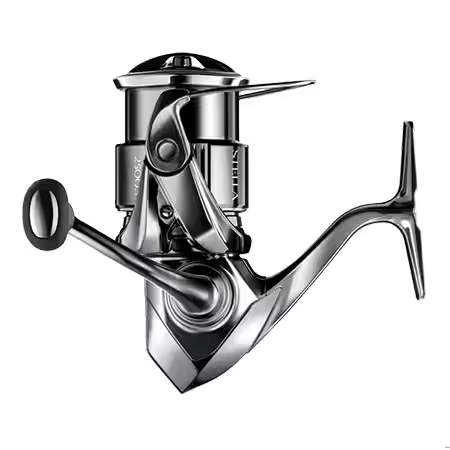
If you're looking for the best inshore spinning reel, you've come to the right place. Instead of giving you a list of 20 different reels and expecting you to figure it out yourself, I've narrowed this guide down to three recommendations: the best overall reel for most inshore anglers, the best reel for saltwater durability, and the premium reel I'd buy if money weren't a factor.
I'm Captain Harvey Wall, a full-time fishing guide and charter captain in Ocean Isle Beach, North Carolina. I spend hundreds of hours each year targeting redfish, speckled trout, flounder, black drum, and other inshore species. These recommendations aren't based on marketing claims or spec sheets—they're based on what I'd confidently recommend to family, friends, and my charter customers.
My goal is simple: help you choose the right reel without overwhelming you with endless options. After my recommendations, I'll explain why I prefer 2500-size reels for most inshore fishing, what Shimano's "HG" and "FK" mean, whether a sealed reel is worth the extra money, and which anglers each reel is best suited for.
My Recommended Inshore Spinning Reels
My inshore charter rods are rigged with Shimano Nasci 2500HG and Penn Spinfisher VII 2500 spinning reels because they've proven themselves day after day with my charter clients. My clients consistently comment on how smooth they cast and how comfortable they feel. I enjoy using both of them too, but my personal spinning rods are rigged with Shimano Stella FK 2500HG reels because life's too short not to enjoy nice fishing equipment. :)
Each of these reels fills a different role. Here's a quick comparison to help you decide which one best fits your style of fishing before we dive into the details for each reel.
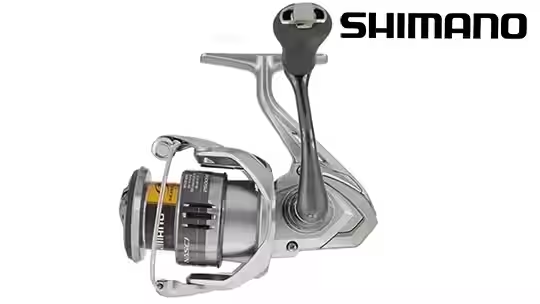
Best Overall
Inshore Spinning Reel
Shimano Nasci 2500HG
- Best For: Redfish • Speckled Trout • Flounder • Black Drum
- Size: 2500
- Gear Ratio: 6.2:1 (HG)
- Max Drag: 20 lb
- Bearings: 5+1
- Weight: 8.3 oz
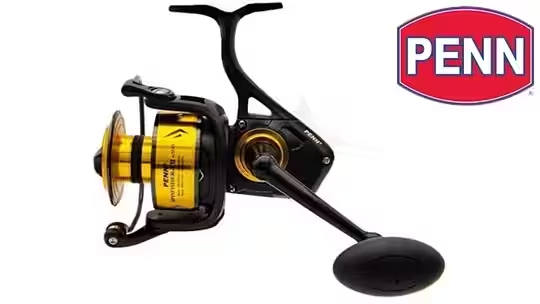
Most Durable
Inshore Spinning Reel
Penn Spinfisher VII 2500
- Best For: Redfish • Speckled Trout • Flounder • Black Drum
- Size: 2500
- Gear Ratio: 6.2:1
- Max Drag: 15 lb
- Bearings: 5+1 Sealed, Stainless Steel
- Weight: 10.9 oz
Captain Harvey’s Premium Recommendation
Shimano Stella 2500HG
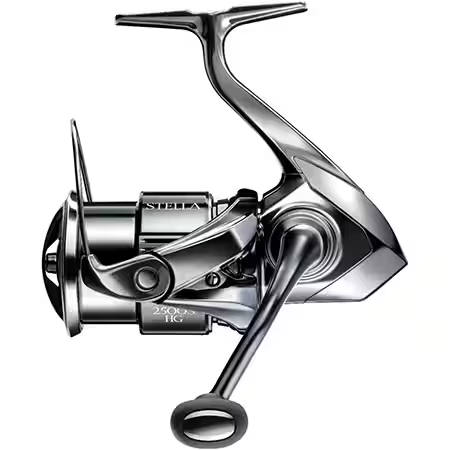
If you regularly target redfish, speckled trout, flounder, snook, and other inshore gamefish, the Shimano Stella FK 2500HG is, in my opinion, one of the finest inshore spinning reels ever built. It won't catch more fish than similar reels, but it feels noticeably lighter, smoother, and more refined than any spinning reel I've ever used.
Buying a Stella makes sense if you appreciate premium fishing equipment, spend a lot of time on the water, and would rather buy one exceptional reel than wonder what you're missing. It's the reel I choose for my own personal spinning rods.
The Shimano Stella FK 2500HG features a 2500-size frame with a 5.8:1 (HG) gear ratio, 20 pounds of maximum drag, 12+1 bearings, and weighs just 7.4 ounces. It's remarkably lightweight for an inshore reel of this caliber, making it a pleasure to fish all day while still offering the strength and refinement Shimano's flagship spinning reel is known for.
Captain's verdict: If budget isn't the deciding factor and you want the finest inshore spinning reel in this guide, this is where I'd spend my money. Life's too short not to enjoy nice fishing equipment.
Here's a quick side-by-side comparison of the key specifications for my three favorite inshore spinning reels.
| REEL MODEL | SIZE | GEAR RATIO | LINE RETRIEVE INCHES / TURN |
MAX DRAG | WEIGHT |
|---|---|---|---|---|---|
| Shimano Nasci | 2500 | 6.2:1 | 36" | 20 lb | 8.3 oz |
| Penn Spinfisher VII | 2500 | 6.2:1 | 36" | 15 lb | 10.7 oz |
| Shimano Stella FK | 2500 | 5.8:1 | 34" | 20 lb | 7.4 oz |
Why I Chose These Inshore Spinning Reels
Shimano Nasci 2500HG: my best overall recommendation
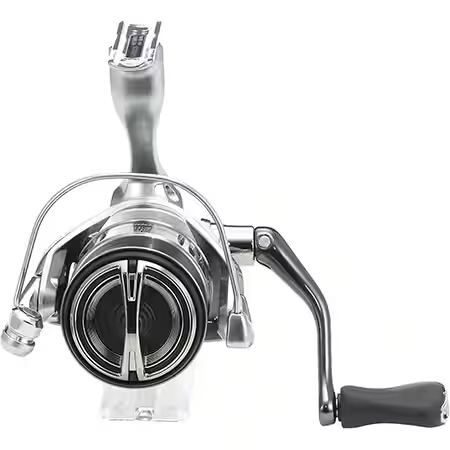
The Shimano Nasci 2500HG earns my best overall recommendation because it strikes the balance I'm looking for in an inshore spinning reel. It's smooth, lightweight, dependable, and priced well below premium reels while delivering the performance most anglers will ever need. In fact, the majority of my inshore charter rods are rigged with Nasci reels because they've proven themselves season after season with my charter clients.
My clients consistently comment on how smooth they cast and retrieve, and I enjoy fishing them just as much. The 2500HG size is light enough to fish comfortably all day, while the high-speed gear ratio quickly picks up slack line when working artificial lures or steering a fish away from docks, oyster beds, or grass edges.
While there are certainly more expensive reels on the market, I've never felt the Nasci gives up much in real-world fishing performance. It simply works, day after day, without making you feel like you should have spent twice as much. For most inshore anglers, I think it's one of the best values in saltwater fishing.
Who should buy it: The angler looking for one versatile inshore spinning reel for redfish, speckled trout, flounder, black drum, and other everyday saltwater fishing without overspending.
Who should skip it: The angler who fishes extremely harsh saltwater conditions every week and wants the added sealing of the Penn Spinfisher VII, or someone who simply wants the refinement and lightweight feel of Shimano's flagship Stella.
Penn Spinfisher VII 2500: built for saltwater
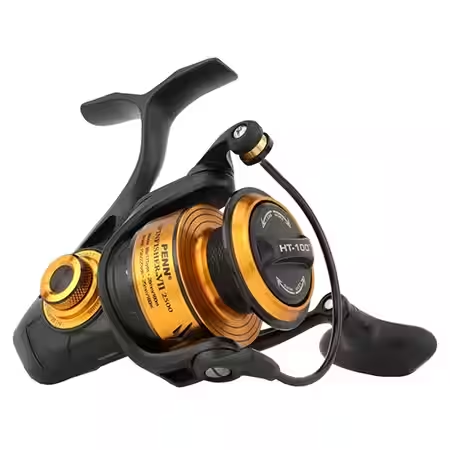
The Penn Spinfisher VII 2500 earns my most durable recommendation because it's built to handle the abuse that saltwater fishing dishes out. While my Shimano Nasci reels make up the majority of my charter rods, I also keep several Spinfishers rigged and ready because I know they'll keep performing in tough saltwater conditions with minimal fuss.
The biggest advantage of the Spinfisher VII is its sealed design. Salt spray, rain, surf, and the occasional dunking are less likely to find their way into the reel than with many traditional spinning reels. It's a little heavier than the Nasci, but that's a tradeoff many anglers are happy to make for the added protection and rugged construction.
Who should buy it: The angler who fishes saltwater often, values durability above all else, and wants a reel built to withstand years of hard use around boats, docks, marshes, beaches, and coastal waters.
Who should skip it: The angler who prioritizes the lightest weight and smoothest feel over maximum sealing, or someone willing to spend considerably more for the refinement of a Shimano Stella.
Shimano Stella FK 2500HG: the premium choice
The Shimano Stella FK 2500HG is my premium recommendation because it's simply the finest inshore spinning reel I've ever owned. It won't catch more fish than my Nasci or Spinfisher reels, but every time you pick it up you immediately notice how incredibly light, smooth, and refined it feels. It's the reel I choose for my own personal inshore spinning rods.
The HG stands for High Gear, giving the 2500HG a fast 5.8:1 retrieve that's ideal for quickly picking up slack line when working artificial lures or steering fish away from docks, oyster beds, and grass edges. The FK identifies Shimano's current Stella generation, featuring numerous refinements over previous models in smoothness, durability, and overall performance.
Who should buy it: The angler who spends a lot of time on the water, appreciates premium fishing equipment, and wants the lightest, smoothest, and most refined inshore spinning reel Shimano builds.
Who should skip it: The angler who is primarily concerned with value or maximum saltwater sealing. The Shimano Nasci and Penn Spinfisher VII will handle the vast majority of inshore fishing for considerably less money.
Captain's recommendation: I spool all three of these reels with braided line. Braid gives me better casting distance, greater sensitivity, and more positive hooksets, especially when fishing artificial lures for redfish, speckled trout, flounder, and black drum. I simply adjust my leader material and strength to match the conditions and target species rather than changing my main line.
What Size Spinning Reel Is Best for Inshore Fishing?
For most inshore saltwater anglers, a 2500-size spinning reel is the best all-around choice. It's light enough to cast comfortably all day, balances well with a 7-foot inshore rod, and has more than enough power for redfish, speckled trout, flounder, black drum, and sheepshead.
When you're shopping for an inshore spinning reel, it's easy to assume bigger is better. In my experience, that's usually not the case. After thousands of hours guiding anglers on the waters around Ocean Isle Beach, I've found that a quality 2500-size reel offers the best balance of weight, casting comfort, line capacity, and fish-fighting power for nearly every situation I encounter.
Because my fishing charter customers spend most of the day casting artificial lures, reel weight matters. A difference of just a few ounces might not seem like much in the store, but after several hundred casts you'll appreciate every ounce you aren't carrying. That's one of the reasons all three reels I recommend in this guide are available in a 2500 size.
When I Step Up to a 4000-Size Spinning Reel
If I feel the need to fish something larger than a 2500, I don't move up to a 3000 or 3500, I go straight to a 4000. In my experience, a 3000 or 3500 simply isn't enough of a step up in line capacity or fish-fighting power to justify the change. A 4000, on the other hand, provides a noticeable increase in both. I'll make that jump when I'm specifically targeting upper-slot redfish, fishing around heavier structure, or expecting to put more pressure on larger fish. Those situations are the exception rather than the rule, which is why I recommend a 2500 as the best all-around inshore spinning reel for most anglers.
Why I Don't Recommend 1000 or 2000-Size Spinning Reels
While 1000 and 2000-size spinning reels work well for freshwater and ultralight fishing, I think they're simply too small for most inshore saltwater fishing. They hold less line, provide less drag, and leave you with less margin for error when a larger fish shows up. If you're buying one spinning reel for redfish, speckled trout, flounder, black drum, and sheepshead, I believe a quality 2500-size reel is the better long-term investment. It's the size I rely on for the vast majority of my inshore fishing, and it's why every reel I recommend in this guide is a 2500-size model.
Why Smooth Drag Matters More Than Maximum Drag
One thing I've noticed in a lot of other inshore spinning reel buyer's guides is that they focus heavily on the specifications. They'll compare maximum drag numbers from one reel to the next, but they rarely explain whether those differences actually matter once you're on the water fighting a fish.
The truth is, I'd much rather fish a reel with a smooth, consistent drag than one that simply advertises a few extra pounds of maximum drag. For the inshore fishing I do in southeastern North Carolina, you're rarely using anything close to a reel's maximum drag anyway. What matters is how smoothly the drag engages and how consistently it performs throughout the fight.
A Smooth Drag Protects Your Entire Setup
When a big redfish makes a sudden run or a speckled trout shakes its head beside the boat, a smooth drag protects everything between you and the fish—your braid, fluorocarbon leader, knots, and hook hold. A drag that sticks before it slips puts a sudden shock on the entire system, increasing the chances of tearing a hook free or breaking your leader. That's one of the biggest reasons I place so much value on a quality drag system.
Don't Get Hung Up on Maximum Drag Numbers
If you're comparing two quality inshore spinning reels, don't make your decision because one claims 20 pounds of drag and another claims 22. Those numbers sound impressive on the box, but they rarely make a meaningful difference on the water. In fact, I've never lost a fish because one reel was rated for two pounds less drag than another. I'd rather own a reel with a drag that's silky smooth from the first run to the last than one that simply advertises a higher maximum number.
How I Actually Set My Drag
I don't set my drag by feel. I use a handheld scale attached to the line at the rod tip and measure the actual amount of drag it takes to pull line from the reel. That gives me a repeatable drag setting every time instead of relying on how tight it feels by hand.
One thing that's often misunderstood is the role drag actually plays. Your drag isn't what sets the hook—it's what manages the fight after the hook is already in the fish. With 20-pound braid and a 20-pound fluorocarbon leader, there's virtually no stretch, so the energy from a firm sweeping hookset transfers directly to the hook long before the drag has a chance to slip. That's why a smooth drag is so much more important than maximum drag.
A common rule of thumb is to begin around one-quarter to one-third of your leader's breaking strength. With the 20-pound fluorocarbon leader I normally fish, that works out to roughly 5 to 7 pounds of drag. It's a solid starting point, but over the years I've found I can land more fish by backing it off a bit.
Most of my charter trips target redfish, speckled trout, and flounder (and occasionally black drum and sheepshead). In that situation, the limiting factor usually isn't my leader, it's protecting a trout's mouth. That's why I typically back my drag down to about 2 to 2.5 pounds and let the rod and reel absorb the fight instead of trying to horse fish to the boat.
If I'm primarily targeting redfish, I'll increase my drag to around 3 to 4 pounds. Even then, I'm still nowhere near the reel's advertised maximum drag. That's why I pay much more attention to how smoothly a drag performs than whether it's rated for 15, 20, or more pounds.
Should You Buy a Sealed Spinning Reel?
One feature you'll see advertised on many saltwater spinning reels is a sealed body or sealed drag system. It's a nice feature to have, but I don't think it's a requirement for most inshore anglers.
My charter reels spend hundreds of days a year on the water, and while they certainly get splashed and rained on, they're not constantly being submerged or blasted by surf. I've had excellent service from both sealed and non-sealed reels because I rinse them after every trip and perform basic maintenance. In my experience, taking care of your reel is more important than whether it's fully sealed.
The Braid I Use on Every Charter Reel
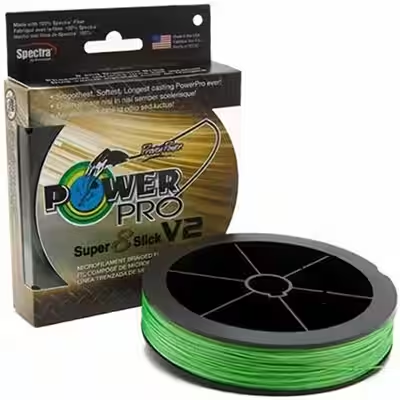
If you step onto my boat, every spinning reel is spooled with 20-pound PowerPro Super Slick V2. I've experimented with different brands and line sizes over the years, but I keep coming back to this braid because it works well for me. It's dependable, casts well, and has held up to thousands of hours of charter fishing.
I know some anglers prefer 10 or 15-pound braid to squeeze out a little more casting distance, while others jump to 30-pound or heavier around thick cover or larger fish. Keep in mind that I'm guiding in the inshore waters of southeastern North Carolina, where I'm primarily targeting redfish, speckled trout, flounder, black drum, and sheepshead -not tarpon or snook.
If I were fishing inshore for tarpon or snook on a regular basis, I'd be stepping up to at least 40-pound braid and a larger reel. For the way I fish, though, I don't see enough advantage to change. Twenty-pound casts well, gives me confidence around oyster rocks and docks, and I've never felt like it cost me fish because it was too heavy.
Even when I step up from a 2500 to a 4000-size reel, I don't change my braid. I still spool it with 20-pound PowerPro Super Slick V2. If I need more abrasion resistance for upper-slot redfish or heavier structure, I'll increase the size of my fluorocarbon leader instead. To me, that's a much better solution than putting heavier braid on the reel.
My Fluorocarbon Leader Setup for Inshore Fishing
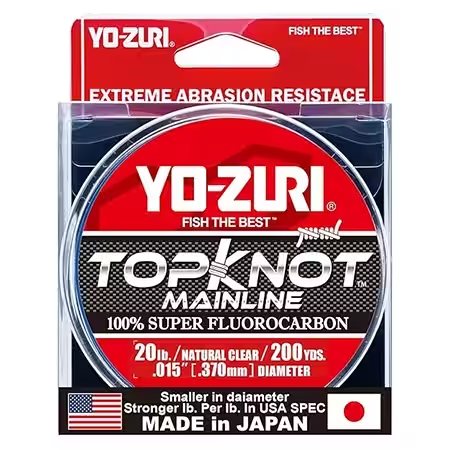
Earlier I mentioned that I don't change my braid when I move from a 2500 to a 4000-size spinning reel. This is where I make the adjustment. Nearly every spinning reel on my boat is finished with a Yo-Zuri Clear 100% Fluorocarbon leader, and 20-pound test is my everyday choice for inshore fishing.
Why I Fish 20-Pound Fluorocarbon
After years of guiding in southeastern North Carolina, I've found that 20-pound fluorocarbon is the best all-around leader for the way I fish. It's heavy enough to stand up to oyster rocks, docks, and other structure, but not so heavy that I worry about getting bites from speckled trout. I can fish redfish, trout, flounder, black drum, and sheepshead with the same leader instead of constantly changing line throughout the day.
I've tried other fluorocarbon over the years, but I keep coming back to Yo-Zuri. It ties dependable knots, holds up well around shell, and has earned my confidence after thousands of hours of charter fishing. When something consistently works, I don't see much reason to change it.
When I'll Use 30 or 40-Pound Fluorocarbon
If I'm specifically targeting upper-slot redfish around heavy oyster beds, docks, bridge pilings, or other rough structure, I'll usually increase my leader to 30 or 40-pound fluorocarbon. Notice that I'm changing the leader—not the braid. I'd much rather add abrasion resistance where it matters most than fill the entire reel with heavier braided line.
How Long Should Your Fluorocarbon Leader Be?
I usually start with a leader that's somewhere around 18 to 24 inches. If the water is exceptionally clear or the fish are acting spooky, I'll go up to around 36 inches. On charter trips, I also like starting with extra leader so I spend less time retying and my charter customers spend more time fishing.
How I Care for My Saltwater Spinning Reels
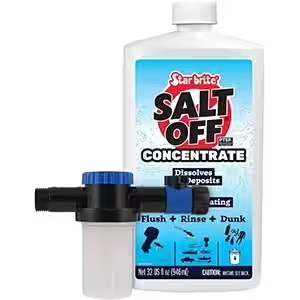
Saltwater is hard on every spinning reel, regardless of price. Whether you're fishing a Shimano Nasci, Penn Spinfisher VII, or Shimano Stella, a few minutes of maintenance after each trip will help keep it performing smoothly for years. My charter rods and reels get rinsed after every trip, and it's one of the simplest ways to protect your investment.
- Lightly rinse the reel with fresh water after every trip.
- Wipe it down and allow it to air dry before storing it.
- Back off the drag before putting the reel away.
- Check for salt buildup, sand, or signs of wear.
- Service the reel periodically following the manufacturer's recommendations.
Captain's Tip: No spinning reel is completely maintenance-free, even sealed models. After rinsing my reels with fresh water, I regularly spray them with Star Brite Salt Off, especially after long stretches of fishing. It's inexpensive, takes less than a minute to use, and has become a regular part of how I care for my own gear.
What Inshore Rod Should You Pair With These Spinning Reels?
Any of these reels will pair nicely with a quality 7-foot medium or medium-light inshore spinning rod, depending on your preferred lures and target species. I fish all three with 7-foot rods, but the best rod for you depends on your budget and how you like to fish. My favorite rod to pair with these reels is the TFO Intracoastal Inshore Series Spinning Rod.
Looking for a inshore fishing rod and reel combo? Check out my guide to the best inshore spinning rod and reel combos, where I recommend my favorite rod and reel combinations for every budget.
You can also see all of my captain-tested rods, reels, tackle, and other fishing equipment on my fishing gear recommendations page.
FAQ — Buying the Best Inshore Spinning Reel
What is the best inshore spinning reel?
For most anglers, my best-overall choice is the Shimano Nasci 2500HG. It is smooth, comfortable to fish with, dependable, and offers nearly everything most inshore anglers need without moving into premium-reel pricing.
What is the most durable inshore spinning reel?
My durability pick is the Penn Spinfisher VII 2500. Its sealed design and rugged construction make it especially well suited for anglers who regularly fish around salt spray, rain, sand, docks, beaches, kayaks, and other demanding coastal conditions.
What is the best premium inshore spinning reel?
My premium choice is the Shimano Stella FK 2500HG. It will not catch more fish than a Nasci or Spinfisher VII, but it is lighter, smoother, and more refined than any other spinning reel I have used. It is also the reel I choose for my personal spinning rods.
Is a 2500-size reel big enough for inshore fishing?
Yes. A quality 2500-size spinning reel has plenty of line capacity and drag for redfish, speckled trout, flounder, black drum, snook, and most other inshore gamefish. It is also light enough to cast artificial lures comfortably throughout the day.
Should I buy a 2500 or 3000 spinning reel?
I prefer a 2500 for most inshore fishing because it keeps the outfit light and balanced while still providing plenty of drag and line capacity. A 3000 may make more sense if you regularly target larger fish, want additional line capacity, or prefer a slightly larger reel.
What does HG mean on a Shimano spinning reel?
HG stands for High Gear. An HG reel retrieves line faster than the standard-geared version, which helps when picking up slack after working an artificial lure, making another cast, or staying connected to a fish swimming toward the boat.
What does FK mean on the Shimano Stella?
FK is Shimano's model-generation designation for this version of the Stella. Unlike HG, Shimano does not use FK to describe a particular gear ratio or fishing feature.
Is the Penn Spinfisher VII better than the Shimano Nasci?
Neither reel is better for every angler. The Shimano Nasci is lighter and gets my best-overall recommendation, while the Penn Spinfisher VII offers greater protection from harsh saltwater conditions. Choose the Nasci for everyday inshore fishing or the Spinfisher VII when durability and sealing matter most.
Is the Shimano Stella worth the money?
The Stella is worth considering if you spend a lot of time on the water, appreciate premium fishing equipment, and want an exceptionally light, smooth, and refined reel. Most anglers do not need one, but anglers who enjoy using the best equipment may find it worth the investment.
Should I use braided line on an inshore spinning reel?
Yes. I use braided main line on my inshore spinning reels because it casts well, offers excellent sensitivity, and has very little stretch. I then add a monofilament or fluorocarbon leader selected for the water clarity, structure, lure, and target species.
How much drag do I need for inshore fishing?
You do not need to fish anywhere near a reel's maximum drag rating for most inshore species. A smooth, properly adjusted drag is more important than the largest number printed on the box. Set it to match your line, leader, rod, hook, and fishing conditions.
Do sealed spinning reels still need maintenance?
Yes. Sealing provides added protection, but no saltwater spinning reel is maintenance-free. Lightly rinse it with fresh water after fishing, allow it to dry, inspect it for salt or sand, and service it according to the manufacturer's recommendations.
Final Thoughts
You don't need twenty spinning reels to choose from—you just need the one that's right for the way you fish. That's why I narrowed this guide to the three reels I actually own, use, and confidently recommend.
If you're looking for the best all-around value, buy the Shimano Nasci 2500HG. If maximum saltwater durability is your priority, choose the Penn Spinfisher VII 2500. And if you simply want one of the finest inshore spinning reels money can buy, treat yourself to the Shimano Stella FK 2500HG.
No matter which reel you choose, pair it with a quality rod, spool it with the right line, and take care of it after every trip. Do that, and any of these reels will provide years of dependable service.
Want to see this gear in action? Book an Ocean Isle Beach fishing charter, and you'll fish with the same equipment I trust on the water every day.

Tight Lines,
Captain Harvey Wall
Salty Dawg Fishing Charters
Updated: August 9, 2026
How to Book Your Fishing Charter
Booking your Fishing Charter is easy! Here’s how:
- Option 1: Book Online
BOOK MY TRIP - Option 2: Have questions or prefer not to book online?
Feel free to E-Mail Captain Harvey or call (910) 250-8459 if you have any questions. He's happy to help you plan the perfect fishing trip.