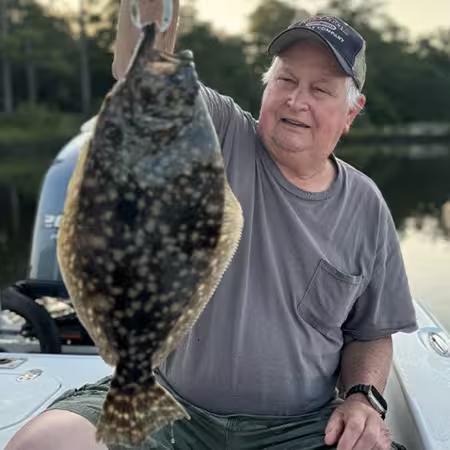
Flounder are ambush predators that are true masters of camouflage, they hug the bottom, and most of their bites are subtle — which is why a lot of anglers fish right over them without ever knowing it. If you fish too fast or lose contact with the bottom, you can easily miss more flounder than you hook.
From the Outer Banks down to the South Carolina line — including the creeks, rivers, and inlets where I live here in Ocean Isle Beach — flounder follow the same basic patterns. They position where current meets structure, they key on depth changes, and they ambush bait along edges. If you can learn to read those patterns, you can catch flounder anywhere in NC (or anywhere else, for that matter).
I guide people for inshore and nearshore fish year-round, but one of the staples of my charter business is putting clients on big flounder. We catch big flounder in North Carolina and lots of them. This guide is built from real time on the water, not theory. I’ll walk you through how to identify flounder, when they move, where they live, and — most importantly — how to catch them with both lures and bait.

Fish With the Captain Who Wrote This Guide
I’m Captain Harvey Wall, the author of this guide and the owner/operator of Salty Dawg Fishing Charters in Ocean Isle Beach, NC. If you’d rather skip the blog and come learn to fish for NC Flounder, join me on the water.
Inshore Charter Info BOOK MY TRIPFlounder Identification (Southern, Summer, and Gulf)
Flounder are the most recognizable fish in our inshore waters, but the goal here is simple: identify a flounder quickly at the boat so you know what you’re holding and can follow NC regulations with confidence.

Flounder Identification
- Both eyes are on the same side of the head (fun fact: juveniles have eyes on both sides).
- Body is flat and oval with a broad head and a big, toothy mouth.
- Color-camouflage on the top side (brown/olive/gray) and a pale/white bottom side.
- Fins run long along the edges (dorsal and anal fins extend down most of the body).
There are 3 species of flounder normally found in North Carolina: Southern, Summer, and Gulf. While North Carolina manages all 3 species collectively — with the same regulations and bag limits applying to all of them — it’s still useful (and honestly pretty interesting) to know which species you caught. Below is a practical way to tell them apart in NC waters.
Southern Flounder Identification
- Primary giveaway: Usually no bold “eye spots” (ocelli) like summer flounder often show.
- Color pattern: Often a more uniform mottled brown/olive look that blends into mud, sand, and shell.
- Body shape: Typically thicker and more “football-shaped,” built for short ambush bursts.
Southern flounder are the most common inshore flounder in NC and are found in creeks, rivers, sounds, marsh edges, ICW drop-offs, dock edges, oyster transitions, and inlet-adjacent channels.
Summer Flounder Identification
- Primary giveaway: Often shows distinct eye-like spots (ocelli) on the body (not always perfect, but common).
- Color pattern: Can show more defined contrast or “freckling” depending on bottom type and water clarity.
- Body shape: Often a bit more elongated and streamlined than a typical inshore southern flounder.
Summer Flounder are most commonly found over nearshore hard bottom, reefs, deeper channels, and offshore structure rather than in backwater creeks. That said, Summer Flounder are found inshore in North Carolina — they’re just far less common inshore than Southern Flounder.
Gulf Flounder Identification
- Primary giveaway: Often shows distinct eye-like spots (ocelli) on the body.
- Color pattern: Typically has a higher-contrast, more “decorated” look than many southern flounder, with stronger mottling and clearer pattern definition over sand, shell, or mixed bottom.
- Body shape: Generally similar to southern flounder but can appear slightly taller and rounder through the mid-body rather than stretched out lengthwise.
Gulf flounder are found inshore and in inlet-adjacent areas, but they are the least common flounder species in North Carolina.
Flounder Records
- NC State Record Flounder: 20 lb 8 oz Southern Flounder caught in 1980.
- IGFA World Record Flounder:20 lb 9 oz Southern Flounder caught in 1983.
Seasonal Patterns of North Carolina Flounder
Flounder movements in North Carolina are driven mainly by water temperature and their spawning cycle. Warming water in spring pulls fish inshore, while cooling water and offshore spawning needs push them back toward deeper structure in fall and winter.
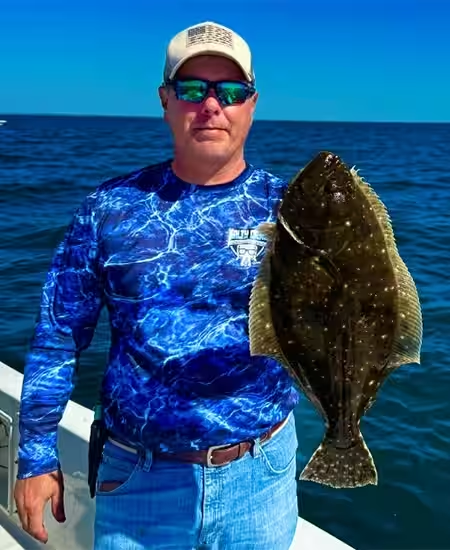
Spring (late March–April)
As water temperatures climb into the mid-60s, flounder begin moving in from offshore reefs and redistribute through creeks, rivers, and the ICW. Early spring fish are often scattered, but they quickly set up along channel edges, creek mouths, and drains where warming water meets moving current. This is when shallow-water flounder fishing starts to turn on — not because fish are everywhere, but because they’re relocating into accessible inshore spots.
Summer
In summer, flounder become more predictable. Heat pushes bait into deeper channels, shaded banks, and current seams, and flounder position accordingly along drop-offs, ledges, and hard edges. They feed heavily on shrimp, finger mullet, and menhaden that ride the tide past ambush points. The best bites often occur when moving water is paired with shade, structure, or oxygenated flow.
Fall
Fall is the peak window for inshore flounder in North Carolina. Cooling water triggers a migration toward inlets and deeper ICW bends as fish stage for their offshore spawning run. Bait is concentrated, flounder are aggressive, and current lines become prime feeding lanes. This is when quality fish are most consistent and tide timing matters the most.
Winter
In winter, most flounder abandon shallow water and hold on offshore reefs, wrecks, and deeper hard bottom. They are still catchable — often in very good numbers for those who can reach them — but they are largely inaccessible to small inshore boats. The few flounder that remain inside are usually deep, slow, and tied to the warmest holes in creeks and channels.
Flounder Season in North Carolina
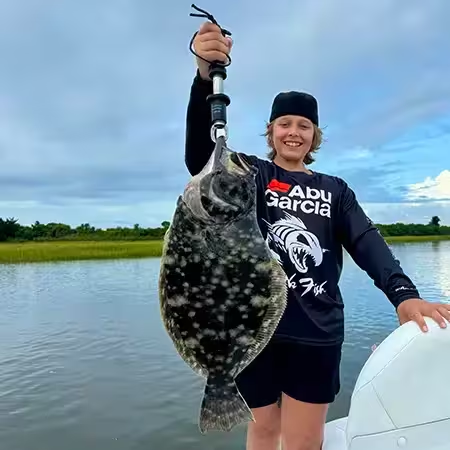
Harvest seasons change from year to year based on state management decisions, so always confirm current dates with NCDMF before keeping fish.
In 2025, the North Carolina recreational flounder season ran from September 1–15 with a 15-inch minimum size limit and a 1-fish per person, per day bag limit. The 2026 flounder season for North Carolina has not yet been announced. Recreational anglers will receive a larger harvest allocation in 2026, which could result in a longer season, a higher bag limit, or both — but the full details have yet to be announced by the NCDMF.
North Carolina's Mandatory Harvest Reporting Law went into effect on December 1, 2025. All flounder harvested must now be reported to the NCDMF.
For deeper context on how North Carolina manages flounder, why seasons are so short, and where the fishery is headed, I cover it in detail here: The Future of Flounder Fishing in NC. My thoughts from that article were also featured in this Carolina Sportsman Magazine article.
Where to Find Flounder in North Carolina
If you want to catch flounder in North Carolina, focus on places where current, depth change, and an edge come together. Flounder don’t roam — they set up in ambush spots along these transitions.
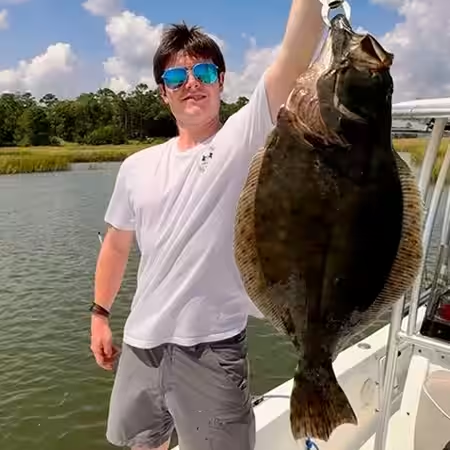
Channel edges & drop-offs
Flounder often sit on the deeper side of a drop-off facing into the current, waiting for bait to wash past. The break concentrates forage and gives flounder a clear ambush lane while keeping them just out of sight. On moving water, cast slightly up-current and crawl your lure or bait down the edge so it naturally tracks the contour rather than drifting randomly across flat bottom.
Creek mouths and drains
Creek mouths and small drains act like natural bait highways, especially on a falling or early rising tide. Shrimp, minnows, and small mullet funnel out of shallow water through these pinch points, and flounder set up where the current accelerates. Focus your casts along the edges of the flow rather than the middle, and slow your retrieve so your bait stays in the strike zone longer.
Inlets & inlet-adjacent channels
In fall, flounder stage near inlets as they prepare to move offshore to spawn. They use current breaks, sandbars, and deeper channel bends as feeding lanes where bait is constantly moving. Position your boat so you can fish both sides of the break, and pay close attention to where the current changes speed — that seam is often where the bites happen.
ICW edges and dredged bends
Steep banks, riprap, and dredged bends along the ICW create consistent depth changes that flounder love. Spots where small creeks dump into the ICW are especially productive because they bring bait and fresh flow into deeper water. Work these areas methodically, keeping bottom contact and adjusting jig weight so your bait tracks the slope instead of drifting too fast.
Docks, pilings, and bridges
Shade plus current seams around docks, pilings, and bridges create perfect ambush zones for flounder. Fish often sit just off the structure rather than pressed tight to it, waiting for bait to pass through the shadow line. Cast parallel to the structure and retrieve slowly along the edge of the shade where current meets still water.
Oyster bars & shell edges
Flounder usually position along the edge of an oyster bar or shell ridge rather than on top of it, where footing is uneven and bait movement is inconsistent. These edges offer both cover and a clean feeding lane. Drag your lure or bait slowly along the transition from hard bottom to softer mud or sand, feeling for that change with every cast.
Sand-to-mud transitions
Sand-to-mud transitions can be subtle, but they are real flounder magnets because they concentrate forage and create a predictable edge. You may not see the change from the surface, but you can feel it through your rod tip. Make longer drifts across these zones and slow down your retrieve whenever you detect the bottom shift — that’s often where the bite comes.
Around Brunswick County and Ocean Isle Beach (where I guide for flounder), these patterns play out in places like the Shallotte River, Calabash River, ICW bends near Sunset and Holden Beach, and channel edges near Shallote Inlet and Little River Inlet — all classic combinations of current, depth change, and bottom transitions.
When to Catch Flounder in North Carolina (Tides & Timing)
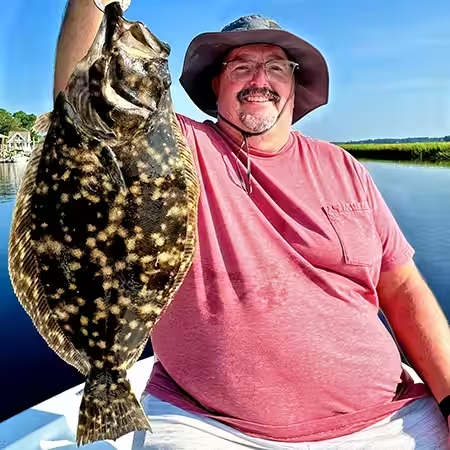
Tides matter more than the clock for flounder. In most North Carolina inshore waters, the best flounder fishing happens on moving water — especially a falling tide and the first half of the rising tide. As water drains off shallow flats and marsh, bait is forced through creeks, drains, and channel edges, which puts flounder in perfect ambush position. Slack tide can still produce fish, but action is usually slower because bait movement stalls.
The falling tide is often the most reliable window. Flounder commonly set up along creek mouths, oyster edges, ICW drop-offs, and channels where moving water naturally funnels bait. In these spots, flounder can hold in one high-percentage position and let food come to them. If you only had one tide to fish for flounder in North Carolina, most experienced anglers would choose the falling tide — and it’s usually easier to present a lure naturally on a falling tide, especially at a narrow creek mouth or channel, because the current brings your bait right back to you.
Time of day still plays a role, but it depends on conditions. On bright, high-sun days, flounder often bite better from late morning through mid-afternoon when they’re actively hunting along deeper edges, shaded structure, and current seams. On cloudy, overcast, or rainy days, the best windows tend to be dawn and dusk, when flounder feel more comfortable sliding shallower and feeding longer.
Feeding will also slow down in the afternoons during the dog days of summer when the water gets too hot for their comfort. Last summer (2025), inshore water temperatures here in Ocean Isle Beach, NC climbed as high as 93°F in the late afternoon — only about 10 degrees cooler than hot tub water — which will noticeably reduce bites in shallow creeks and flats.
Solunar tables can help, but they’re not magic. Major and minor feeding periods can line up with strong flounder bites — especially when they overlap with moving water. That said, tide and current still matter more than solunar predictions. The best scenario is simple: fish a falling tide that overlaps a major or minor solunar window, and be set up on prime structure before that window starts.
How to Catch Flounder in NC (Tactics)
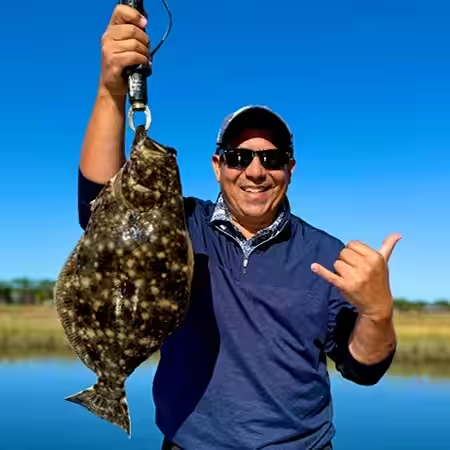
Most flounder anglers in North Carolina fall into one of two camps: bait fishermen or lure fishermen. Both methods absolutely catch fish, and success usually comes down to confidence, experience, and conditions more than anything else. That said, a skilled lure angler often has an advantage because they can cover water faster, locate active fish, and adjust presentations on the fly instead of waiting for bites to happen.
Bait Fishing for Flounder in NC
If you prefer bait, simple is better. Flounder are bottom-oriented ambush feeders, so the best baits are those that stay low, move naturally in current, and give off scent they can track. Some of the best baits for flounder in NC are:
- Live mullet minnows
- Live mud minnows
- Live shrimp
- Cut mullet (use when live bait isn't available)
These baits work because they ride close to the bottom, move naturally, and bait like cut mullet puts out scent that helps flounder find it — even in stained water.
The most common and effective way to present live bait is on a simple Carolina rig: an egg sinker on the main line, a swivel, about 12 inches of fluorocarbon leader, and either a live-bait J-hook or a circle hook. This setup keeps your bait looking natural on the bottom while protecting your main line from shell and structure. Let the rig drift or creep with the current, pausing occasionally so the bait can swim freely. Keeping your leader no longer than 16 inches between the swivel and hook helps keep your bait tight to the bottom — right where flounder live.
Hybrid method: jighead + live bait
A jighead tipped with a live minnow or shrimp is one of my favorite “best of both worlds” approaches. You get the control of a lure with the scent and movement of real bait — which is especially powerful in moving water at creek mouths, channel edges, and inlet-adjacent bends. And don't be surprised when you're reeling in Speckled Trout and Redfish along with your Flounder.
Lure Fishing for Flounder in NC (My Primary Method)
Fishing with soft plastic lures on lightweight jigheads is my go-to for flounder fishing. Your goal is steady bottom contact and a slow, controlled retrieve — letting the current and the natural action of the lure do much of the work. Most bites don’t feel like a “hit.” Instead, you’ll feel added weight, a soft drag, or your lure suddenly getting heavy. On bigger flounder you will typically feel a "thump" and then weight, which will often make you feel like you're hung up. Go ahead and set the hook the second you feel this and be prepared to take on a decent sized flounder.
Natural colors usually outproduce bright colors in our coastal waters. These lures really shine along channel edges, creek mouths, ICW drop-offs, docks, bridges, and oyster transitions — basically anywhere current is funneling bait. Most flounder anglers gravitate toward white, and I’m no different; white is one of my go-to colors. I also regularly fish rootbeer, watermelon, green pumpkin, new penny, and other natural colors. When choosing soft plastics, I like baits with a lot of tail action, and I often prefer a contrasting tail color — especially chartreuse — to add a little flash and visibility in stained water (our water is almost always stained here in Brunswick County NC).
Best of both worlds: scented soft plastics
A great crossover option is scented soft plastics like Berkley Gulp Swimming Mullet or Berkley Gulp Shrimp. You still fish like a lure angler, but you get the added attraction of scent like live bait. You'll also catch Redfish, and sometimes even Black Drum, on these types of lures.
You can also add your own scent to any lure. Products like Procure Scent work very well for flounder and often turn hesitant fish into biters, especially in stained water or on slow days. I don't always use Procure, but when the bite slows down, it quickly becomes my go-to in order to get a few extra bites.
How to recognize a flounder bite (lures vs bait)
On lures, common signs include: a sudden increase in weight, a “dragging grass” feeling, or your line going slack for no obvious reason. Most flounder bites do not feel like a sharp tap — they usually feel like something simply stopped your lure.
When you’re fishing a lure and aren’t sure whether you just had a bite, go ahead and check it with a gentle hookset. You don’t need a big bass-style snap — just lift the rod smoothly and start reeling.
With live bait, bites are usually subtler. Instead of a tap, you’ll feel steady tension as the flounder mouths the bait. Give the fish a moment to turn before applying pressure, and think of the hookset as a slow, steady lift — not a jerk — especially if you’re using a circle hook.
Best Fishing Gear for Flounder in NC
Flounder fishing in North Carolina is built around feel, patience, and staying connected to the bottom. You’re not reacting to sharp strikes — you’re reading subtle changes in weight, current, and bottom texture as your bait moves. A properly balanced inshore spinning setup (2500 to 4500 sizes) gives you the sensitivity to detect those light bites while still providing enough strength to pull fish out of shell, grass, and structure. The gear below reflects what I actually use on my inshore charters and what consistently puts flounder in the boat across creeks, rivers, and the ICW.
Flounder Rod / Reel
- Budget Combo: Penn Battle IV Rod & Reel Combo (4000 size)
- Recommended Rod: TFO Intracoastal Inshore Rod 7'0
- Recommended Reel: Shimano 21 Nasci 4000 Reel
- Premium Reel: Penn Slammer IV 4500 Reel
Line & Leader Setup
- Main Line: PowerPro Super Slick V2 Braided Fishing Line (15-20 lb test)
- Fluorocarbon Leader: Yo-Zuri Clear 100% Fluorocarbon Leader (10-20 lb test)
Flounder Lures
- Jighead: 1/4 oz Redfish Eye Jighead
- Soft Plastics:
• Z-Man Swimming Trout Trick
• Z-Man Goat
• Z-Man EZ Shrimpz
Carolina Rig
- Egg Sinker: 3/8 oz Egg Sinker
- Hook: Livebait Hook 2/0, Owner 5363 Circle Hook 2/0
- Bobber Stop: (optional) Rubber Bobber Stops
- Bead: (optional) 6 MM Beads (protects knots)
Handling & Releasing Flounder
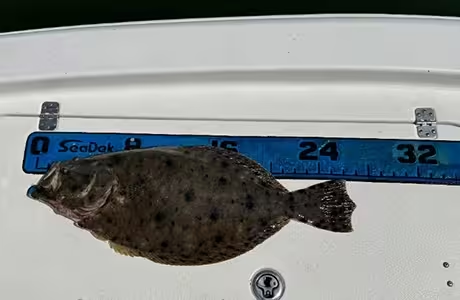
For most of the year in North Carolina, flounder fishing is effectively catch-and-release. With very short harvest seasons and strict limits, the vast majority of flounder you encounter will be released. Because of that, careful handling is not just “nice to do” — it is essential if we want released fish to survive and support future seasons.
Always wet your hands before touching a flounder. Like most saltwater fish, flounder have a protective slime layer that helps prevent infection. Dry hands strip that layer away and increase stress and post-release mortality.
Support the body flat when lifting a flounder. Never hold a large flounder only by the jaw or gill plate — their internal organs can be damaged. If you take a quick photo, cradle the fish horizontally and keep it close to the water.
Avoid touching or squeezing the gills. Even brief contact can cause bleeding or injury that reduces survival, especially in warm water.
If the fish is undersized or over-slot, release it quickly. Keep air exposure to a minimum, remove the hook gently, and place the fish back in the water head-first so it can swim away on its own.
In very warm water, try to release flounder without lifting them out of the water at all when possible. If a fish seems sluggish, hold it upright in gentle current until it kicks off naturally — don’t toss it.
FAQ: Flounder Fishing in NC
Why is flounder season so short in North Carolina?
North Carolina’s flounder seasons and limits have changed several times in recent years, and the reasons involve complex biological, economic, and management debates. Rather than oversimplify it here, I explain the history, the science, and the management decisions in detail in my article: The Future of Flounder Fishing in NC.
When do flounder move inshore in NC?
Most flounder begin moving inshore in late March and April as water temperatures consistently climb into the mid-60s. They migrate from offshore reefs and deeper structure into creeks, rivers, inlets, and the ICW to feed through spring and summer. The exact timing varies each year based on winter temperatures and how quickly the water warms.
What is the best tide for flounder in North Carolina?
The falling tide is generally the most reliable for flounder because it concentrates bait and pulls it out of creeks, marshes, and flats into deeper channels where flounder wait to ambush. Early rising tide can also be productive, but slack water is usually slow because bait movement — and flounder activity — drops off.
Are southern and summer flounder the same in NC?
No. Southern flounder are the primary inshore species found in creeks, rivers, sounds, and the ICW. Summer flounder (often called “fluke”) are more common nearshore and offshore over hard bottom and reefs. North Carolina manages all three flounder species together (Southern, Summer, & Gulf), but they typically live in different places and behave differently.
Can you catch flounder year-round in North Carolina?
You can catch flounder year-round, but winter fishing is mostly offshore. As water temperatures drop, most flounder leave shallow water and hold on deeper reefs and structure, which makes them harder to reach from small inshore boats. Inshore flounder fishing is best from mid-spring through fall.
What is the best bait for flounder in North Carolina?
The most reliable live baits for flounder in North Carolina are mullet minnows, mud minnows, and live shrimp fished on a simple Carolina rig along channel edges, creek mouths, and oyster transitions. On lures, a jighead with a 3–4 inch soft plastic paddletail or shrimp profile is consistently effective when kept in contact with the bottom and retrieved slowly with the current.
What depth do flounder hold in NC?
Inshore flounder most commonly hold in 2–10 feet of water along drop-offs, creek mouths, and ICW channel edges where there is moving water. They usually sit on the deeper side of a transition, facing into the current, and rarely spend much time in truly shallow water unless bait is thick and the tide is moving.
Fish for Flounder on an NC Inshore Charter
If you want to target flounder in North Carolina — particularly around Ocean Isle Beach and the surrounding creeks, rivers, and ICW — an inshore charter gives you the best shot at fishing the right water at the right time. On my trips, flounder are often part of a mixed inshore day that can also include redfish, speckled trout, black drum, and sheepshead depending on season, tide, and conditions.
My approach is not just to put you on fish, but to help you understand why they’re there. I spend time showing guests how to read structure, stay in contact with the bottom, and recognize real flounder bites so you leave with practical skills you can use long after the trip is over.
Tight Lines,
Captain Harvey Wall
Salty Dawg Fishing Charters
February 13, 2026

How to Book Your Fishing Charter
Booking your Speckled Trout Fishing Charter with Salty Dawg Fishing Charters is easy! Here’s how:
- Option 1:
Book Instantly Online - Option 2: Prefer to talk first or book by phone?
Call / text Captain Harvey directly at (910) 250-8459
Have questions? Feel free to Contact Captain Harvey or call anytime. He is happy to help you plan the perfect fishing trip for you!