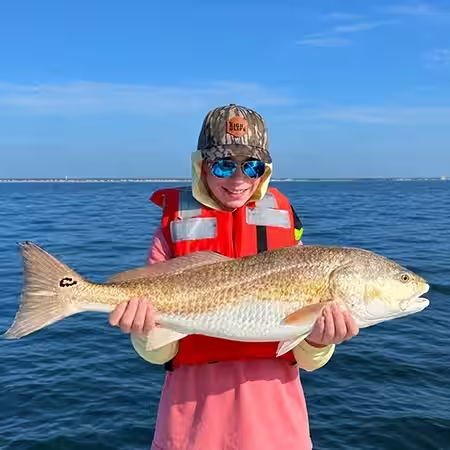
Some of the biggest redfish we catch around Ocean Isle Beach are found surprisingly close to shore. Each fall, we target bull reds around local inlets and beneath beachfront pogie schools, sometimes in just 5–15 feet of water. These are large adult redfish that we call bull drum or old drum.
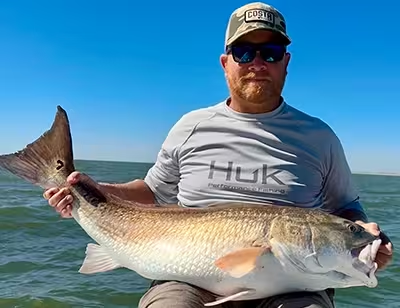
Most of the bulls we catch measure 35–45 inches in length, with the largest landed by a customer aboard my boat measuring 48 inches. For visitors hoping to catch one, October 10–25 is the window I recommend. That stretch around mid-October has produced the most reliable fishing on my bull redfish fishing charters over the last several years.
We can find them as early as the last week of September and as late as the first few days of November. My last bull red of 2025 came on November 2. Those catches mark the edges of the season, and the October peak is what I’d build a trip around.
The timing gets plenty of attention, but the reason these fish gather here is just as interesting. Their seasonal movements overlap with spawning season, while our inlets and beachfront bait schools offer places to feed. Understanding those connections helps explain where we find bull reds, and why they don’t stay in the same spot throughout the fall.
From Puppy Drum in the Marsh to Bull Reds in the Ocean
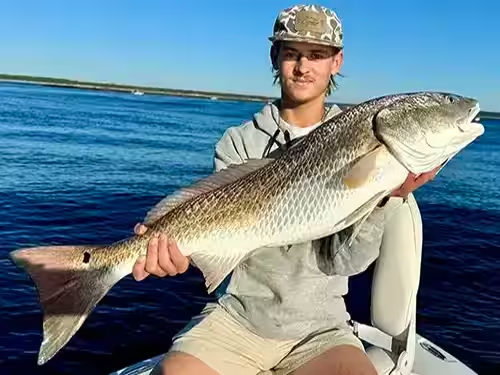
The marshes, creeks, and backwaters where we catch puppy drum throughout the year are where younger redfish spend their first few years feeding and growing. We catch them regularly on my inshore fishing charters, with most catches measuring from 14 to 26 inches.
As redfish mature, they move out of the backwaters and into the ocean to join the adult breeding population—a transition N.C. Marine Fisheries describes at around four years old and 32 inches long. These adults live in coastal waters year-round and can grow beyond 50 inches. In fact, the world record redfish came from right here in North Carolina, measuring 57 inches and weighing 94 pounds, 2 ounces.
During the fall, we get a better opportunity to find these big drum close to our beaches and around the inlets. From a fishing standpoint, finding them is a lot easier when they’re gathered beneath a pogie school in shallow water than when they’re spread out somewhere offshore. That’s a big part of what makes this fall window so valuable to us.
Why Do Bull Reds Gather Here in the Fall?
Fall puts big drum close to shore at a time when there’s plenty for them to eat. Pogies and mullet give them a reason to spend time along our beaches and around the inlets. And the important part is those bait schools give me a starting point to find them.
Our inlets funnel bait between the backwaters and the ocean, while schools of pogies along the beach put a lot of food in one place. Those feeding opportunities give big drum a reason to gather close to shore and stay around while the food is available.
Spawning also plays a part in the seasonal picture. North Carolina red drum spawn during late summer and early fall, so their breeding season overlaps with these coastal movements. But that doesn’t mean every school we find is actively spawning.
For the fishing I do, the feeding opportunity is what I focus on. Finding pogies or mullet doesn’t guarantee bull reds, but it gives me a much better place to start than dropping bait somewhere and hoping.
Why Our Fall Bait Matters
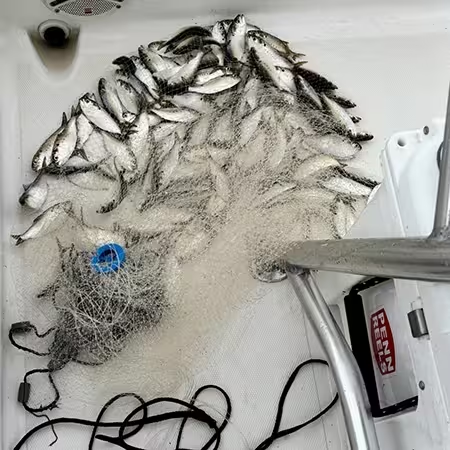
The whole idea, just like with any type of fishing, is to fish where the fish are. Bull reds are usually not far from the bait. Find the bait, and you’ve got a good starting point.
Pogies (also called menhaden or bunker) are a major draw for bull reds around Ocean Isle Beach. They form large schools along our beaches, while huge schools of mullet also provide food as they move along our beaches in the fall.
In October, I typically look for bull reds around baitballs in shallow water along the beach. The bulls can feed beneath the bait without showing themselves, so a bait school is worth investigating even when you can’t see any drum.
Finding those schools is easier without much wind chop. When planning your trip, keep in mind that north winds generally make our south-facing beaches calmer. That can make beachfront bait easier to spot on days when the water farther offshore is too rough, although conditions at the inlet still need to be considered.
The bait moves and the reds move with it. Yesterday’s productive stretch of beach may be quiet today while another area holds the bait. If you can’t find bait schools or conditions keep you from fishing outside, another option is to spot-lock or anchor in a safe position near the inlet, clear of boat traffic, and fish fresh pogies, mullet, or chunks of blue crab.
Where Do Bull Reds Gather Around Ocean Isle Beach?
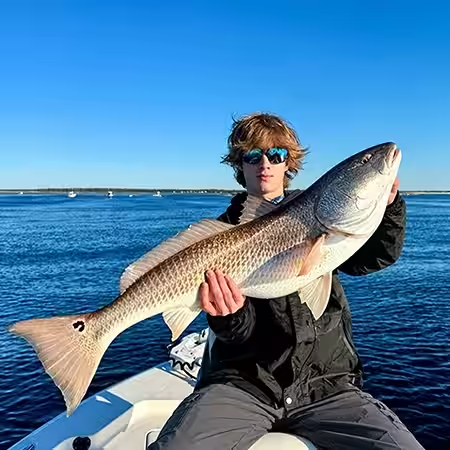
My preferred places are inlets and beachfront bait schools. I also catch them around nearby reefs, which gives us several different settings within the same coastal fishery.
Fishing the Inlets for Bull Reds
I’ve caught bull reds around all the inlets in Brunswick County. Although I typically fish Shallotte Inlet between OIB and Holden Beach, Tubbs Inlet between Ocean Isle and Sunset Beach, and Little River Inlet near Sunset Beach. Each inlet looks different and fishes differently, but I’m fishing them for the same reason: big drum can feed on bait moving between the backwaters and the ocean.
I prefer fishing the outgoing tide. That moving water carries food out toward the inlet mouth, and I want my bait where the drum can find it. I’m looking at the current and choosing a position where I can hold the boat and keep fresh pogies, mullet, or chunks of blue crab on the bottom.
At Shallotte Inlet, that means paying attention to the channel and the water around the mouth. At Little River, the jetties give you an obvious place to start looking, but don’t get so focused on the rocks that you overlook the surrounding water. The drum don’t have to be right against a jetty to find a meal. I'll usually find them around the mouth of the inlet and I prefer the north side of the jetty.
If it’s too rough at the inlet mouth, I’ll look farther inside for a place to fish. I still want moving water, but I need to be able to hold the boat comfortably and leave plenty of room for boats coming through the channel. If I can’t find a spot that gives me both, I’m fishing somewhere else.
Once I’m set up, I’ll spot-lock or anchor and put out two to four rods with fresh bait on the bottom. That sounds simple enough until everybody else has the same idea. Little River Inlet can turn into bumper boats on October weekends, so having room to fish is part of choosing the spot.
And don't forget that Little River Inlet requires a South Carolina fishing license.
Ocean Isle and Sunset Beach Bait Schools
Along the Ocean Isle and Sunset Beach fronts, I look for bait schools in 5–15 feet of water. You don’t have to run miles offshore to find a big drum. A 40-inch redfish can be feeding just off the beach, well within sight of people walking along the sand.
This is a different approach from picking an inlet spot and setting up there. Along the beach, I’m covering water until I find a bait school worth fishing. The stretch between the inlets gives me plenty of water to search, so I don’t have to limit the trip to the inlet mouths.
This is also my alternative to crowded inlets. On October weekends, I’d often rather look for beachfront bait than spend the trip playing bumper boats at Little River. It takes more gas for the boat and more effort, but finding a bait school away from that crowd gives me better odds at landing more big redfish.
That extra room also matters once a bull red is hooked. With a fish that size, I’d rather have space to fight it than worry about somebody else’s anchor line or fishing lines right beside us.
Bull Redfish at Artificial Reefs
I’ve also caught bull reds at Jim Caudle Reef, Jolly Mon Reef, and the artificial reefs off Oak Island. If you’re only thinking about the inlets and beaches, you’re leaving out another place these big drum can be found during the fall.
Reefs concentrate bait and give drum another place to find food. These are adult fish living in the ocean, so there’s nothing unusual about catching one over submerged structure. They don’t spend the entire fall sitting at an inlet waiting for somebody to drop a pogie in front of them.
Don’t just pull up to the reef coordinates and assume you’re on the fish. Look at your sonar for bait and fish around the structure, and check the surrounding bottom before deciding where to set up.
When fishing a reef for bull reds, I like to position the boat on the up-current side of the structure and suspend cut bait or live pogies just off the bottom. That keeps the bait up out of the structure and in the moving water as it flows toward the reef.
For my own bull red fishing, an inlet or a beachfront bait school is still my first choice, but don't leave out our local artificial reefs.
These Are Our Breeding Fish
There’s more to these big drum than their size. These are the adult breeding fish that produce the next generation of redfish. The puppy drum we enjoy catching in the marsh depend on a healthy population of adults out in the ocean.
These fish can also be older than the person catching them. Red drum can live for 50 years or more, and N.C. Marine Fisheries has documented one at 62 years old. That doesn’t mean every big bull is that old, but you could be holding a fish that’s been swimming these waters for decades.
N.C. Marine Fisheries places red drum spawning in late summer and early fall. Winds and currents carry their young into protected waters where they’ll feed and grow. That’s the connection between the big bulls along the coast and the smaller drum we catch on our inshore trips.
There’s a local connection, too. NCDMF’s red drum management plan documents evidence of spawning near Cape Fear River Inlet. That doesn’t establish Shallotte or Little River as confirmed spawning sites, but spawning is part of the story along our southern North Carolina coast.
North Carolina protects these larger fish from harvest. The recreational red drum limit is one fish per person per day, measuring 18–27 inches in total length. Anything over 27 inches must be released, including every 35–45-inch bull we’re talking about here.
But putting a tired fish back in the water isn’t the end of the job. Have the camera ready before lifting it, keep its time out of the water short, and use wet hands to support it horizontally under the belly and at the tail. Don’t hang a big drum by its jaw.
If the fish needs time to recover, hold it upright in the water, facing into the current so water can flow through its gills. Don’t pull it backward through the water, and don’t let it go just because you’re ready to make another cast. Give it the time it needs to hold itself upright and swim away strongly.
A bull red is a fish worth getting excited about, but the picture shouldn’t be the most important part of the catch. Getting that fish back in the water in good shape gives it the chance to keep spawning—and gives somebody else the chance to catch it again.
Fish with the Right Gear
One mistake I see is anglers bringing a knife to a gunfight: rods, reels, line, or terminal tackle that are undersized for these fish.

The rod and reel you use for puppy drum probably aren’t what you want for bull reds. My bull red setup is closer to what you’d use for an average-sized shark. Too little tackle can mean a broken line, a broken rod, or a fight that wears the fish out more than necessary. I want to enjoy the fight, land the fish efficiently, and have it in good condition for release.
Here’s the setup I use for bull reds:
- Rod and reel: Penn Spinfisher VII 6500 combo.
- Mainline: 50-pound PowerPro Super Slick V2 braid.
- Leader: 80-pound Yo-Zuri H.D. Carbon fluorocarbon leader.
- Hook: Gamakatsu inline circle hook, 8/0. I use inline, non-offset circle hooks, never stainless steel, and nothing smaller than 8/0 for bulls.
- Swivel: AFW #4 ball-bearing swivel, rated for 200 pounds.
- Sinker: A 4-ounce egg sinker for my modified Carolina rig.
Experience the Fall Bull Redfish Run Around Ocean Isle Beach
I hope this guide has been helpful to you in getting ready to catch a bull redfish in Ocean Isle Beach. However, if you'd rather go out with me and shorten the learning curve then visit my Bull Redfish Charters page for trip details, availability, and booking.

Tight Lines,
Captain Harvey Wall
Salty Dawg Fishing Charters
October 5, 2026
Captain Harvey's Customer Reviews
Still wondering if Captain Harvey and Salty Dawg Fishing Charters is the right choice? Here’s what real guests have to say:
Recent 5-Star Google Reviews
How to Book Your Fishing Charter
Booking your Fishing Charter is easy! Here’s how:
- Option 1: Book Online
BOOK MY TRIP - Option 2: Have questions or prefer not to book online?
Feel free to E-Mail Captain Harvey or call (910) 250-8459 if you have any questions. He's happy to help you plan the perfect fishing trip.