
North Carolina is home to one of the most diverse and accessible shark populations on the East Coast. After more than 25 years fishing professionally in North Carolina's waters — from shallow summer surf zones to nearshore reefs just a couple miles offshore — I’ve seen firsthand how consistently sharks use our entire coastline. Anglers, beachgoers, and boaters encounter them here more often than almost anywhere else in the region.
This page is your complete guide to the most common shark species you’ll encounter in North Carolina — how to identify them, where you’ll find them, what size ranges they typically run, and which seasons they show up strongest. Whether you're fishing surf edges, inlets, piers, or drifting nearshore reefs, the same core species appear from Carova at the Virginia line to Sunset Beach on the South Carolina border.
Below, you’ll find detailed breakdowns of each species along with behavior patterns, how to target them, and key NC regulation notes. Whether you're fishing DIY or stepping aboard with me, this will give you a strong foundation before you ever put a bait in the water.
Common Shark Species in North Carolina Waters
Below is a complete list of the most common shark species caught in North Carolina waters, with identification notes, size ranges, typical habitats, and key handling considerations. These are the sharks recreational anglers most often encounter from the surf to the reefs.
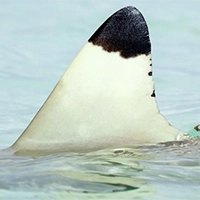
Blacktip Shark
One of the most frequently caught sharks along the North Carolina coast. Blacktips jump, run hard, and fight fast, making them a favorite target for anglers looking for exciting summer shark action.
Found In:
Surf and beach troughs, inlets, and nearshore reefs, as well as behind working shrimp boats where bait is thick and baitfish are busting on the surface.
Common Size in NC:
Typically 3–6 feet long, with occasional larger fish mixed in when big bait schools push along the beaches and nearshore reefs.
NC State Record:
Blacktip sharks are not currently listed as a separate category on the
North Carolina State Saltwater Records table. Shark records are tracked for species such as blue, dusky, hammerhead, lemon, tiger, mako, and others, but no individual blacktip state record is posted at this time.
World Record:
The International Game Fish Association (IGFA) all-tackle world record for a blacktip shark is 270 pounds, 9 ounces, caught by Jurgen Oeder in Kenya's Malindi Bay on September 21, 1984. The fish measured 94.46 inches and was caught using an 80-pound class line with a yellowfin tuna bait.
Notes:
Blacktips are part of the “ridgeback” large coastal shark group (with bull, lemon, spinner, tiger, and others). Under federal HMS rules they generally carry a 54 inch fork-length minimum and a one-shark-per-vessel bag limit in the directed fishery. Always verify the latest
NOAA HMS shark regulations
and
North Carolina recreational shark size and bag limits
before keeping any blacktip shark — when in doubt, treat them as a catch-and-release sport fish.

Atlantic Sharpnose Shark
Small, feisty, and plentiful — perfect for families and kids. Atlantic sharpnose sharks provide steady action and are one of the most common “first sharks” for new anglers along the North Carolina coast.
Found In:
Nearshore waters just off the beach, around bait schools, reefs, and ledges; also hooked from piers and in the surf during warmer months when water temperatures are in the upper 60s and above.
Common Size in NC:
Most Atlantic sharpnose sharks in North Carolina run 2–3.5 feet long and commonly weigh in the 5–12 pound range, with larger fish occasionally showing up around strong bait concentrations.
NC State Record:
Atlantic sharpnose sharks are not listed as a separate category on the
North Carolina State Saltwater Records
table. The state records page includes specific listings for other shark species (such as blue, dusky, hammerhead, lemon, tiger, and mako), but no individual Atlantic sharpnose state record is posted at this time.
World Record:
The IGFA all-tackle world record for the Atlantic sharpnose shark is 16 lbs 11 oz, caught by Jacob Ethridge in July 2016. The catch was made in Fort Walton Beach, Florida, but the IGFA initially had difficulty confirming the species from the photos, which led to a delay in its official recognition.
Notes:
Atlantic sharpnose sharks are part of the “small coastal shark” group in federal HMS rules and can be harvested under the one-shark-per-person aggregate limit when regulations allow. However, size and bag limits can change, so always confirm the latest
NOAA HMS shark regulations
and
North Carolina recreational shark size and bag limits
before deciding to keep one. Many anglers still treat them primarily as a fun, catch-and-release sport fish for kids and beginners.
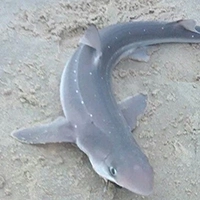
Spiny Dogfish
A small schooling shark extremely common in cooler months offshore and around structure. Anglers often hook them while bottom fishing for sea bass, triggerfish, or other reef species.
Found In:
Nearshore and offshore waters around reefs, ledges, and hard-bottom areas; occasionally caught from piers and the surf during cold-water periods.
Common Size in NC:
Typically 12–36 inches long. Larger schools of 2–3 ft fish are common around deep nearshore and offshore structure during winter months.
NC State Record:
Spiny dogfish are not listed as a separate category on the
North Carolina State Saltwater Records
table. They are commonly caught but not tracked as an individual record species in North Carolina.
World Record:
The
IGFA all-tackle world record spiny dogfish
is 19 lbs 12 oz, caught by Stephen McLean on January 28, 2014, in Puget Sound, Washington.
Notes:
Often called “dogfish” by local anglers. They have sharp dorsal spines and rough skin, so handle with care. Though edible, most NC anglers release them because they are considered bycatch during cooler-season reef fishing.
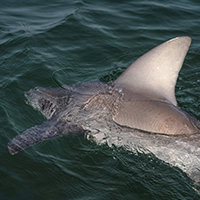
Sandbar Shark
A thick-bodied, broad-shouldered shark known for its tall first dorsal fin and strong, determined fight. Sandbar sharks are one of the most frequently encountered large sharks on North Carolina’s nearshore reefs and at inlet drop-offs.
Found In:
Nearshore and offshore reefs, ledges, hardbottom areas, and deep inlet channels — usually close to the bottom around bait concentrations.
Common Size in NC:
Typically 4–7 feet long, with some larger individuals encountered offshore or around deeper structure.
NC State Record:
Sandbar sharks were historically recorded by the state, but because harvest is now prohibited, the
North Carolina State Saltwater Records
table no longer posts a sandbar category. Any earlier listings came from years when retention was allowed.
World Record:
The IGFA all-tackle world record sandbar shark is 529 lbs 1 oz, caught by Patrick Sebile on April 5, 2002, in the Archipelago des Bijagos, Guinea-Bissau.
Notes:
Sandbar sharks are fully protected under both federal HMS law and North Carolina regulations. They are prohibited from harvest, possession, or retention in all NC waters and must be released immediately. Their protected status exists because sandbars mature slowly and were heavily overfished in previous decades.
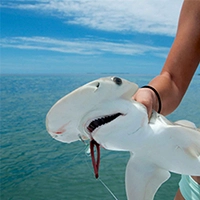
Bonnethead Shark
A small hammerhead species that loves shallow, sandy areas and grass flats. Bonnetheads feed heavily on crabs and shrimp and are outstanding fun on light tackle, making them a favorite for families and beginners.
Found In:
Inshore waters, tidal flats, sandy bays, shallow channels, and near inlet mouths. Also caught along the surf, especially during late summer and early fall when grass shrimp and small crabs are abundant.
Common Size in NC:
Typically 2.5–4 feet long and commonly 10–20 pounds. Larger bonnetheads occasionally appear when water temperatures peak in late summer.
NC State Record:
Bonnetheads were historically included in North Carolina’s coastal shark record listings, but the
state saltwater records table
does not currently display a bonnethead-specific record. Any past listings date back to years when the category was tracked separately.
World Record:
The IGFA all-tackle world record bonnethead shark
is 28 pounds, caught by Carter Wells on June 28, 2012, in the Halifax River, Port Orange, Florida.
The same catch also holds the Male Junior and Men’s 30-lb line class world records.
Notes:
Bonnetheads are part of the “small coastal shark” group under federal HMS rules. They may be harvested when regulations permit, but size and bag limits vary annually. Always verify the latest
NOAA HMS regulations
and
North Carolina shark rules
before keeping one. Many anglers prefer to release bonnetheads due to their abundance and strong sporting qualities.
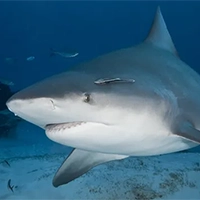
Bull Shark
One of the most powerful predators in North Carolina waters. Bull sharks are thick, strong, and built for short, bruising fights that test your tackle, knots, and nerves when they show up in the spread.
Found In:
Inlets, river mouths, and nearshore beaches, especially around deep troughs, bait schools, and strong current edges. They’re most commonly encountered along the surf zone and near inlets when mullet and menhaden are stacked up.
Common Size in NC:
Many bull sharks caught off North Carolina run in the 4–8 foot range, with some larger fish pushing beyond 9 feet when conditions and bait are right. Most charter encounters are with solid, hard-fighting fish in the 80–200+ pound class.
NC State Record:
Bull sharks fall under North Carolina’s coastal shark record categories, but there is no separate, clearly listed bull shark state record on the current
NC State Saltwater Records
table. Several other large coastal shark species (such as dusky, tiger, and various hammerheads) do have specific entries, but bull sharks are not broken out as their own published state-record line at this time.
World Record:
The IGFA all-tackle world record bull shark weighed 697 pounds, 12 ounces and was caught by angler Ronald de Jager in Malindi, Kenya, on March 24, 2001. The record fish ate a live yellowfin tuna trolled on heavy tackle and remains the benchmark for the species.
Notes:
Bull sharks are part of the “ridgeback” large coastal shark complex and are subject to strict size and bag limits. In many federal HMS contexts they fall under a 54-inch fork-length minimum and a very limited bag framework. Always check the latest
NOAA HMS shark regulations
and
North Carolina recreational shark size and bag limits
before keeping any bull shark. Many anglers treat them as a catch-and-release trophy species, especially larger fish hooked near inlets and river mouths.
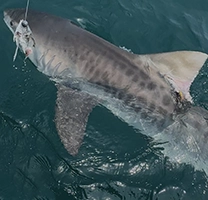
Tiger Shark
A massive apex predator that patrols reefs, ledges, wrecks, and bait-rich nearshore and offshore zones. Tigers are among the largest sharks encountered off North Carolina — when one shows up behind the boat, it’s a moment nobody forgets.
Found In:
Nearshore and offshore structure, hardbottom areas, ledges, wrecks, shrimp-boat bycatch lines, and bait-dense drop-offs. They frequently shadow schools of menhaden, mullet, and bonito.
Common Size in NC:
6–12+ feet. Many tigers off North Carolina run from a few hundred pounds to well over 800 lbs, with true giants occasionally pushing into four-digit territory.
NC State Record:
Tiger Shark: 1,150 lbs 0 oz
This long-standing state-record tiger shark highlights the size potential of tigers along the NC coast.
World Record:
The IGFA all-tackle world record for tiger shark is officially a tie: 1,780 lbs — caught by Walter Maxwell on June 14, 1964, in Cherry Grove, South Carolina (about 6 miles south of Ocean Isle Beach NC) and 1,785 lbs 11 oz — caught by Kevin J. Clapson on March 28, 2004, in Ulladulla, Australia
IGFA rules require a new record to exceed the old one by at least 0.5%, so Clapson’s larger fish did not exceed that threshold — resulting in a true shared world record. Addtionally, Maxwell's Tiger Shark wasn't weighed until the day after it was caught, with estimates of it's weight at the time of capture at over 2,000 lbs!
For a detailed retelling and analysis of the legendary Cherry Grove catch, read my in-depth feature:
World Record Tiger Shark — Full Story and Photos
Notes:
Tiger sharks are listed as Large Coastal Sharks under NOAA HMS rules and carry strict size and retention regulations. Always check the latest
NOAA shark regulations
and
North Carolina size & bag limits
before keeping any tiger shark. Most larger fish are released to preserve this apex predator’s role in the ecosystem.
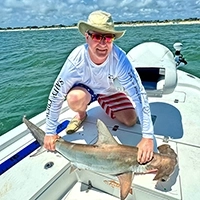
Hammerheads (Scalloped, Great, & Smooth)
Broad-headed sharks occasionally encountered in deeper channels, around inlet mouths, and near offshore structure. Impressive to see, especially when they cruise or surface near the boat.
Found In:
Offshore and nearshore drop-offs, deep channels, and around large bait schools off inlets and reef edges.
Common Size in NC:
Great Hammerhead: 4-10 feet, Scalloped Hammerhead: 4-8 feet, Smooth Hammerhead: 4-9 feet
NC State Record:
Great Hammerhead: 710 lbs 0 oz, Scalloped Hammerhead: 234 lbs 0 oz, Smooth Hammerhead: No record listed.
Note: Any historic state-record listings date back to years when harvest was allowed, but today all hammerheads encountered in NC waters must be released immediately.
World Record:
The all-tackle world record hammerhead shark weighed 1,280 pounds and was caught by Bucky Dennis in Boca Grande, Florida, on May 23, 2006. The massive great hammerhead was 14.5 feet long and was caught on an M-130 line class.
Notes:
All Hammerhead Shark species in North Carolina — including scalloped, great, and smooth hammerheads — are strictly release-only under state law. While
federal HMS rules list minimum sizes for certain hammerheads, North Carolina’s own regulations override them and no hammerhead species may be retained in NC waters. They cannot be harvested, possessed, or kept under any circumstance.
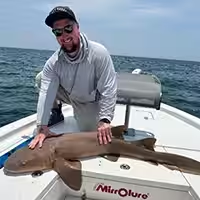
Nurse Shark
A slow-moving, bottom-oriented shark commonly caught on North Carolina’s nearshore reefs, ledges, and hard-bottom areas. Nurse Sharks aren’t flashy, but they’re incredibly strong, stubborn fighters — and they show up on my shark charters more often than people expect. The Nurse Shark shown here was caught in Summer 2025 on one of my shark fishing charters in Ocean Isle Beach, NC.
Found In:
Nearshore reefs, wrecks, live-bottom areas, and deeper inlet channels — usually tight to the bottom around structure. They often show up while targeting blacktips, sandbars, or tiger sharks on bottom baits.
Common Size in NC:
Typically 4–8 feet long. Larger fish push past 200 pounds and are commonly hooked around AR reefs and deeper structure near the inlets.
NC State Record:
Nurse Shark: 163 lbs 0 oz (caught off Wrightsville Beach in 2003).
This species — also called “grey shark” in some listings — carries a 54-inch fork-length minimum when harvest is permitted under federal HMS rules.
World Record:
The
IGFA all-tackle world record nurse shark
is 263 lbs 12 oz, caught by Nic Jeter on July 21, 2007, in Port St. Joe, Florida.
Notes:
Nurse sharks are incredibly strong and notorious for rolling, twisting, and refusing to come off the bottom — expect long fights. Handle with care: their crushing bite is powerful despite their calm reputation. Always confirm the latest
NOAA HMS rules
and
North Carolina shark limits
before keeping one. Most large NC nurse sharks are released due to their slow growth and strong sporting quality.
When Sharks Show Up in North Carolina
If there’s one thing I get asked all the time on the boat, it’s this: “When are the sharks here?” The short answer is “more often than you think.” Different species slide in and out with the water temperature, but there is almost always something with teeth around if you know what to look for. Once you understand the seasonal rhythm, you stop guessing and start showing up when the odds are stacked in your favor.
Spring (April–May)
Spring is when the switch flips. As soon as water temps creep into the 60s and bait starts showing in the inlets and along the beach, the first waves of sharks aren’t far behind. Atlantic sharpnose and blacktips are usually the early arrivals, shadowing mullet, menhaden, and glass minnows. This is a great time to fish inlet mouths and nearshore structure with fresh cut bait — the sharks are hungry, not picky, and there isn’t much pressure on them yet.
Summer (June–August)
Summer is full-throttle shark season on the North Carolina coast. Warm water, thick bait schools, and shrimp boats working just off the beach all come together at the same time. Blacktips and spinners are the headliners, but you’ll also see sharpnose, sandbars, and the occasional bigger visitor mixed in. You can catch sharks from the surf, the piers, around the inlets, and on the nearshore reefs — if there’s life on the screen and bait in the water, there are usually sharks somewhere close by.
Fall (September–November)
Fall is my favorite stretch of the year for consistent shark fishing. The water starts to cool, bait stacks up instead of spreading out, and everything — mullet, menhaden, bluefish, and predators behind them — begins to funnel. Sharks use inlets, bars, and reef lines like highways this time of year. On the right tide, with bait pouring out of the creeks or piled along the beach, it can feel like you’re fishing in the middle of a conveyor belt of sharks.
Winter (December–March)
Winter is quieter, but it’s not a dead zone. Most of the warm-water species push south or offshore, but we still see sharpnose and spiny dogfish when the conditions line up. This is more of a “pick your windows” season — you’ll want stable weather, workable seas, and a plan to fish deeper water or nearshore structure. You won’t see the numbers you get in summer or fall, but if you’re determined and patient, there are still sharks to be caught.
The simple way to think about it is this: spring brings them in, summer is peak action, fall is peak consistency, and winter is a specialty game. Watch the water temps, follow the bait, and you’ll stay right in the middle of where North Carolina’s sharks want to be.
Shark Fishing Regulations in North Carolina
Quick note before we get into the rules: NC shark regulations change — sometimes quietly, sometimes often. What’s written below is accurate and practical, but not a substitute for checking the current NC DMF and NOAA guidelines before you keep a fish. When in doubt, release it.
North Carolina follows a blend of state and federal rules, which means some sharks can be kept under specific conditions — but most of what you’ll catch nearshore is catch-and-release. If you're targeting sharks along the beach, inlets, or 3–15 miles out, expect to release the majority of what you hook.
Circle Hooks Are Mandatory
If you're using natural bait for sharks in NC waters (state or federal), you must use inline, non-offset circle hooks. This is one of the most important rules in shark fishing — it dramatically reduces gut-hooking and increases survival after release. No J-hooks for bait, no excuses.
Most Common Sharks Must Be Released
Some of the sharks you’re most likely to catch cannot be legally harvested under any circumstance. This includes large, powerful species that are protected for population recovery.
- Sandbar sharks — always release
- Dusky sharks — always release
- Undersized hammerheads (strict size limits apply)
- Many spinners — commonly released due to ID and size issues
- Any shark you cannot identify with 100% confidence
If you’re not sure — don’t guess. Let it go.
Legal to Keep (Under the Right Conditions)
A handful of smaller coastal sharks can be harvested when within regulations, and they fall under the 1-shark-per-person aggregate bag limit. That means one total — not one per species.
- Atlantic sharpnose
- Bonnethead
- Blacknose
- Finetooth
- Some blacktips (if properly sized and ID’d)
Sharpnose and bonnethead are the most commonly harvested because they’re easy to ID — but again, only one shark per angler per day.
Quick Size & Bag Summary
- Atlantic Sharpnose — no minimum size, still counts toward your 1-shark limit
- Bonnethead — no minimum size, counts toward 1-shark limit
- Blacktip — often 54" fork-length minimum (varies state vs federal)
- Sandbar & Dusky — zero harvest, federally prohibited
If you want to keep a shark — sharpnose and bonnethead are your safest, legal bet.
Prohibited Species
These sharks are release-only every day, every season, no exceptions:
- Sandbar
- Dusky
- Great white
- Sand tiger
- Bigeye thresher
- Night shark
- Whale shark
- Sixgill and sawsharks
- Any shark you cannot identify confidently
When in doubt — release. There is zero downside to letting a shark swim away.
Shark Identification
Correctly identifying sharks is one of the most important parts of shark fishing in North Carolina. Misidentifying a protected species is an easy way to get fined — and most sharks look similar when the adrenaline is high and the fight is fresh.
NOAA publishes an excellent, free resource that I highly recommend every angler keep bookmarked or printed in their tackle bag: the Shark Identification Placard. It shows fin shapes, coloration, tail differences, and protected species at a glance — exactly what you need when the fish is at the side of the boat.
Regulations Change Often — Always Double-Check
Shark rules shift as populations recover and management plans update. Before you keep a shark, always review:
Knowing the rules protects you — and keeps our fishery strong for the next generation.
Where to Catch Sharks in North Carolina
North Carolina has no shortage of shark water. Whether you're standing in the surf at Ocean Isle Beach, drifting the edge of Little River Inlet, or sliding across AR reefs a couple miles off the beach, sharks are never far from the bait. I fish these areas almost daily in the summer and fall, and each one has its own “pattern” once you learn how to read the water. Here’s how I explain it to guests on my boat.
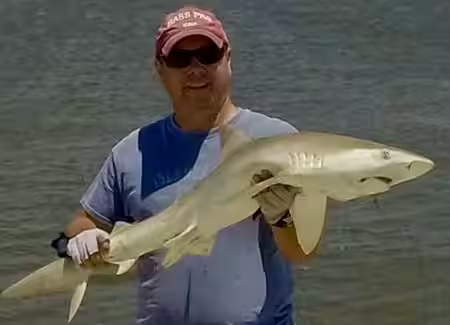
Surf Fishing the Beaches
If you only remember one thing about surf fishing for sharks in NC, remember this: find the deeper lanes. Our beaches — from the Outer Banks all the way down to Sunset Beach — all have the same basic setup. You’ll have an outer bar, a trough, and a cut. Sharks cruise these like highways. Use this to your advantage by learning to read the water along the beaches to find sharks.
You’re looking for:
- Deeper troughs where the waves don’t break
- Cuts in the bar where sharks slip through and cruise the inside lane
- Rips or dirty/mixed water where scent spreads quickly
- Mullet or menhaden pushed tight to the beach — if bait is in the wash, sharks are too
Best times: early and late in the day, cloudy or breezy afternoons, and nighttime. And if you ever see nervous bait skipping straight toward the beach, go ahead and get a bait in the water — something’s pushing them. It might be Kings, Spanish, or Bluefish chasing the school, but there will almost always be sharks hanging around the chaos.

Fishing the Piers
Piers are shark magnets simply because they sit on the first major drop-off from the beach. Yaupon Pier, Ocean Isle Beach Pier, Sunset Beach Pier, or any pier along the Carolina coast all give you instant access to deeper water without needing a boat. Sharks cruise the pilings, the bar, and the end of the pier where King fishermen set up.
A few tips:
- Cast along the pilings or toward the bar — not straight out into the desert
- The “king spots” at the very end usually produce the biggest sharks
- Nighttime is when blacktips, spinners, and sharpnose really show up
Some towns, like Wrightsville Beach, have made shark fishing from the surf or piers illegal. Each pier also has its own rules about rigs and bait size, so when in doubt, ask the folks in the pier house whether shark fishing is allowed — it’ll save you a lot of hassle.
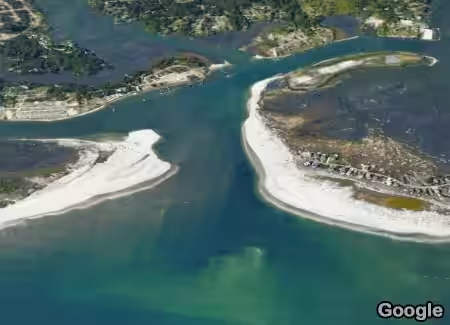
Inlets and Deep Tidal Channels
Inlets are where things can get spicy in a hurry. Deep water + strong tide + nonstop bait = sharks. Whether you’re at Little River Inlet, Masonboro, Bogue, Oregon Inlet, or Shallotte Inlet (pictured here) the behavior is the same: sharks use these channels like conveyor belts. It’s one of the most reliable places for bull sharks, sandbars, and blacktips.
- Set up along the channel edges where the water drops off
- Fish the down-current side — that’s where your scent trail naturally spreads
- Use enough weight to actually stay put (the inlet will humble you fast if you don’t)
If mullet or menhaden are stacked in the inlet, it’s almost guaranteed sharks are right behind them.
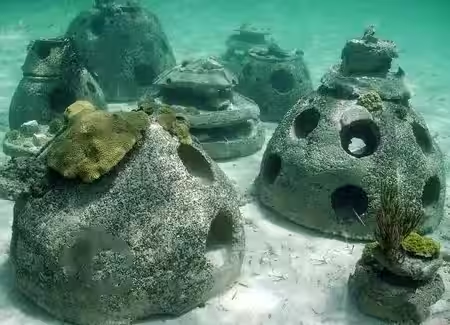
Nearshore Reefs, Wrecks, Live Bottom
This is where I spend a lot of time on charters, especially several of the nearby NC Artificial Reefs. Anything in that 1–6 mile range off the beach holds bait — and where there’s bait, there are sharks. Some days you barely get the second rod set before a sharpnose or blacktip smokes it.
- Artificial reefs (ARs)
- Natural ledges and rockpiles
- Live bottom patches
- Shipwrecks
- Any structure that concentrates bait
Drift fishing is deadly here — I’ll stagger baits at different depths and let the boat slide naturally across the reef. Blacktips, sharpnose, sandbars, lemons, and even tiger sharks show up on these spots from late Spring through early Fall.
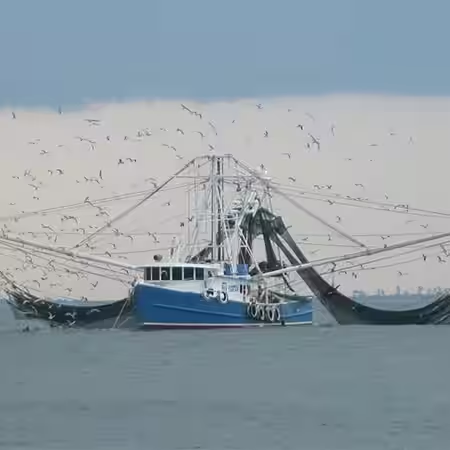
Fishing Behind Working Shrimp Boats
If you’ve never experienced shark fishing behind a shrimp boat, add it to the bucket list. When the trawlers are dumping bycatch, the water behind the boat turns into a feeding frenzy. I’ve had days where we hook multiple sharks at once — blacktips, spinners, sharpnose, and every now and then a tiger cruising the line like a submarine.
- Give the crew plenty of space — don’t crowd them
- Monitor VHF channel 16 in case the Captain needs you to back off
- Stay close to the centerline of the shrimp boat to avoid the nets and gear
- Drift your bait right down the wake and hang on
When the bite turns on behind a shrimp boat, it’s some of the fastest shark action you’ll ever see. If you want to give this a try, give me a call!
How I Catch Sharks in North Carolina (And How You Can Too)
If you fish with me — whether it's off Ocean Isle, Holden Beach, Sunset Beach, or twenty miles offshore — these are the exact shark fishing techniques I rely on every day. Not theory. Not guesswork. Just proven decisions I make when clients are on the deck and rods are bending. Shark fishing in North Carolina doesn’t require complicated or advanced shark fishing tactics — just the right bait, smart positioning, and patience. Follow the approach below and you’ll consistently catch sharks along the Carolina coast, even on days when everyone else is soaking baits and getting skunked.
Fresh Bait Wins — Period
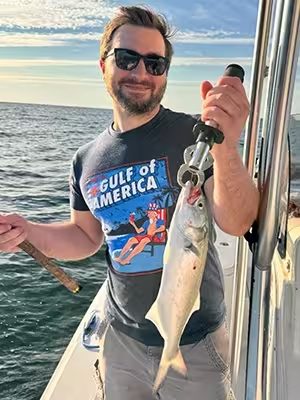
If there’s one lesson I wish every new shark angler knew, it’s this: fresh bait outfishes frozen 10-to-1. I’m talking scales still shining, blood still bright red. My go-to bait is bluefish, but mullet, menhaden (pogies), bonito, ladyfish, croakers, and even big pinfish all produce — just make sure you’re legal if you plan to use gamefish for bait.
Rebait often. If a chunk has been soaking 30 minutes or more, I’m usually swapping it out — fresh scent is everything. But don’t swap too fast. One of the hardest lessons for new shark anglers is patience. You don’t need to constantly check baits — you need to give that scent trail time to stretch downcurrent like a billboard sharks can follow. Reel in too often and you reset the whole trail. Set it, leave it, and let the bait scent work for you.
Sharks hunt with their nose — give them something worth tracking. One trick I use on charters: take a keeper-size Spanish Mackerel, butterfly it, hang it over the side on an anchor ring with just enough rope to keep it in the water, and tie off to a cleat. It dumps oil and blood into the current and will pull sharks from way farther than you’d think. The sharks will follow up the scent trail and will likely reach your baited line first.
Put Your Bait Where Sharks Can Smell It
Sharks aren’t picky. You don’t have to drop a bait on their nose like you would a winter trout. If a shark is in the area and you’ve got fresh bait soaking, it’s only a matter of time before they find it. The trick isn’t precision casting — it’s putting your bait where the scent can spread naturally.
General rule I fish by: if the bait is fresh and there is enough current to carry the scent, a shark will eventually come find you.
The best places for dispersing scent and drawing sharks in:
- Surf — anywhere with moving water past the first trough
- Inlets — tide flow pulls scent like a conveyor belt
- Nearshore reefs — structure + bait = constant traffic
- Behind shrimp boats — they’re already following the bycatch trail, and fresh, oily bait seals the deal
You don’t need hero casts. You don’t need sniper accuracy. What matters most is fresh bait, a healthy scent trail, and patience — if sharks are in the neighborhood, they'll come find you.
Drift Fishing — My Favorite Way to Cover Water
If there’s enough wind or current to drift a reef, I’m doing it — nine trips out of ten. Drifting lets your bait move the way real prey moves. Instead of sitting in one spot and hoping a shark cruises by, you’re actively sweeping across ledges, live bottom, and rock patches, looking for the fish that want to eat. When I want steady action for clients, this is usually where I start.
Here’s exactly how I drift for sharks: I keep baits just off the bottom — not plowing through it. Rods stay in the holders, drag set firm enough for a circle hook to roll into the corner of the jaw, and the boat eases along slow enough to look natural while laying down a clean scent trail behind us. If you're drifting the right line, sharks don’t take long.
If the drift is too fast, I’ll correct it. Bump the trolling motor, throw a drift sock, or in a pinch — tie a rope to a cleat with a five-gallon bucket attached to create drag. Slowing the slide is the whole game. Control the drift, and you control where your scent goes… which usually means you control how many sharks come find you.
Anchoring / Spot-Lock — When I Want The Sharks to Come to Me
Drifting is my go-to, but some days the current, the wind, or the bite call for a different approach. When I want to sit on a high-percentage spot and let sharks come to me, I anchor — and for me, that means using spot-lock on my trolling motor. Same result, less hassle. This is how I fish reefs when I know sharks are already there or when I’m marking steady bait and don’t want to leave fish to look for fish. It also works well closer to shore on days the ocean is too sloppy to run offshore.
I like to set up up-current of the structure so the scent washes naturally across it. If you anchor directly on top of the structure, you choke off your own scent path. Hold just up-current, get baits soaking, and let that smell drift right to where the sharks are staging.
My anchoring setup for sharks doesn’t change much versus drifting — I still fish baits just off the bottom — but when I’m locked in place I’ll split the spread: half on bottom, half just above it. Anchoring isn’t about covering ground, it’s about confidence. You’re betting on the spot, betting on the bait, and letting time do what time does. And when the first rod dumps, it’s usually not the last.
When the bite slows, I don’t panic and move every fifteen minutes. I give the scent time to build. Current + bait + patience beats impatience every single day. If I need to make an adjustment, I’ll slide a short distance along the same piece of structure long before I make a big move.
Shark Behavior Cues to Watch
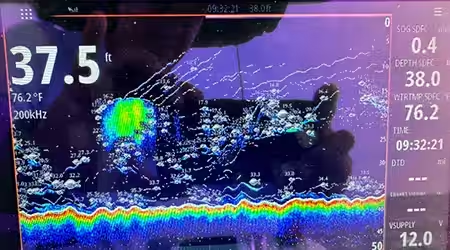
One of the biggest separators between someone who soaks bait and someone who catches sharks is awareness. Sharks announce themselves long before they eat — if you know what to look for. I’m constantly scanning the water, the horizon, the birds, even the bait on sonar. Half the time I know a rod is about to go off before it ever does.
- Diving birds picking off bait forced to the surface
- Bait balls tightening or rising on sonar
- Mullet schools scattering, slashing wakes behind them
- Dirty, streaked water — a feeding zone stirred up below
- Bluefish or Spanish mackerel blitzing bait (sharks are rarely far behind)
- Nervous bait near the boat — flicking, flashing, fleeing
- You're anchored and a shrimp boat passes close by
- Blacktips rolling, spinners free-jumping, fins cutting surface
If you spot even two of these signs, you need fresh bait soaking immediately. You’re no longer searching — you’re intercepting.
Circle Hooks Do the Hooking — You Just Reel
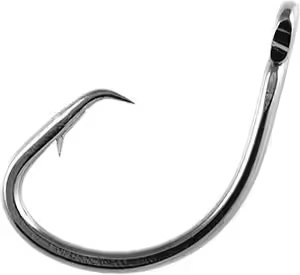
This one trips up even strong anglers. When a shark eats your bait, your rod is going to load, bounce, and your reel will scream — and your instincts will tell you to set the hook like you're bass fishing. Don’t. It's the hardest thing to get my fishing charter clients on the boat to remember -not setting the hook when using circle hooks.
With circle hooks, the fish hooks itself. All you do is reel until the rod is bent over hard. No swinging, no cross-their-eyes hookset. Just steady pressure until the drag comes alive, and then the fight starts.
Smooth and steady lands more sharks than any dramatic hook-swing ever will. Let the hook roll, let the shark load the rod — and you’ll be amazed how many more make it to the boat.
Best Gear for NC Shark Fishing
You don’t need giant offshore reels and broomstick rods to catch sharks along the NC coast — but you do need gear that can handle long runs, rough mouths, and abrasive skin without failing. Here’s the kind of setup I trust day in and day out on my charter boat.
Shark Fishing Rod / Reel
- Surf Setup: Penn Pursuit V LE 9 Foot Rod-Reel Combo
- Pier Setup: Penn Spinfisher VII 7 Foot Rod Reel Combo
- Boat Setup: Penn Spinfisher VII 7 Foot Rod Reel Combo
Line & Leader Setup
- Main Line: PowerPro SS V2 80 LB Test Braided Fishing Line
- Mono Leader: HI-SEAS Grand Slam 400 LB Mono Fishing Leader
- Wire Leader: AFW 400 LB Stainless Steel Cable Leader
Terminal Tackle
- Swivels: Dr Fish Stainless Steel Swivel #8 390 LB
- Circle Hooks: Mustad Demon Perfect Circle 10/0 Hook
- Drift Sinkers: Egg Sinker 4 Ounce
- Anchored Sinkers: Bank Sinker 6 Ounce
- Pier / Surf Sinkers: Pyramid Sinker 8 Ounce
Shark Fishing Accessories
- De-Hooker: Bubba De-Hooker
- Shark Measuring Tape: Bluewing 96" Waterproof Fishing Ruler
- Fish Handling Gloves: Lindy Fish Handling Gloves
- Crimping Kit: Basic Crimping Kit
- Premium Crimping Kit: Hi-Seas Rigging Kit
Note: Make sure you’re using inline (non-offset) circle hooks that are not stainless steel to stay legal when targeting sharks.
Common Mistakes to Avoid
These are the things I see every summer — good anglers losing fish, missing bites, or stressing sharks for no reason. Avoid the mistakes below and I promise you’ll hook more sharks, land more sharks, and leave them healthier when you release them.
- Using J-hooks instead of circle hooks — In many shark situations, J-hooks aren’t legal, and they deep-hook fish. Inline circles = safer hookups + faster releases.
- Relying on old or frozen bait — If it’s gray, washed out, or smells sour, the sharks don’t want it. Fresh bleeds, frozen feeds seagulls.
- Trying to “set” circle hooks — A big bass-style hookset rips the bait out of their mouth. Just reel until the rod loads — the hook will find the corner.
- Fighting sharks too long on light tackle — Overplayed sharks drown. Heavy gear = quick fight + strong release.
- Fishing clean water when dirty water is close — Dirty edges concentrate bait and predators. The mudline is a buffet line — fish it.
- Scattering baits instead of lining them downcurrent — One scent trail is a highway. Three random ones are broken back roads.
- Skipping leader checks — One nick in mono = heartbreak. One kink in wire = goodbye fish.
- Using too little weight in current — If the bait rolls, it won’t soak. Add lead, plant it, let it bleed.
- Mishandling or misidentifying protected species — Know what you’re catching. A fast ID can save you from a fine — and save the shark.
- Dragging big sharks onto dry sand or boat decks — A shark’s body collapses under its own weight. Release in the water whenever possible.
- Fishing slack tide and expecting fireworks — No current = no scent trail = slow fishing. Your best bites happen when the ocean is moving.
You’ll notice something — almost every mistake traces back to either bait quality, scent delivery, or safe handling. Get those three right and you’re already ahead of most shark anglers on the beach.
Safety & Conservation
Sharks are tougher than we are, but that doesn’t mean they’re indestructible. A clean fight, a quick release, and the right gear decide whether that fish swims away strong or sinks out exhausted. I release hundreds of sharks every year — blacktips, sandbars, duskies, sharpnose — and the goal is always the same: catch them, admire them, send them back healthy.
- Keep sharks in the water whenever you can — Big sharks don’t belong on a beach, deck, or pier planks. Their organs collapse under their own weight. Water is life.
- Use inline, non-offset circle hooks — They hook the corner of the jaw instead of the throat. It’s better for the shark and it’s the law in most shark-fishing situations.
- Be fast, be calm, be deliberate — Avoid touching the eyes, gills, and belly. A shark thrashes because it’s scared — not mean. A gentle hand settles things quickly.
- If the hook is deep, cut the leader — Don’t pull, dig, or wrestle with steel. A jaw-corner hook slips out. A swallowed hook does not. Cut, release, let it heal.
- Never gaff a shark you don’t plan to keep — And even when legal, think twice. Breeding-age sharks are priceless to our fishery.
- Release big fish promptly — Big females are the future. A 6–8 foot sandbar or a heavy dusky might carry pups. One good release could mean twenty new sharks.
We get to do this because sharks still swim here — big, wild, powerful fish close enough to touch. How we handle them determines whether that’s still true in twenty years. Take care of the sharks you catch, and there will always be another one racing down the scent line toward your bait.
Frequently Asked Questions
Are there great white sharks in North Carolina?
Yes — primarily in winter. Great whites migrate south along the North Carolina coast from December through March, following large schools of menhaden and other baitfish. They cruise near beaches, inlets, and offshore structure. Encounters while recreational fishing are uncommon but not impossible. Most great white activity is documented through satellite tagging and offshore observations rather than angler catches.
What's the best bait for NC shark fishing?
Fresh mullet or menhaden are the top producers. Both are abundant along the NC coast and produce consistent bites from most shark species. Bluefish, bonito, and ladyfish also work extremely well when fresh. Always choose fresh over frozen—the scent difference is dramatic.
Do I need heavy offshore gear?
No. Most blacktips, sharpnose, sandbars, and even bull sharks are landed on medium-heavy spinning or conventional setups with 40–65 lb braid and a proper wire leader. Offshore-class gear is overkill for nearshore shark fishing and makes the fight less enjoyable.
Can you catch sharks from the beach?
Absolutely. Any NC beach can produce sharks, especially around outer sandbars, cuts, and bait schools. Surf fishing is one of the most accessible and productive ways to catch sharks in North Carolina.
Are sharks dangerous when handling them?
They can be very dangerous if not handled properly. Always keep hands away from the mouth and tail, don't bring large sharks over the rail or onto dry sand, use long-handled pliers or de-hookers, and cut the leader if a fish is deeply hooked or thrashing violently. Respect the fish and exercise caution when dealing with sharks -for your safety and theirs.
Do balloon rigs work for catching sharks?
Yes — when sharks are feeding up high. Balloon rigs suspend a bait near the surface and let the current push it along naturally, which can be deadly when sharks are feeding on bait near the top. I don’t fish balloons every day, but when you see pogies spraying, birds diving, or sharks jumping around a bait pod like tarpon — that’s time for a balloon-rig.
I treat balloon rigs as a situational tool, not a default setup. If the bite is happening deep, I stick to bottom or near-bottom presentations. But when the action is on top and everything is blowing up around you, a drifting balloon bait will often out-produce anything sitting on the bottom.
What time of year is best for shark fishing in NC?
June through October is prime shark season statewide. Late April and May see the first arrivals, and action can continue into early November depending on water temperatures. Summer (June–August) is peak season for the most species and highest activity levels.
Can kids catch sharks in NC?
Yes. Atlantic sharpnose and bonnetheads are perfect for kids—they're abundant, fight hard for their size, and aren't overwhelming on light tackle. These species provide steady action and are great confidence builders for young anglers.
Do I have to release all sharks in NC?
No, but most must be released. Only a few species—such as sharpnose, bonnethead, and properly sized blacktips—can be legally harvested, and they fall under a strict one-shark-per-person aggregate bag limit. Always verify current regulations before keeping any shark.
Ready to Experience NC Shark Fishing?
North Carolina is one of the best places on the East Coast to catch sharks — from the surf and inlets to nearshore reefs and shrimp boat lanes. If you’ve read this far, you now know how I approach bait, structure, current, tides, and behavior every single day I’m on the water. You can absolutely take this info and catch sharks on your own — many anglers do — but having someone who fishes these waters daily shortens the learning curve and puts you on fish faster.
Here’s what a Shark Fishing Charter with me gets you instantly:
- Fresh bait and proven shark rigs — no guesswork
- Local knowledge of tides, winds, seasonal patterns, and migration timing
- Safe shark handling and proper species ID — no illegal mistakes
- Direct access to my most productive spots: reefs, live bottom, and shrimp boat drifts
- Better odds at larger blacktips, spinners, duskies, sandbars, and bulls in season
- All rods, reels, rigs, bait, leader, tackle — just step aboard and fish
Shark fishing here is raw, visual, high-energy, and unforgettable — screaming drags, long runs, kids and adults high-fiving. I run shark fishing charters all summer and fall, and they’re easily some of the most exciting trips I offer. When you're ready to skip trial-and-error and jump straight into the action, hop on the boat with me — I’ll put you exactly where the sharks live. Give me a call at (910) 250-8459 or Book right here on my website.

Tight Lines,
Captain Harvey Wall
Salty Dawg Fishing Charters
Updated: November 28, 2025

How to Book Your Fishing Charter
Booking your Shark Fishing Charter with Salty Dawg Fishing Charters is easy! Here’s how:
- Option 1:
BOOK MY TRIP - Option 2: (If you have questions or don't want to book online)
Call / text Captain Harvey directly at (910) 250-8459
Have questions? Feel free to Contact Captain Harvey or call anytime. He is happy to help you plan the perfect fishing trip for you!