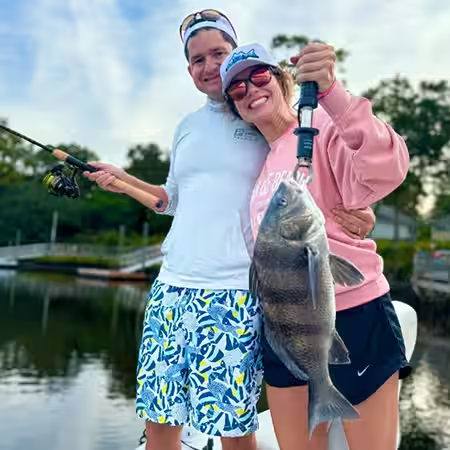
What is a black drum? Black drum (Pogonias cromis) are a bottom-feeding inshore saltwater fish found along the North Carolina coast, most commonly around oyster bars, bridge pilings, shell bottom, and stretches of moving water such as the ICW.
This guide explains how to identify, find, and catch black drum in North Carolina’s inshore waters — with simple, bait-first tactics that work from creeks to bridges to the ICW.
Black drum are one of the most dependable inshore fish you can target in NC. They’re forgiving for beginners — you don’t need fancy tackle, perfect casts, or fast retrieves — but they can also be a legitimate trophy pursuit for experienced anglers who know how to target bigger fish on heavy structure.
Most black drum are caught on simple bottom rigs with natural baits, and that’s exactly how I fish for them on my inshore charters around Ocean Isle Beach. If you want steady action, shrimp and fiddler crabs will get it done. If your goal is heavyweight drum, switching to larger crabs and fishing slower, heavier structure is the move.
Unlike redfish or speckled trout, black drum are not a “search-and-sight-cast” species. Success is far more about understanding where they feed — oysters, pilings, shell bottom, and current — than about lure choice or finesse.

Fish With the Captain Who Wrote This Guide
I’m Captain Harvey Wall, the author of this guide and the owner/operator of Salty Dawg Fishing Charters in Ocean Isle Beach, NC. If you’d rather skip the learning curve and experience the NC Black Drum fishery firsthand, join me on the water.
View Inshore Fishing ChartersBlack Drum Identification in North Carolina
Black drum change a lot as they grow, so the goal here is simple: identify one quickly at the boat so you know what you’re holding and can follow NC regulations with confidence.
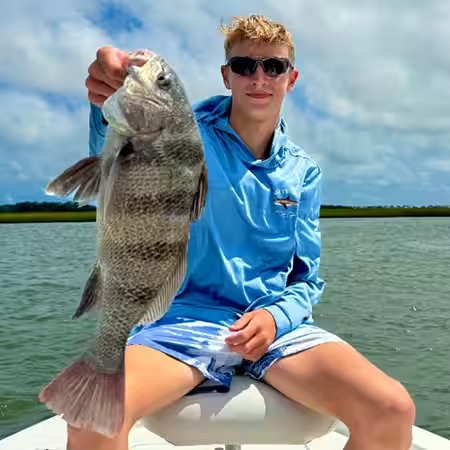
Black Drum Identification (Quick Checklist)
- Chin barbels (“whiskers”): The most reliable giveaway. If it has whiskers, it’s a black drum.
- Juvenile bars fade with age: Smaller fish may show vertical bars; adults usually become dark bronze to almost black.
- Deep, rounded body: Especially obvious on larger fish with thick shoulders.
- No redfish tail spot: Black drum do not have the classic red drum spot on the tail.
Black Drum vs Red Drum (Quick Compare)
Black drum have chin barbels (“whiskers”) and no tail spot. Red drum have no whiskers and usually have one or more tail spots. Simple rule: whiskers = black drum; tail spot = red drum.
Black Drum vs Sheepshead (Why People Mix Them Up)
Black drum and sheepshead are often confused because they live in the same places and eat the same kinds of food. You’ll find both tight to pilings, docks, rocks, and oyster bars, and both will eat shrimp and crabs on the bottom. They also fight hard for their size, which adds to the confusion when you’re hooked up.
The fastest way to tell them apart is to look under the jaw. If the fish has whiskers (chin barbels), it’s a black drum — no question. Sheepshead do not have whiskers.
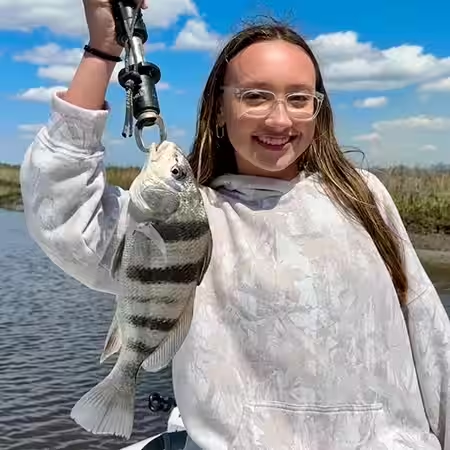
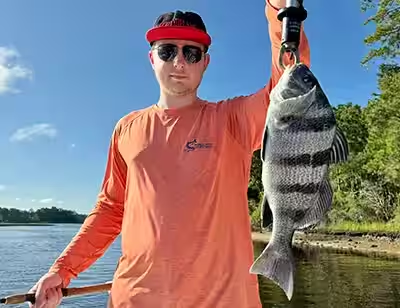
Sheepshead also keep bold black vertical stripes their entire life, while black drum only show faint bars when they are small — those bars fade as drum get older. Adult black drum are usually dark bronze to almost black, while sheepshead stay silver-gray with clear stripes.
Mouth and teeth are another giveaway. Black drum have a normal fish mouth, but sheepshead have obvious “human-like” crushing teeth that they use to crack barnacles and oysters. If you see those teeth, you’re holding a sheepshead, not a drum.
Simple field rule: Whiskers = black drum. Stripes + crushing teeth = sheepshead.
Black Drum Records
- NC State Record Black Drum: 104 lb (Cape Lookout, 2005).
- IGFA World Record Black Drum: 113 lb 4 oz (Panama City, Florida).
Seasonal Patterns of Black Drum in North Carolina
Black drum can be caught year-round in North Carolina, but their behavior shifts with water temperature and how bait concentrates around structure. The good news is you don’t have to overcomplicate it — black drum are predictable once you start thinking in terms of structure and tide.
Spring
As water temperatures climb, larger black drum begin showing up more consistently around major structure. This is when crab baits start to outperform shrimp, especially around bridges and deeper oyster bars. Fish often stage on edges rather than way up shallow.
Summer
Summer offers the most consistent action overall, especially for smaller drum in creeks, docks, and shallow oyster bars. Early morning and late afternoon can fish best, and moving water still matters. Shrimp and fiddlers both shine this time of year.
Fall
Fall is one of the best all-around seasons. You’ll catch plenty of slot-size drum, but you also have a real shot at heavyweight fish as they concentrate around larger pieces of structure. I like to target trophy black drum this time of year with a half or whole blue crab on a knocker rig fished tight to major structure with good current.
Winter
Winter drum fishing is slower but can still be good. Fish tend to hold deeper and closer to hard structure, and bites can be subtle. Heavier weights, slower presentations, and patience pay off.
Where to Find Black Drum in North Carolina
Black drum aren’t a “run-and-gun” fish. They live where food is concentrated. Think structure, not secret spots — especially structure that has shellfish and moving water.
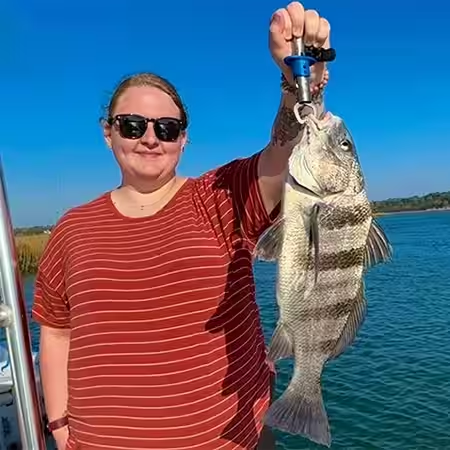
Oyster Bars & Shell Bottom (Top Producer)
Oyster bars and hard shell bottom are the most consistent black drum habitat you’ll find inshore. These areas act like a buffet: oysters, barnacles, mud crabs, fiddlers, and shrimp all concentrate here — and black drum are built to crush that food.
The key is not just finding oysters — it’s finding oysters with moving water. Drum feed best on a steady tide that delivers fresh bait across the bottom. On slack water, bites often slow down.
Fish your bait right on the shell, but don’t drag it constantly. Use just enough weight to hold bottom and let the fish come to you.
Bridge Pilings, Docks, & Riprap
Bridges, docks, and riprap are prime black drum hangouts because they’re coated in barnacles and small crustaceans. Add current, and these become high-percentage feeding zones.
The best presentation is usually down-current of the structure where bait naturally drifts and collects. Stay close enough to be in the strike zone, but not so tight that you’re snagging every cast.
Creek Mouths, Drains, & Mud Flat Edges
Smaller black drum are very common in creeks, especially where soft mud transitions to shell or harder bottom. These edge zones funnel bait during tidal movement and give drum easy feeding lanes.
Instead of casting randomly across a flat, look for subtle features: small drop-offs, scattered shell, or a slight color change in the bottom. Those small changes often hold fish.
When to Catch Black Drum
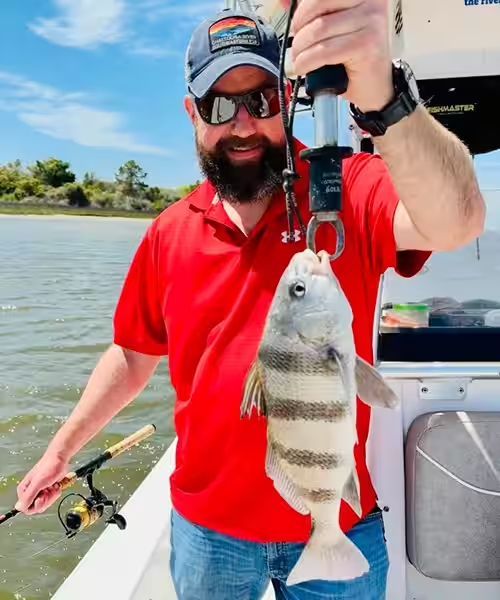
Black drum don’t follow the clock as much as they follow current and feeding opportunity. If you understand how tide movement, light levels, and bait positioning work together, you’ll dramatically increase your odds — without ever looking at a calendar.
Best Tide for Black Drum
Black drum typically bite best on steady, moderate-moving tides. They are bottom feeders that root along structure, so they want current strong enough to bring food to them — but not so strong that they have to fight it constantly.
Slack tide is usually the slowest window because bait isn’t moving. On the opposite end, ripping current can still produce fish, but it often favors smaller drum that are more aggressive and less energy-conscious.
If your goal is bigger drum, focus on a steady push of water rather than peak current. Moderate tide movement allows larger fish to feed efficiently along oyster bars, bridge pilings, and shell edges.
Simple rule:
Faster current = more bites.
Moderate current = better chance at bigger fish.
Time of Day
Black drum are less light-sensitive than species like speckled trout, but light levels still matter — especially in shallow water.
In shallow creeks and along exposed oyster bars, early morning and late afternoon often produce better bites, especially in summer heat. Lower light levels make fish more comfortable moving slightly shallower and feeding more actively.
In deeper water around bridges, docks, and the ICW, time of day matters less than tide. If you have moving water and structure, drum will feed mid-day just fine — even under bright sun.
On extremely hot summer afternoons, shallow bites can slow down. In those cases, deeper structure or shaded pilings tend to outperform open flats.
Do Solunar Tables Matter?
Solunar tables can help — but they’re not magic.
Major and minor feeding periods sometimes line up with strong black drum bites, especially when they overlap with moving water. If a major solunar window falls during a steady outgoing or incoming tide, that can absolutely stack the odds in your favor.
That said, tide and current matter more than solunar predictions. I would always choose:
- Moving water with average solunar timing
- Over perfect solunar timing on slack tide
If you can line up both — steady tide movement and a major or minor feeding window — that’s when things can get really good.
Bottom Line Timing Strategy
If you’re planning a black drum trip in North Carolina, prioritize your timing in this order:
- Moving water
- Moderate current strength
- Structure with shell or pilings
- Bonus: overlap with a solunar window
Black drum are predictable when you focus on current instead of the calendar. If the water is moving and you’re fishing the right structure, you always have a legitimate shot.
How to Catch Black Drum in NC
Black drum are bottom feeders. You don’t need fancy techniques — natural bait and simple rigs catch black drum consistently. The big keys are structure, moving water, and keeping your bait on the bottom.
Best Baits for Black Drum
You can catch black drum on a lot of natural baits, but if I had to keep it simple, shrimp and fiddlers are the two primary baits — and larger crabs are what I switch to when we’re trying to weed out the smaller fish and target heavier drum.
- Shrimp (primary bait): Reliable year-round. Works around oysters, bridges, docks, and creeks. Great for steady bites.
- Fiddler crabs (primary bait): A natural match around oyster bars and riprap. Also helps when small fish are stealing your shrimp.
- Larger crabs (for bigger drum): Half or quartered blue crab, or stout mud crabs, fished on bottom around heavy structure.
Best Rigs for Black Drum
You don’t need complicated rigs for black drum. The goal is to keep bait on the bottom, in the current, and in the feeding lane. These are the rigs I rely on most.
- Carolina rig: My everyday black drum rig. Lets fish pick up bait with less resistance.
- Knocker rig: Excellent when fishing tight to oysters or riprap because it stays compact and “taps” along structure.
- Jigheads: A natural presentation around docks, oyster bars, and bridge riprap. Cast up-current and let it drift along the structure. Live Fiddler crabs on jigheads work great for Black Drum.
How to tie a Carolina Rig: Slide an egg sinker onto your main line first, then add a small bead (optional, but it protects your knot), and tie the line to a barrel swivel. From the other end of the swivel, attach about 12 inches of fluorocarbon leader and finish with a snelled circle hook. The sliding sinker keeps the weight separated from the hook and bait, allowing a black drum to pick it up without immediately feeling resistance — which increases hookups, especially on slow, subtle bites.
How to tie a Knocker Rig: Slide your egg sinker directly onto the main line and snell your hook directly to the main line (no sivel or extra leader sections). The sinker rests right above the hook, creating a compact setup that stays tight to structure and keeps the bait pinned to the bottom. This rig shines around oysters, riprap, and bridge pilings because it “taps” along structure instead of trailing behind the weight.
Captain’s Recommendation: For both Carolina and Knocker rigs, I run a circle hook and snell it directly to the line. A snelled hook gives you a straighter pull when the fish loads the rod, which helps the hook rotate cleanly into the corner of the mouth. It’s a simple upgrade that increases hookups and makes releases easier.
Feeling the Bite & Setting the Hook
Black drum don’t usually “smash” a bait. A lot of bites feel like a slow thump, a heavy weight, or your line steadily moving off. If you’re using a circle hook, don’t jerk — let the rod load and come tight with steady pressure.
Best Fishing Gear for Black Drum in NC
Black drum fishing in North Carolina is simple on purpose — but the right setup makes a big difference, especially around oysters, pilings, and shell. You want enough sensitivity to feel subtle bites, and enough toughness to handle abrasion and pull fish away from structure. The gear below reflects what I use and what works best for bait fishing around the ICW, creeks, and hard structure.
Black Drum Rod / Reel
- Budget Combo: Penn Battle IV Rod & Reel Combo (4000 size)
- Recommended Rod: TFO Intracoastal Inshore Rod 7'0
- Recommended Reel: Shimano 21 Nasci 4000 Reel
- Premium Reel: Penn Slammer IV 4500 Reel
- Note: Use a 6000 size reel / matching rod for trophy drum.
Line & Leader Setup
- Main Line: PowerPro Super Slick V2 Braided Fishing Line (20-40 lb test)
- Fluorocarbon Leader: Yo-Zuri Clear 100% Fluorocarbon Leader (20-50 lb test)
Knocker Rig
- Egg Sinker: 1 oz Egg Sinker (Use 3/4 oz to 2 oz sizes)
- Hook: Owner 5363 Circle Hook 4/0
Carolina Rig
- Egg Sinker: 3/8 oz Egg Sinker (Use 3/8 oz to 1 oz sizes)
- Hook: Livebait Hook 2/0, Owner 5363 Circle Hook 2/0
- Bobber Stop: (optional) Rubber Bobber Stops
- Bead: (optional) 6 MM Beads (protects knots)
- Swivel: Swivel
NC Black Drum Size & Bag Limits for 2026
North Carolina Black Drum Regulations (2026): 14–25 inch slot limit (total length), 10 fish per person per day, with one fish allowed over 25 inches TL.
- Slot limit: 14–25 inches total length (TL)
- Trophy allowance: 1 fish per person per day over 25 inches TL
- Daily bag limit: 10 fish per person
The slot protects juvenile fish under 14 inches and most of the large breeding drum over 25 inches. The one-over-slot allowance is a smart move by NCDMF because it still gives anglers a legal shot at weighing a potential state or world record. For a species that can top 100 pounds, that trophy provision matters.
How to measure total length (TL): Lay the fish flat on a rigid ruler or bump board with the mouth closed, pinch the tail together, and measure from the tip of the snout to the longest point of the tail.
Regulations can change, so always confirm the most up-to-date rules with NCDMF before keeping fish.
Tips for Catching Trophy Black Drum
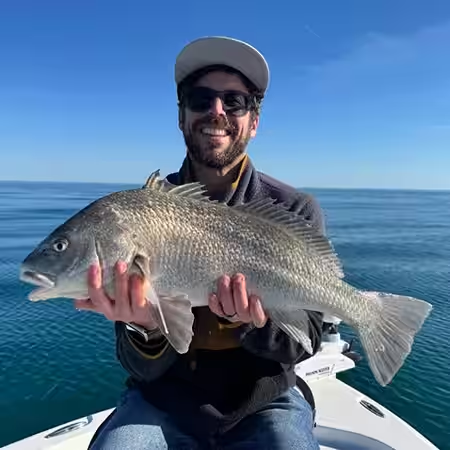
If your goal is truly large black drum — not just steady action — you have to shift your mindset from “catch a lot” to “wait for the right bite.” Big drum behave differently than school-size fish, and your tactics should reflect that.
Bait Choice Matters More Than Anything
Shrimp is a fantastic numbers bait, but it’s rarely the path to heavyweight drum. When you’re targeting big fish, switch to larger crabs — half or quartered blue crab, or stout mud crabs. Crab filters out smaller fish, holds up better around shell, and stays in the strike zone longer while big drum root along the bottom.
Expect fewer bites — but when the rod finally loads up, it’s usually worth the wait.
Fish the Right Kind of Structure
Big drum prefer heavier, more permanent structure than smaller fish. Focus on large bridge pilings with deep water, mature oyster bars with thick shell, hard-bottom channel edges, inlet jetty walls, and deeper stretches of the ICW where shell meets current.
Shallow flats and small creeks will still hold drum, but they’re much more likely to produce smaller fish. If you want giants, fish the big, rugged habitat.
Tide Timing Over Tide Speed
Fast, ripping current can create lots of bites from smaller drum — but it’s not your friend for trophy fish. Big drum feed best on moderate to slow-moving tides when they can methodically nose along the bottom without burning energy fighting current.
A simple way to think about it: faster current = more action, slower current = bigger fish.
Presentation Beats Casting Distance
You don’t need long casts for big drum. Short, accurate casts tight to structure are usually better. The goal is keeping your bait still, on bottom, and in the feeding lane. casting too often can actually hurt your odds — big drum often approach bait slowly, investigate it, and then commit. Let your bait sit, soak, and call in the drum to you.
Leader and Tackle for Heavy Habitat
Around oysters, barnacles, and concrete, abrasion is your biggest enemy. For trophy drum, step up your leader to 50 lb fluorocarbon and use stout circle hooks. That heavier setup prevents break-offs when a big fish rubs you on structure and gives you confidence to fish right in the hard stuff where the biggest drum live.
How the Bite Feels — and How to Respond
Big black drum rarely hit like a redfish. Instead, you’ll often feel a slow thump, a heavy weight, or your line steadily moving off. When that happens, don’t set the hook like you’re bass fishing. Let the fish load the rod, then come tight with steady pressure. Patience in those first few seconds is usually the difference between landing a giant and pulling the hook.
FAQ: Black Drum Fishing in North Carolina
What is the size limit for black drum in North Carolina?
As of 2026, the North Carolina black drum slot limit is 14–25 inches total length, with a daily bag limit of 10 fish per person. One fish per person per day over 25 inches may be kept as a trophy.
What is the best bait for black drum in North Carolina?
Shrimp and fiddler crabs are the two most reliable baits for black drum in North Carolina. If you’re targeting bigger drum, larger crabs (like quartered blue crab) are often the best upgrade because they filter out small fish and hold up better around shell and structure.
What is the best tide for black drum?
Black drum usually bite best on steady, moderate-moving tides. Slack water can be slow because bait isn’t moving. Ripping current can still produce fish, but it often favors smaller drum rather than trophies.
Where are black drum most commonly found in North Carolina?
In North Carolina, black drum are most commonly found around oyster bars, shell bottom, bridge pilings, docks, riprap, and creek mouths — especially where moving water brings food past the structure.
How can you tell a black drum from a red drum?
Black drum have chin barbels (“whiskers”) and do not have a redfish tail spot. Red drum have no whiskers and usually have one or more tail spots. Simple rule: whiskers = black drum; tail spot = red drum.
How can you tell a black drum from a sheepshead?
Black drum have chin barbels (“whiskers”). Sheepshead do not. Sheepshead also have bold vertical stripes and obvious crushing teeth. If you see whiskers, it’s a black drum.
Are black drum good to eat?
Yes — smaller black drum are excellent table fare. Fish in the 14–22 inch range have firm, mild-flavored fillets very similar to red drum. Larger drum can become coarse in texture and stronger in flavor, which is why most anglers release the big fish and keep a few slot-size drum for the freezer.
How big do black drum get in North Carolina?
Most black drum caught inshore in North Carolina are in the 3–10 pound range, but fish over 50 pounds are caught every year around major structure. True trophy drum can exceed 100 pounds.
Tight Lines,
Captain Harvey Wall
Salty Dawg Fishing Charters
February 13, 2026
More NC Gamefish Species Guides
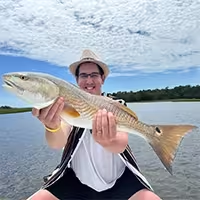
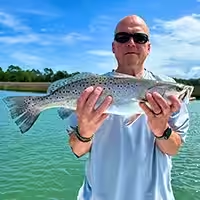
Want to explore more gamefish species found along the North Carolina coast? Here are the other fish anglers commonly encounter in our waters. Click each guide below to learn more.


How to Book Your Fishing Charter
Booking your Black Drum Fishing Charter with Salty Dawg Fishing Charters is easy! Here’s how:
- Option 1:
Book Instantly Online - Option 2: Prefer to talk first or book by phone?
Call / text Captain Harvey directly at (910) 250-8459
Have questions? Feel free to Contact Captain Harvey or call anytime. He is happy to help you plan the perfect fishing trip for you!