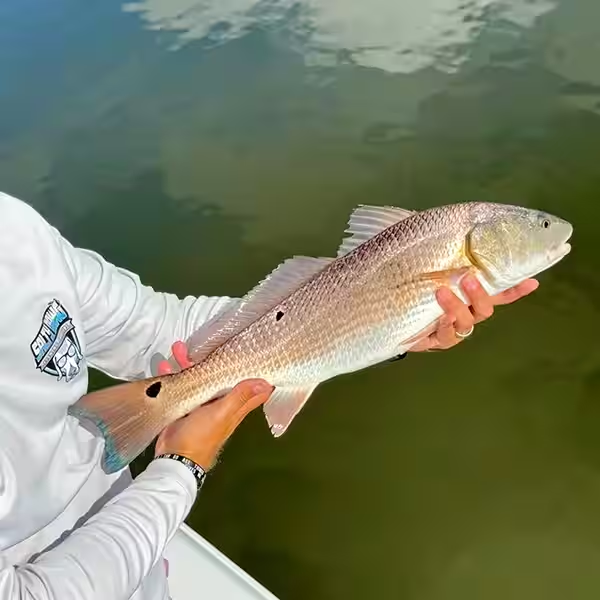
Red Drum, better known as Redfish, are one of the most iconic inshore gamefish in North Carolina — so much so that they’re actually the official state saltwater fish of NC. They’re a true estuary fish — built to thrive in tidal rivers, marsh creeks, the Intracoastal Waterway, and the protected waters behind our barrier islands.
On my inshore charters out of Ocean Isle Beach, redfish are one of the most consistent species I target. When you hook one on light tackle, you’ll know it quick — hard runs, and real power.
We catch redfish year-round in North Carolina, but their behavior changes a lot with water temperature, bait availability, and seasonal patterns. Spring and summer reds are often spread out across flats, grass edges, and creek mouths. Fall is the famous window — bait stacks up, fish feed heavy, and schools can seem like they’re everywhere. Winter can still be excellent too, especially in deeper protected water where reds group up and stay comfortable.
Most redfish we catch are slot fish, which are from 18–27 inches. The bigger adults we see in the fall are known as Bull Reds or Old Drum (some can be 40+ years old) — same species, just different life stages. And redfish under slot size (under 18 inches) are typically referred to as Puppy Drum.
This is my complete North Carolina redfish guide — written the same way I explain red drum to my charter clients who want to understand the fish, not just get lucky and catch one by accident. I’ll break down how to identify redfish, where they live, how they move seasonally, and why they’re considered the backbone of NC’s inshore fishery.
This guide focuses heavily on how to find and catch redfish in North Carolina, based on what I see on the water guiding trips out of Ocean Isle Beach.
Looking for the full lineup of inshore species? View the NC Inshore Fish Species Guide.

Fish With the Captain Who Wrote This Guide
I’m Captain Harvey Wall, the author of this guide and the owner/operator of Salty Dawg Fishing Charters in Ocean Isle Beach, NC. If you’d rather skip the learning curve and experience the NC Redfish fishery firsthand, join me on the water.
View Inshore Fishing ChartersRedfish (Red Drum) Identification
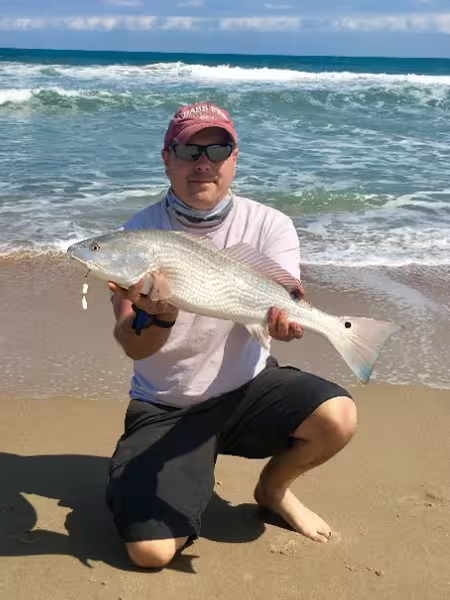
Red drum are one of the easier inshore fish to identify in North Carolina once you know what to look for. Their bronze-to-copper body color, broad tail, and (often) one or more black spots near the base of the tail make them stand out. You’ll hear them called redfish, puppy drum, bull reds, bull drum, or old drum — but those are all the same species at different sizes and life stages.
- Body color: Copper, bronze, or reddish-gold along the sides with a lighter belly. Color can shift based on water clarity and bottom type — marsh fish often look darker than fish from clean, sandy water.
- Tail spot(s): Most red drum have one black spot near the base of the tail (both sides), but some have none and others have multiple spots. This is one of the quickest “giveaways.”
- Mouth position: A slightly downturned mouth built for feeding along the bottom, especially on crabs and shrimp.
- Tail shape: Broad and powerful — built for short bursts and strong runs in current.
- Common mix-up: Croakers can confuse people because they also live shallow inshore and may have simlar colors and shape, but without spots.
- Most common size inshore: The majority of redfish caught by anglers in NC are in the 13-24 inch range.
Redfish Identification Resources
Where to Catch Redfish in North Carolina
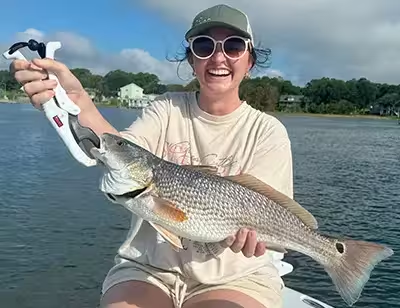
Redfish are widely distributed along the North Carolina coast and can be found in nearly every inshore system that has tides, bait, and some form of structure or edge. They move constantly based on water temperature, salinity, forage, and seasonal patterns — and in many areas, they’ll use the same types of habitat year after year. In most cases, your best odds come when you’re fishing areas that naturally funnel bait and concentrate current.
- Marsh creeks & oyster shorelines: Some of the most consistent redfish habitat in NC. Reds use creek mouths, bends, and oyster edges as ambush points, especially on moving water.
- ICW edges & drop-offs: Redfish travel and feed along ICW structure — especially where current sweeps bait along an edge, point, or deeper transition.
- River mouths & mixing zones: Where freshwater meets saltwater, bait concentrates. These areas can hold redfish for long stretches, especially when temperatures are stable.
- Inlets, jetties, and deep tidal channels: These areas can produce bigger fish and seasonal pushes of red drum. In fall and winter, redfish often stage near inlets as they follow bait and temperature breaks.
- Open flats (seasonal): In warmer months, redfish often spread onto shallow flats to feed — especially early and late in the day or on higher water.
In North Carolina, redfish can be caught year-round, but the most “famous” window is September through November when bait is heavy and fish feed aggressively. That said, winter and spring redfish trips can be excellent too — they just tend to be more pattern-driven and location-specific.
Captain’s Redfish Playbook (North Carolina Seasonal Patterns)

If you want to consistently catch redfish in North Carolina, don’t overcomplicate it — focus on seasonal location, moving water, and bait. Red drum are very pattern-driven, and once you understand where they “prefer” to stage each season, you can find them in almost any inshore system. This is the same seasonal playbook I use guiding inshore redfish trips out of Ocean Isle Beach.
- Spring Redfish (March–May): As water temps rise, redfish spread out and start feeding heavier. Look for them along marsh creek mouths, oyster edges, and ICW drop-offs where shrimp and baitfish begin to show up more consistently. Spring reds often bite best on moving water and along transition areas where depth changes quickly.
- Summer Redfish (June–August): Early mornings and late evenings are prime time. Reds will still use shallow flats and grass edges, but in the heat they commonly slide to deeper edges, docks, and current-swept structure where oxygen levels are better and bait gets pinned. Summer is also when your presentation speed and stealth matter most in clear, calm water.
- Fall Redfish (September–November): This is the famous window for a reason. Bait stacks up, water temps are comfortable, and redfish feed aggressively. You can run into schools of slot fish that seem like they’re everywhere — especially around creek mouths, ICW points, and inlet-adjacent staging areas. If someone asks me when they have the best odds at catching redfish in NC, fall is usually the answer.
- Winter Redfish (December–February): Winter redfish can be excellent, but they’re more location-specific. Reds commonly group up in deeper protected water — holes, bends, and basins near the ICW or river systems. Winter bites often come in shorter feeding windows, and slower presentations usually outperform fast retrieves. When you find a winter school, you can catch multiple fish out of the same area.
Captain’s Tip: Redfish don’t live everywhere at once — they’re always positioned where they can feed efficiently. When I’m looking for fish, I’m not just “fishing water”… I’m looking for bait + current + an edge. Get those three ingredients together and you’re in the game.
How to Catch Redfish in NC (Tide, Wind, and Water Clarity)
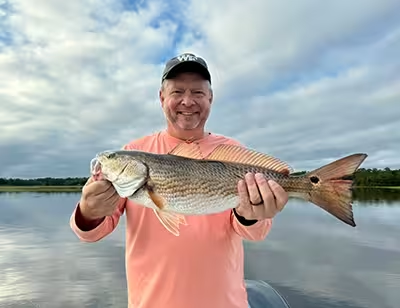
One of the biggest mistakes anglers make with redfish is focusing too much on the lure and not enough on conditions. Redfish are opportunistic feeders, but inshore success usually comes down to three things: tide movement, wind direction, and water clarity. If you learn how those three factors position bait, you’ll catch a lot more reds — even on tough days.
Tide Movement (The #1 Factor)
- Moving water is everything: Redfish feed best when the tide is moving. Slack tide usually slows the bite down.
- Falling tide concentrates fish: On an outgoing tide, bait gets pulled off the flats and out of the creeks. This is when redfish stack up on creek mouths, drains, and edges.
- Rising tide spreads fish out: High water lets reds roam shallow. They can be harder to locate, but when you find them, the bite can be incredible.
Wind Direction (Wind Pushes Bait)
- Wind positions bait: A steady wind will push water and bait toward certain shorelines. Windblown banks, points, and grass edges can turn on fast.
- Don’t fear wind: A little chop often helps the bite because it breaks up light and makes fish less spooky — especially in clear water.
Water Clarity (Match Your Presentation)
- Clear water: Go more natural with lure color, lighten your leader if needed, and focus on quiet, accurate casts.
- Dirty water: Use darker profiles or higher-visibility colors, and consider lures with more vibration or thump so fish can track them.
- Best overall redfish water: Slightly stained water is ideal — enough visibility for fish to hunt, but not so clear that they get spooky.
Captain’s Tip: If I had to simplify redfish fishing into one sentence, it would be this: fish moving water where bait naturally gets funneled. When you combine tide movement with a strong edge (creek mouth, oyster line, ICW drop), redfish usually aren’t far away.
Best Places to Target Redfish Inshore
If you dropped me into a new area and told me to find redfish fast, these are the first three places I’d check. They’re simple, repeatable patterns — and they all have the same ingredients: bait + current + an edge.
- Creek mouth + drain on a falling tide: Outgoing water pulls bait off the flats and funnels it through drains. Redfish stack up right where that flow dumps into deeper water.
- ICW edge where current sweeps a point: Any point, corner, or bend that “pins” bait against a drop-off is a redfish magnet — especially when the tide is moving.
- Oyster line / current seam with bait flicking: If you see nervous water, bait flipping, or a clean current seam along oysters, slow down. Redfish use that edge like a buffet line.
If one of these spots has clean moving water and bait showing, I slow down and fish it hard before I go hunting elsewhere.
Best Lures for Redfish in North Carolina (What I Use)
Redfish will eat a lot of different lures, but if you want to keep it simple, you don’t need a tackle shop worth of gear. On my inshore charters, I rely on a small handful of proven lures that cover almost every situation we run into around Ocean Isle Beach — from shallow marsh creeks to ICW edges and oyster shorelines.
-
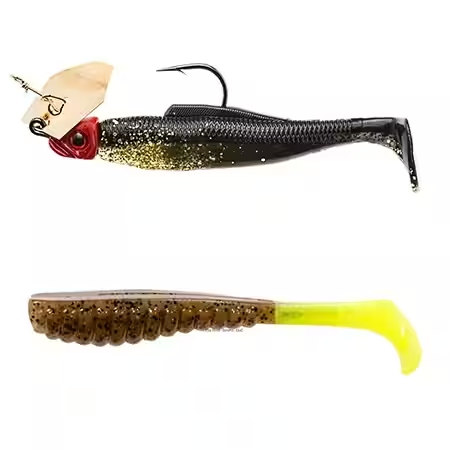
Swimbaits: My everyday workhorse lure — and honestly one of the easiest baits to fish. They’re hard to beat when you’re covering water along grass edges, creek mouths, and drop-offs. I like the Z-Man Swimming Trout Trick in pumpkin chartreuse or lighter colors like pearl blue glimmer. Another great option is the Z-Man Diezel MinnowZ in opening night or gold rush colors.
I rig my swimbaits for redfish on a Z-Man Redfish Eye Jighead in 1/4 oz.
If you want more vibration and flash in stained water, the Z-Man Chatterbait Jig Head is also a great way to rig your Diezel MinnowZ — I prefer the 1/4 oz size with a gold blade.
Want the exact method I teach on my charters for fishing swimbaits? Read this: How to Fish a Swimbait Inshore. - Gold Spoons: A gold spoon is one of the most reliable redfish lures ever made — especially in slightly stained water and around grass, oysters, and shallow flats. It covers water fast, doesn’t have to be fished perfectly, and redfish flat-out crush them. My favorite spoon for redfish in NC is the Johnson Gold Spoon in the 2-3/4 inch, 3/4 oz size.
- Topwater Lures: Early morning, late evening, or anytime you’ve got low light, topwater lures are a great choice. This bite can be very tide-dependent, but when it’s on, it’s one of the most fun ways to catch redfish in NC. My go-to topwater for reds is the MirrOlure Top Dawg. Work it with a steady walk-the-dog cadence, and pause it near oyster lines, points, and creek mouths.
- Ned Rigs (Finesse Baits): When the water is clear, the fish are pressured, or it’s the dead of winter, downsizing can make all the difference. Tiny Ned-rigged soft plastics will still get eaten when bigger baits get ignored. If you’re new to the Ned rig, this Z-Man Ned Rig Starter Kit is a great starting point. My favorite finesse bait for reds is the Z-Man TRD TicklerZ in green pumpkin, rigged on a Z-MAN Pro ShroomZ Jighead in 1/6 oz.
Captain’s Tip: If the water is clear, I usually size down and go natural. If the water is dirty, I go with a darker profile or something with more vibration (gold spoons and chatterbaits are two of my favorites). In slightly stained water, redfish are comfortable — and that’s usually when the bite gets really good.
Best Rod & Reel for Redfish in NC
You don’t need heavy fishing gear to catch redfish in North Carolina — but you do need a setup that can handle strong runs, sharp structure, and constant use without failing. Here’s the redfish gear I trust day in and day out on my inshore charters. I recommend 2500 size reels for most situations, but if you’re around larger redfish, stepping up to a 4000 size reel is a smart move. And if you’re fishing around lots of oysters, docks, or other sharp structure, I also recommend bumping your leader up to 30 or even 40 lb test.
Red Drum Rod / Reel
- Budget Combo: Penn Battle 4 Rod & Reel Combo (2500 size)
- Recommended Rod: TFO Intracoastal Inshore Rod 7'0
- Recommended Reel: Shimano 21 Nasci 2500HG Reel
Line & Leader Setup
- Main Line: PowerPro Super Slick V2 Braided Fishing Line
- Fluorocarbon Leader: Yo-Zuri Clear 100% Fluorocarbon Leader
Fighting & Handling Redfish
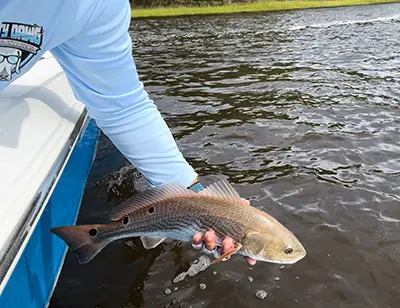
Redfish are one of the best light-tackle fighters in North Carolina’s inshore waters. Slot fish tend to make hard, steady runs and use current to their advantage, especially around creek mouths, docks, and ICW edges. Bigger fish feel like a bulldozer — slow, powerful, and determined — and once a redfish gets broadside in the current, it can feel much heavier than its size. The key is staying smooth, keeping steady pressure, and letting the drag do the work instead of trying to “win” with brute force.
Here are a few tips I teach my charter clients when we hook into a redfish:
- Keep steady pressure — redfish pull hard, but steady pressure lands them faster and cleaner than aggressive pumping.
- Use the drag — redfish are known for strong runs, especially when they feel the hook. Let the drag work and avoid tightening down mid-fight.
- Control the fish around structure — if you’re near docks, oysters, or bridge pilings, guide the fish away early before it can rub you off.
- Handle carefully — support the fish horizontally, avoid squeezing the belly, and keep your hands off the gills.
- Quick photo, quick release — especially in warm water. Keep the fish in the water as much as possible and release it strong.
Redfish Regulations in North Carolina
Red drum are one of North Carolina’s most tightly managed inshore species, and the rules are built around protecting breeder fish while allowing harvest of a limited “slot” size. Regulations can change, so it’s always smart to verify the most current rules before keeping fish — especially if you’re traveling or fishing unfamiliar water.
Official Redfish Regulations Resources
For the most accurate, up-to-date red drum regulations, use these official resources:
NC Redfish Regulations at a Glance
- Slot Limit: 18 to 27 inches. Fish outside the slot (smaller or larger) must be released.
- Measurement Standard: Total Length (tip of the snout to the end of the tail with the tail pinched).
- Bag Limit: 1 fish per person, per day.
More NC Gamefish Species Guides
Want to explore more gamefish species found along the North Carolina coast? Here are the other fish anglers commonly encounter in our waters. Click each guide below to learn more.
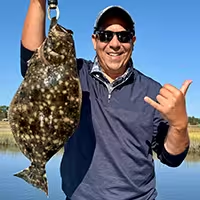
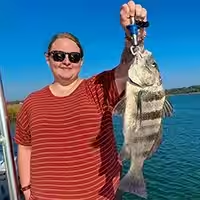

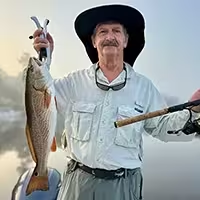
Redfish FAQs
Are redfish common in North Carolina?
Yes — red drum (redfish) are one of the most common and widely distributed inshore gamefish in North Carolina. They’re found in tidal rivers, marsh creeks, the Intracoastal Waterway (ICW), sounds, and inlet systems all along the NC coast. Here around Ocean Isle Beach, redfish are available year-round — but where they hold and how they feed changes with water temperature, tides, and bait.
Where is the best place to catch redfish in NC?
The best places to catch redfish in North Carolina are areas that consistently combine moving water, bait, and a strong edge or structure. Some of the most reliable redfish spots across NC include marsh creek mouths, oyster shorelines, ICW drop-offs, and inlet-adjacent channels. In the Ocean Isle Beach area, I focus heavily on tide-driven creek drains, current-swept ICW points, and oyster seams where bait naturally gets funneled.
What’s the difference between puppy drum, redfish, and bull reds?
They’re the same species — just different life stages of red drum. Puppy drum is the nickname for smaller redfish commonly caught inshore (often “slot” fish). Bull reds or old drum are the big adult breeders, and they’re most often found near inlets, deeper tidal channels, and nearshore structure during seasonal migrations. Along the NC coast, fall and winter are the most common times anglers see an influx of larger red drum.
Can you keep redfish in North Carolina?
Yes — but only if the fish is within North Carolina’s legal red drum slot limit and you stay within the daily bag limit. Overslot redfish (bull reds) are protected breeder fish and must be released. Regulations can change, so always confirm the current NC rules with NCDMF before harvesting. If you’re fishing around Ocean Isle Beach, it’s especially important to measure accurately and release big breeders quickly and cleanly.
What’s the easiest way to identify a redfish?
The easiest way to identify a redfish (red drum) is by the bronze-to-copper body color and the black tail spot (some have multiple spots and some have none). They also have a strong, broad tail built for power and short bursts — which is why they pull so hard on light tackle. In North Carolina’s inshore waters, that tail-spot feature is one of the quickest and most reliable identifiers.
Reserve Your North Carolina Inshore Fishing Charter Today!
Don't miss your chance to experience the best inshore fishing charter in North Carolina!. Book your fishing charter now for an unforgettable day on the water!
To Book Your Inshore Fishing Charter:
- NC Inshore Fishing Charter Info
- Call or text Captain Harvey at (910) 250-8459
- Click / tap the "Book My Trip" button below to view my availability calendar and choose your booking options.
BOOK MY TRIP
Tight Lines,
Captain Harvey Wall
Salty Dawg Fishing Charters
February 23, 2026

How to Book Your Fishing Charter
Booking your Redfish Fishing Charter with Salty Dawg Fishing Charters is easy! Here’s how:
- Option 1:
BOOK MY TRIP - Option 2: (If you have questions or don't want to book online)
Call / text Captain Harvey directly at (910) 250-8459
Have questions? Feel free to Contact Captain Harvey or call anytime. He is happy to help you plan the perfect fishing trip for you!