
Hammerhead sharks are a regular part of North Carolina’s coastal waters, showing up anywhere from the surf zone to the nearshore reefs and all the way out to the blue water. They’re also probably the second most common shark we catch on my shark fishing charters. Hammerheads are one of the easiest sharks to recognize thanks to their wide, hammer-shaped head and tall dorsal fin, and when they move through an area, you usually know it. They’re strong, fast fish that make long, sweeping runs and have a very distinct way of fighting on light tackle.
Here in North Carolina, we typically see hammerheads during the warmer months when bait stacks up along the beaches, in the inlets, and around our nearshore reefs. Menhaden schools, mullet runs, and clean summertime water can pull them surprisingly close to shore. Most of the hammerheads we encounter are scalloped hammerheads, with occasional smooth or great hammerheads showing up offshore when the conditions line up. They aren’t the most common shark we catch—blacktips and spinners hold that title—but when a hammerhead hits a bait, you know it instantly.
This page breaks down everything you need to know if you’re trying to identify a hammerhead or understand how they behave along the NC coast. Whether you’re learning the species for the first time or checking off sharks you’ve caught over the years, this guide will walk you through the key traits, where they show up, and what makes them such a unique part of our fishery.
Looking for other shark species found in NC? View our full NC Shark Species Identification Guide.

Fish With the Captain Who Wrote This Guide
I’m Captain Harvey Wall, the author of this guide and the owner/operator of Salty Dawg Fishing Charters in Ocean Isle Beach, NC. If you’d rather skip the learning curve and book a NC Shark Fishing Charter so you can experience shark fishing for Hammerhead Sharks firsthand, join me on the water.
Hammerhead Shark Fishing ChartersHammerhead Shark Identification
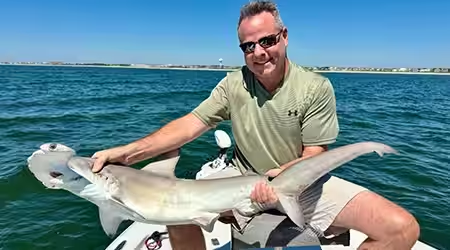
Hammerhead sharks have one of the most recognizable profiles of any species along the North Carolina coast. Even with three different types found in our waters—the scalloped hammerhead, smooth hammerhead, and the larger great hammerhead—they all share the same unmistakable silhouette. The wide, flattened head and tall dorsal fin give them away instantly, and once you know what to look for, identifying a hammerhead becomes second nature.
- Head shape: All hammerheads share the wide, flattened head (cephalofoil), but the scalloped hammerhead has a noticeable “scalloped” curve along the front edge. Smooth hammerheads lack this curve and have a straighter front margin, while great hammerheads have a more pronounced, almost T-shaped head with a very wide span.
- Dorsal fin: The great hammerhead’s first dorsal fin is extremely tall and sickle-shaped — much larger than the other species. Scalloped and smooth hammerheads have tall dorsals too, but not nearly as oversized or dramatic.
- Eyes & front margin: Scalloped hammerheads have deep notches (or scallops) along the front of the head with eyes set just outside the outer curve. Smooth hammerheads have a clean, un-notched front margin. Great hammerheads have a straighter front edge but with a head that is much broader overall.
- Body color: Gray to bronze-brown on top with a light underside. Great hammerheads often show a slightly darker back and sharper contrast, especially in clear water.
- Common mix-up: Smaller hammerheads are sometimes confused with bonnethead sharks, but bonnetheads have a smooth, shovel-shaped head with no distinct outer “wings.”
- Most common in NC: Scalloped hammerheads make up the majority of encounters along our coast, with smooth hammerheads showing up occasionally and great hammerheads appearing offshore or around deeper structure.
Hammerhead Identification Resources
- NOAA Shark Identification: Great Hammerhead
- NOAA Shark Identification: Scalloped Hammerhead
- NOAA Shark Identification: Smooth Hammerhead
- Wikipedia: Great Hammerhead, Scalloped Hammerhead, Smooth Hammerhead
Where to Catch Hammerhead Sharks in North Carolina
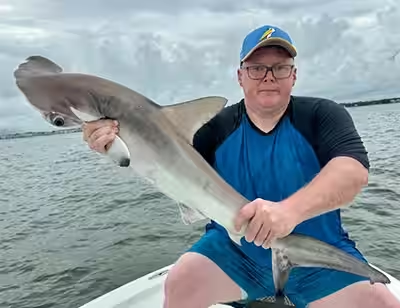
Hammerheads are highly migratory and move up and down the North Carolina coast following bait, clean water, and shifting temperature breaks. We see them in several different zones throughout the season, and each one tends to hold a different size class of fish. In most cases, your best odds come when bait is stacked up and the water is warm and stable.
- Inlets & Beaches / Surf: Smaller hammerheads push close to the beach during the summer, especially when bait is thick and the water clarity is good. These fish are usually juveniles cruising along bars, sloughs, and inlet mouths. My charter clients catch plenty of 3–4 foot hammerheads just a couple hundred yards off the beach every summer.
- Nearshore reefs (2–10 miles): This is where we encounter hammerheads most often. Reef complexes, wrecks, and livebottom holding menhaden or mullet can pull them in tight. Warm, clean water and steady current greatly increase your chances.
- Offshore ledges & temperature breaks: Larger hammerheads — including the occasional great hammerhead — show up offshore around deeper structure, breaks, and strong current edges. These fish often follow bigger bait like bonito, false albacore, or large schools of menhaden.
Across most of North Carolina, the peak window for hammerheads runs from June through October. Consistent warm water, clean conditions, and heavy bait concentrations all play a big role in bringing them within range.
Best Shark Rigs & Baits for Hammerhead Sharks in NC
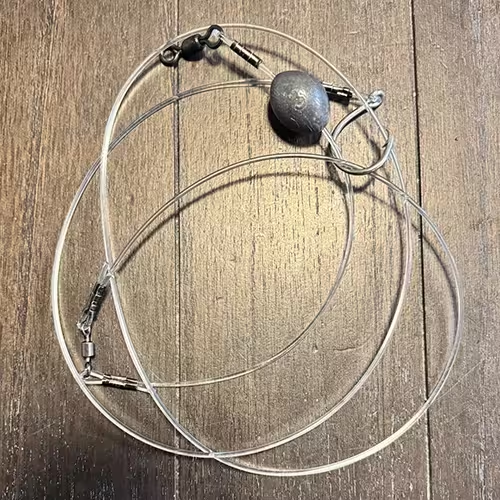
My Go-To Shark Fishing Rig:
This rig is a five-foot modified Carolina rig built in two sections: an upper section with a heavy, fixed sinker locked between two ball-bearing swivels, and a lower section consisting of roughly four feet of 400-pound monofilament leader running to a non-stainless inline circle hook.
This shark fishing rig keeps the bait close to the bottom while still allowing natural movement, reduces tangles, and gives you a clean, strong connection when a hammerhead makes that long initial run.
The shark rig shown above is the exact one I use on most of my NC Shark Fishing Charters, and you can see how I build it step-by-step here: How to Make the Shark Fishing Rig I Use on My Charters.
My Go-To Baits for Hammerhead Sharks:
Hammerheads feed heavily by scent, vibration, and movement, so fresh bait makes all the difference.
- Bluefish chunks or fillets — tough, oily, and stays on the hook well. The best all-around shark bait on our coast.
- Menhaden / Pogies / Bunker — fresh cut or whole.
- Mullet (whole or large chunks) — great scent and very durable.
- Spanish Mackerel — excellent offshore option with strong, long-lasting scent.
- Use chum when possible — it dramatically improves your odds of seeing hammerheads.
- Note: Always check local bait and bait-fishing regulations before fishing.
Captain's Note: I like using Bluefish for bait when fishing for Hammerhead Sharks, which I catch by trolling Yo-Zuri deep divers about 5–10 feet down at 3–4 MPH. I'll troll just off the beaches early in the morning and then set up to shark fish in nearby areas as soon as I have the bait I need. It’s a quick, consistent way to load up on fresh, lively bait before a shark fishing trip.
Best Gear for NC Shark Fishing
You don’t need giant offshore reels and broomstick rods to catch sharks along the NC coast — but you do need gear that can handle long runs, rough mouths, and abrasive skin without failing. Here’s the kind of setup I trust day in and day out on my charter boat.
Shark Fishing Rod / Reel
- Surf Setup: Penn Pursuit V LE 9 Foot Rod-Reel Combo
- Pier Setup: Penn Spinfisher VII 7 Foot Rod Reel Combo
- Boat Setup: Penn Spinfisher VII 7 Foot Rod Reel Combo
Line & Leader Setup
- Main Line: PowerPro SS V2 80 LB Test Braided Fishing Line
- Mono Leader: HI-SEAS Grand Slam 400 LB Mono Fishing Leader
- Wire Leader: AFW 400 LB Stainless Steel Cable Leader
Terminal Tackle
- Swivels: Dr Fish Stainless Steel Swivel #8 390 LB
- Circle Hooks: Mustad Demon Perfect Circle 10/0 Hook
- Drift Sinkers: Egg Sinker 4 Ounce
- Anchored Sinkers: Bank Sinker 6 Ounce
- Pier / Surf Sinkers: Pyramid Sinker 8 Ounce
Shark Fishing Accessories
- De-Hooker: Bubba De-Hooker
- Shark Measuring Tape: Bluewing 96" Waterproof Fishing Ruler
- Fish Handling Gloves: Lindy Fish Handling Gloves
- Crimping Kit: Basic Crimping Kit
- Premium Crimping Kit: Hi-Seas Rigging Kit
Note: Make sure you’re using inline (non-offset) circle hooks that are not stainless steel to stay legal when targeting sharks.
Fighting & Handling Hammerhead Sharks
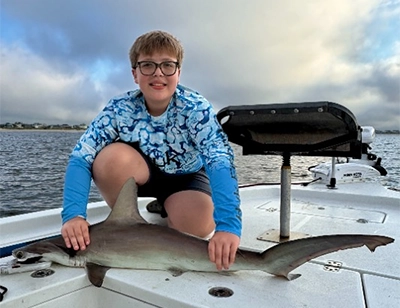
Hammerheads fight differently than many of the other sharks we catch in North Carolina. Instead of short bursts or heavy headshakes, they make long, angled runs and use that wide, hammer-shaped head like a rudder in the current. Once they get broadside to you, they can feel incredibly heavy, so staying smooth and patient makes the fight a lot more manageable. That said, when you're near the beach hooking into the many 3–4 foot Scalloped Hammerheads we have in NC, expect a strong fight but shorter, more manageable runs compared to the larger offshore Hammerhead Sharks.
Here are a few tips I teach my charter clients when we hook into a hammerhead:
- Use steady, consistent drag — no need to “lock down” the reel unless the fish is running toward structure or another hazard.
- Let the rod and drag do the work — pumping the rod hard just wears you out and doesn’t move the fish any faster. This may be necessary with larger sharks, or if one is deep and directly below the boat, but most of the time you just need to keep your rod elevated and reel, reel, reel.
- Have your release tools ready ahead of time — de-hookers, cutters, gloves, and a clean plan for how the release will go. Talk through the release between the angler and anyone helping before the shark is boat-side.
- Keep the shark in the water whenever possible — it reduces stress and is safer for both the shark and the angler.
- Minimize fight time — hammerheads don’t handle prolonged battles well, so land and release them quickly and efficiently.
Hammerhead Shark Regulations in North Carolina
Hammerheads fall under the broader Large Coastal Shark category and are regulated through both federal HMS rules and North Carolina state requirements. Regulations can change quickly, so it’s important to check the most current information before deciding whether a shark is legal to keep. Most anglers release hammerheads regardless, as many are protected or heavily restricted.
Official Shark Regulations & Identification Resources
For the most accurate, up-to-date shark regulations and species identification tools, use these official resources:
- NC Division of Marine Fisheries (NCDMF) Size and Bag Limits
- NOAA Recreational Size and Bag Limits for HMS Species
- NOAA HMS Shark Identification Placard (PDF)
- NOAA HMS Prohibited Shark Identification Placard (PDF)
- NOAA Highly Migratory Species (HMS) Permits
Below is a quick overview of how hammerhead regulations are structured here in North Carolina and what anglers should expect on the water.
Hammerhead Regulations at a Glance
- Hammerhead Management Group: Scalloped Hammerhead, Smooth Hammerhead, and Great Hammerhead fall under the federal Hammerhead Management Group within Highly Migratory Species (HMS) rules.
- Retention Rules: Anglers may only keep a hammerhead if it meets the current federal HMS minimum size and is part of the species allowed for harvest. Many hammerheads — especially Scalloped — do not meet size requirements and must be released.
- Bag Limit: If a hammerhead is legal to keep, it counts toward the one shark per person per day bag limit (from allowed species only). Only one hammerhead from the allowed group may be retained.
- Common Reality: Most hammerheads caught along the NC coast are undersized juveniles and must be released under HMS size rules.
- Hook Requirement: When targeting or catching sharks on natural bait, NC and federal law require non-stainless, inline circle hooks for all recreational shark fishing.
- Identification Responsibility: Anglers are required to properly identify the shark species before harvest. Misidentification of protected species (including some hammerheads) carries serious penalties.
- Best Practice: Unless you are 100% certain the shark meets HMS size rules and retention criteria, treat hammerheads as catch-and-release only. Release the fish quickly, keep it in the water, and minimize handling.
More NC Shark Species Guides
Want to explore more sharks found along the North Carolina coast? Here are the other species we regularly encounter on my shark fishing charters out of Ocean Isle Beach.
Hammerhead Shark FAQs
Are hammerhead sharks common in North Carolina?
Hammerheads aren’t our most common shark, but we do see them consistently each summer. Most are smaller Scalloped Hammerheads in the 3–4 foot range caught just off the beaches, nearshore reefs, and along strong bait lines from June through October. Larger Great Hammerheads show up offshore around deeper structure and temperature breaks.
Where is the best place to catch hammerheads in NC?
Smaller hammerheads push tight to the beaches and inlet mouths when bait is thick. Nearshore reefs (2–10 miles) are the most consistent spots, especially when menhaden schools are holding on the structure. Offshore ledges and current edges occasionally produce bigger Great Hammerheads. Most of my hammerhead catches come from nearshore reef complexes.
What bait works best for catching hammerhead sharks?
Fresh, oily bait is key. Bluefish, menhaden, mullet, and bonito all put off strong scent trails that hammerheads home in on. Bluefish is my #1 choice because it’s tough, oily, and stays on the hook well. Chumming dramatically increases your odds of bringing hammerheads into the spread.
Can you keep a hammerhead shark in North Carolina?
Only under strict HMS rules. Hammerheads fall under the Hammerhead Management Group, and most of the hammerheads caught along the NC coast are undersized juveniles that must be released. To legally retain one, it must meet the federal minimum size and fall within the allowed species list — and only one hammerhead may count toward the daily shark limit. When in doubt, release the shark in good condition.
Are hammerheads dangerous to swimmers in NC?
Hammerheads are large predators, but they are not typically aggressive toward swimmers. Most sightings in NC happen around bait schools, structure, and fishing activity — not close to shore where people swim. Giving sharks plenty of space and avoiding the water during active feeding (especially around bait balls) is the safest approach.
Reserve Your North Carolina Shark Fishing Charter Today!
Don't miss your chance to experience the best Shark fishing charter in North Carolina!. Book your fishing charter now for an unforgettable day on the water!
To Book Your Shark Fishing Charter:
- NC Shark Fishing Charter Info
- Call or text Captain Harvey at (910) 250-8459
- Click / tap the "Book My Trip" button below to view my availability calendar and choose your booking options.
BOOK MY TRIP
Tight Lines,
Captain Harvey Wall
Salty Dawg Fishing Charters
Updated: February 23, 2026

How to Book Your Fishing Charter
Booking your Shark Fishing Charter with Salty Dawg Fishing Charters is easy! Here’s how:
- Option 1:
BOOK MY TRIP - Option 2: (If you have questions or don't want to book online)
Call / text Captain Harvey directly at (910) 250-8459
Have questions? Feel free to Contact Captain Harvey or call anytime. He is happy to help you plan the perfect fishing trip for you!