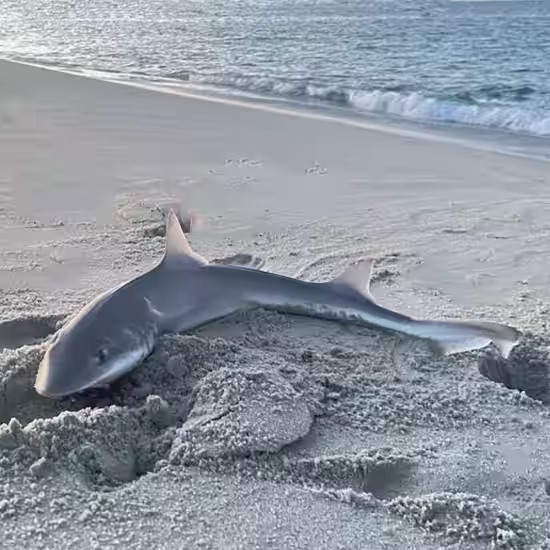
Spiny Dogfish are the classic “mystery shark” you feel thumping away on the end of the line while you’re just trying to catch sea bass or other reef fish. They’re small, schooling sharks that move through in big packs during the cooler months, and they’re one of the most common sharks you’ll run into when you’re bottom fishing off North Carolina in fall and winter.
Around North Carolina, Spiny Dogfish are most often hooked on standard chicken rigs or Carolina rigs while anglers are targeting black sea bass, triggerfish, grunts, and other bottom species. You drop down a baited rig over a good piece of structure, feel a steady, rattling fight with short runs and head shakes, and up comes a slim, gray shark with white spots and sharp dorsal spines — usually with a few more following it up.
In our waters, most Spiny Dogfish run in the 12–36 inch range, with schools of 2–3 foot fish common around deeper nearshore and offshore structure during the colder months. They’re not big sharks by any stretch, but when the dogfish are thick you can have steady action on almost every drop — which is fun until they completely take over a spot.
Spiny Dogfish are incredibly long-lived, slow-growing sharks with a unique life history. NOAA notes they can live several decades, mature late, and grow slowly to just over 4 feet and roughly 20+ pounds at maximum size. They’re managed carefully on the commercial side through a dedicated Atlantic Spiny Dogfish fishery management plan, but for recreational anglers there are currently no specific federal recreational size or bag limits for dogfish in the Atlantic.
The IGFA all-tackle world record Spiny Dogfish weighs 19 lbs 12 oz, caught by angler Stephen McLean on January 28, 2014, in Puget Sound, Washington — a reminder that even a “small” shark can still grow into a respectable fish under the right conditions.
This page breaks down everything you need to know if you’re trying to identify a Spiny Dogfish or understand how and when they show up along the North Carolina coast. Whether you’ve just caught your first one on a reef trip or you’re looking to put a name to the little sharks that keep stealing your baits in winter, this guide will walk you through the key traits, behavior, and basic regulations that apply to recreational anglers.
Spiny Dogfish are sometimes lumped in with “trash fish” or just called “dogfish” by local anglers, but they’re a true shark species with some unique features: sharp dorsal spines, rows of white spots, rough skin, no anal fin, and a life history that makes them more vulnerable to overfishing than their size would suggest.
On my boat, most of the Spiny Dogfish we see come while we’re bottom fishing reefs and ledges in cooler water with standard chicken rigs and cut bait. Once in a while, when they’re really thick, we’ll specifically target them for steady action — but most of the time, they’re an ever-present bycatch that tells you you’re fishing in the right kind of structure and depth.

Fish With the Captain Who Wrote This Guide
I’m Captain Harvey Wall, the author of this guide and the owner/operator of Salty Dawg Fishing Charters in Ocean Isle Beach, NC. If you’d rather skip the learning curve and book a NC Shark Fishing Charter so you can experience shark fishing for Spiny Dogfish and other sharks firsthand, join me on the water.
NC Shark Fishing ChartersLooking for other shark species found in NC? View our full NC Shark Species Identification Guide.
Spiny Dogfish Identification
Spiny Dogfish are small, slim sharks with a pointed snout, large eyes, distinctive white spots, and a sharp spine in front of each dorsal fin. They’re built more like a streamlined little torpedo than a bulky reef shark — long and narrow through the body with relatively small fins and a very different feel on the line compared to a big coastal shark. Once you learn to look for the spots and dorsal spines, dogfish ID becomes straightforward.
- Head & snout: Spiny Dogfish have a narrow, pointed snout with relatively large eyes. The head doesn’t look blunt or blocky like a Bull Shark; instead it tapers into that slim, torpedo-shaped body.
- Dorsal fins & spines: They have two dorsal fins, each with a sharp spine in front of it. Those spines are mildly venomous and can give you a painful stick if you’re not careful. The dorsal fins themselves are modest in size compared to big coastal sharks, but the spines are the key ID feature.
- Body shape: The body is long, slender, and fairly cylindrical, not deep and heavy through the shoulders like a Sandbar or Bull. They often feel like they’re spiraling or corkscrewing during the fight instead of making big, grinding runs.
- Anal fin: Spiny Dogfish do not have an anal fin. That lack of an anal fin, combined with the two dorsal spines, is a textbook ID point for this species.
- Color & markings: They’re typically gray to brownish-slate on top with a pale underside, and they show rows of distinct white spots along the upper body — especially on smaller fish. Those spots can fade on older, larger individuals but are usually obvious on the dogfish we see in NC.
- Teeth & mouth: Their teeth are small, flat, and arranged in a continuous cutting edge, built more for grinding than tearing large chunks. That, plus their relatively small mouth, matches their diet of small fish and invertebrates rather than big, whole prey.
- Most common in NC: Along our coast, Spiny Dogfish are most frequently encountered in the cooler months around nearshore and offshore reefs, ledges, and hardbottom while bottom fishing with bait. When you’re dropping rigs into 60–120 feet of water for sea bass and feel a steady, dogged fight on lighter tackle, there’s a good chance a dogfish is involved.
Spiny Dogfish Identification Resources
- NOAA Fisheries: Atlantic Spiny Dogfish Species Profile
- Atlantic Spiny Dogfish Fishery Management Plan
- NOAA Cooperative Shark Tagging Program: Spiny Dogfish
- Wikipedia: Spiny Dogfish
Where to Catch Spiny Dogfish in North Carolina
Spiny Dogfish are classic cool-season reef and structure sharks. In North Carolina, they migrate through in large schools and stack up around reefs, ledges, and hardbottom when the water cools down. Most recreational encounters happen when anglers are working standard bottom rigs and squid or cut bait for sea bass and other reef fish.
- Nearshore reefs & ledges: Artificial reefs and natural hardbottom within a short run of the beach are prime dogfish territory in the cooler months. When dogfish are thick, you’ll often catch multiple sharks in a row on the same piece of structure using nothing more than a chicken rig and cut bait.
- Offshore structure: Deeper offshore ledges, wrecks, and complex bottom in the 80–150+ foot range can see big winter schools of Spiny Dogfish. Commercial fisheries heavily overlap this offshore habitat, and recreational anglers encounter them regularly when targeting sea bass, triggerfish, and groupers.
- Occasional surf & pier catches: During colder water periods, Spiny Dogfish can also show up for surf and pier anglers fishing bait on the bottom. It’s not as predictable as the reef bite, but it’s not unusual to see a dogfish or two mixed in with winter drum and other bottom species.
Across most of North Carolina, the prime window for encountering Spiny Dogfish lines up with the late fall through early spring cool-water season. They’re especially common in winter when water temperatures drop and the fish push in around deeper nearshore and offshore structure. On my boat, we treat them as a steady-action bycatch anytime we’re bottom fishing the right depth and structure in cold water.
Best Rigs & Baits for Spiny Dogfish in NC
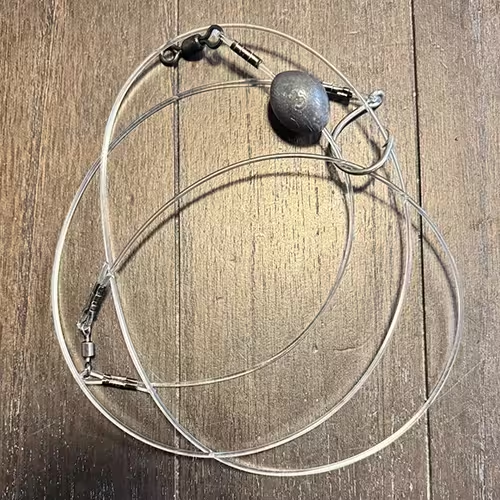
How Most Anglers Hook Spiny Dogfish:
Most Spiny Dogfish in North Carolina are caught by accident on standard bottom tackle — usually two- or three-drop “chicken rigs” or simple Carolina rigs baited with squid, cut fish, or shrimp while anglers are targeting sea bass, porgies, triggerfish, or other reef species. If you’re fishing good structure with bait on the bottom in cool water, you’re already using the right rig to run into dogfish.
My Go-To Shark Fishing Rig (When Bigger Sharks Are in the Mix):
When I expect a mix of larger coastal sharks along with the usual reef species — and the possibility of dogfish making an appearance — I rely on the same heavy bottom rig I use for our bigger sharks: a five-foot modified Carolina rig built in two sections. The upper section carries a heavy, fixed sinker locked between two ball-bearing swivels, and the lower section runs roughly four feet of 400-pound monofilament leader to a non-stainless inline circle hook.
That rig keeps your bait close to the bottom, reduces tangles in current, and gives you a clean, strong connection when a heavy shark settles in over a ledge or channel edge. It’s complete overkill for a 2–3 foot Spiny Dogfish, but it’s perfect for handling the bigger sharks that might show up while you’re fishing the same structure.
The shark rig shown above is the exact one I use on most of my NC Shark Fishing Charters, and you can see how I build it step-by-step here: How to Make the Shark Fishing Rig I Use on My Charters.
My Go-To Baits for Spiny Dogfish & Other Reef Sharks:
Spiny Dogfish are opportunistic feeders that respond well to scent and durable baits fished right on the bottom. The same baits that produce sea bass and other reef fish will draw dogfish in as well.
- Squid strips — the classic dogfish bait on chicken rigs; tough, easy to fish, and irresistible to schooling dogfish.
- Cut fish baits (bluefish, menhaden, mullet) — great on both lighter bottom tackle and heavier shark rigs when other sharks are around.
- Clam or shrimp — will catch dogfish, but tends to draw even more peckers; better when you’re expecting mixed bottom species.
- Small tuna or bonito strips — tougher, oilier baits that work well whenever you’re focused on shark bites over deeper structure.
- Chum helps: On days when you’re specifically trying to see what sharks are around a reef, a steady chum line will draw both dogfish and larger sharks into range.
- Note: Always check local bait and bait-fishing regulations before fishing, and size your baits appropriately for the tackle and anglers on board.
Captain's Note: When the dogfish are really thick on a reef, they’ll often beat everything else to the bait. Sometimes the best move is to adjust depth, move to a new piece of structure, or change the way you’re presenting bait so you can get back to targeting your primary species.
Best Gear for NC Shark Fishing
You don’t need giant offshore reels and broomstick rods to catch sharks along the NC coast — but you do need gear that can handle long runs, rough mouths, and abrasive skin without failing. Here’s the kind of setup I trust day in and day out on my charter boat.
Shark Fishing Rod / Reel
- Surf Setup: Penn Pursuit V LE 9 Foot Rod-Reel Combo
- Pier Setup: Penn Spinfisher VII 7 Foot Rod Reel Combo
- Boat Setup: Penn Spinfisher VII 7 Foot Rod Reel Combo
Line & Leader Setup
- Main Line: PowerPro SS V2 80 LB Test Braided Fishing Line
- Mono Leader: HI-SEAS Grand Slam 400 LB Mono Fishing Leader
- Wire Leader: AFW 400 LB Stainless Steel Cable Leader
Terminal Tackle
- Swivels: Dr Fish Stainless Steel Swivel #8 390 LB
- Circle Hooks: Mustad Demon Perfect Circle 10/0 Hook
- Drift Sinkers: Egg Sinker 4 Ounce
- Anchored Sinkers: Bank Sinker 6 Ounce
- Pier / Surf Sinkers: Pyramid Sinker 8 Ounce
Shark Fishing Accessories
- De-Hooker: Bubba De-Hooker
- Shark Measuring Tape: Bluewing 96" Waterproof Fishing Ruler
- Fish Handling Gloves: Lindy Fish Handling Gloves
- Crimping Kit: Basic Crimping Kit
- Premium Crimping Kit: Hi-Seas Rigging Kit
Note: Make sure you’re using inline (non-offset) circle hooks that are not stainless steel whenever you’re specifically targeting HMS-managed sharks with natural bait, and always check the latest regulations before fishing.
Fighting & Handling Spiny Dogfish
Spiny Dogfish don’t fight like big reef sharks — instead of long, punishing runs, you’ll feel a steady, rattling pull with short bursts and head shakes. On light to medium bottom tackle they’re fun, especially for kids, and their schooling behavior can keep rods bent when the dogfish are thick.
Even though they’re small, they’re still sharks with sharp spines and rough skin, so I treat them with the same respect I give larger species. A few simple habits make fighting and handling them safer and easier:
- Use appropriate drag — you don’t need to lock the drag down; a smooth, moderate drag protects lighter bottom tackle and keeps fish from twisting off.
- Control the fish at boatside — support them with the rod and leader rather than swinging them wildly. Dogfish love to twist, and a swinging shark with spines is a bad combination.
- Beware the dorsal spines — keep hands clear of the spines in front of both dorsal fins. Grip behind the head and ahead of the tail if you must handle them, or use a de-hooker to avoid direct contact.
- Use de-hookers and pliers — a long-handled de-hooker or pliers lets you pop hooks free quickly without wrestling the fish on deck.
- Decide early: keep or release — if you’re releasing them, do it quickly and cleanly. If you’re keeping a few where legal, bleed and ice them promptly just like any other food fish.
Spiny Dogfish Regulations in North Carolina
Spiny Dogfish are managed very differently from our larger coastal sharks. Instead of being part of the Highly Migratory Species (HMS) “big shark” group, they’re covered by a dedicated Atlantic Spiny Dogfish fishery management plan overseen by the Mid-Atlantic and New England Fishery Management Councils and the Atlantic States Marine Fisheries Commission. Most of the strict rules you hear about for big sharks (like Sandbars and Dusky Sharks) do not apply to dogfish in the same way.
Official Shark & Dogfish Regulations Resources
For the most accurate, up-to-date regulations, always start with these official sources:
- NC Division of Marine Fisheries (NCDMF) Size and Bag Limits
- NOAA Recreational Size and Bag Limits for HMS Species
- NOAA HMS Shark Identification Placard (PDF)
- NOAA HMS Prohibited Shark Identification Placard (PDF)
- NOAA Highly Migratory Species (HMS) Permits
Below is a quick, angler-focused overview of how Spiny Dogfish are handled in our region and what the typical recreational rules look like. Regulations can change, so always confirm the latest details before you fish.
Spiny Dogfish Regulations at a Glance
- Management Group: Atlantic Spiny Dogfish are managed under a dedicated fishery management plan, separate from the HMS large coastal shark group. Most of the restrictive “prohibited shark” rules do not apply to dogfish, which are treated more like a groundfish species, especially on the commercial side.
- Recreational retention status: Under current federal guidance, the NOAA recreational shark ID placard notes that there are no specific recreational restrictions for Spiny Dogfish — in other words, they are legal to harvest for anglers where not further restricted by state rules.
- Size & bag limits: Federal Atlantic spiny dogfish specifications focus on commercial quotas and trip limits; they do not currently set a national recreational size or bag limit. North Carolina can adopt more conservative rules at the state level, so it’s important to check the most recent NCDMF recreational size and bag limit table before deciding to keep any dogfish.
- Hook requirements: Spiny Dogfish are not part of the HMS “large coastal shark” group, so the non-stainless inline circle hook requirement that applies when targeting those HMS sharks with natural bait doesn’t apply in quite the same way to incidental dogfish caught on chicken rigs. That said, circle hooks are still a smart choice anytime you expect to hook sharks and want to reduce deep hooking and release mortality.
- Identification responsibility: Anglers are responsible for correctly identifying any sharks they harvest. It’s important to be sure that the shark you’re keeping really is a Spiny Dogfish and not a small individual of a more tightly regulated coastal shark species.
- Best practice: Even where harvest is allowed, I encourage anglers to keep only what they can use and release the rest. Dogfish are long-lived, slow-growing sharks, and handling them carefully — especially when releasing — helps keep the stock healthy for the long term.
Spiny Dogfish do not currently have a separate, active category on the North Carolina state saltwater records table, but the IGFA all-tackle world record dogfish — that 19 lb 12 oz fish from Puget Sound — gives you a good picture of the upper end of what this species can do.
If you’d like to experience our winter reef fishing off Ocean Isle Beach and see what’s lurking around the structure — from sea bass and triggers to dogfish and other sharks — we can build that into one of my NC shark and reef fishing charters. It’s a great way to stay on the water even when the temperatures drop.
More NC Shark Species Guides
Want to explore more sharks found along the North Carolina coast? Here are the other species we regularly encounter on my shark fishing charters out of Ocean Isle Beach.
Spiny Dogfish FAQs
Are Spiny Dogfish common in North Carolina?
Yes. Spiny Dogfish are one of the most common small sharks encountered off North Carolina during the cooler months, especially for anglers bottom fishing around deeper nearshore and offshore structure. If you spend much time dropping chicken rigs on reefs in winter, it’s only a matter of time before you tangle with a pack of dogfish.
Where is the best place to catch Spiny Dogfish in NC?
The most consistent places to encounter Spiny Dogfish in North Carolina are nearshore and offshore reefs, ledges, and hardbottom areas in cooler water. On my charters, most of our dogfish show up while we’re bottom fishing those structures for other species — sea bass, triggerfish, grunts — and a school of dogfish moves in on the commotion.
What bait works best for catching Spiny Dogfish?
Squid is hard to beat for Spiny Dogfish — it’s tough, easy to fish on multi-drop rigs, and dogfish love it. They’ll also eat cut bluefish, menhaden, mullet, and clam fished on the bottom. In most cases, if your bait is drawing sea bass and other reef fish, it will draw dogfish as well when a school passes through.
Can you keep a Spiny Dogfish in North Carolina?
Under current federal rules, Spiny Dogfish are legal to harvest for recreational anglers where not further limited by state regulations, and NOAA’s recreational shark placard notes that there are no specific recreational restrictions for dogfish. That said, North Carolina can adopt its own size and bag limits, and regulations can change, so it’s important to check the latest NCDMF size and bag limit table before deciding to keep any fish.
Are Spiny Dogfish good to eat?
Spiny Dogfish are edible and are used in overseas markets for things like fish-and-chips, but many NC anglers still treat them as bycatch and release them. If you choose to keep a few where it’s legal, bleed and ice them immediately, trim away any dark meat, and cook them fresh — just like you would with any other shark or firm white-meat fish.
Are Spiny Dogfish dangerous to handle?
Spiny Dogfish aren’t “dangerous” in the way big sharks are, but their dorsal spines can deliver a painful stick if you’re careless. Always keep your hands clear of the spines, use pliers or a de-hooker to remove hooks, and avoid laying them where someone might accidentally kneel or grab. Treated with respect, they’re straightforward to handle and release.
When is the best time of year to catch Spiny Dogfish in North Carolina?
Our best Spiny Dogfish action typically runs from late fall through early spring, with the strongest presence in winter when they push in around deeper nearshore and offshore structure. As water temperatures warm and other species arrive, dogfish become less dominant and you’ll see more of the typical warm-season reef and shark mix.
Reserve Your North Carolina Shark Fishing Charter Today!
Don't miss your chance to experience some of the most consistent cool-season shark and reef fishing in North Carolina! Book your fishing charter now for an unforgettable day on the water.
To Book Your Shark Fishing Charter:
- NC Shark Fishing Charter Info
- Call or text Captain Harvey at (910) 250-8459
- Click / tap the "Book My Trip" button below to view my availability calendar and choose your booking options.
BOOK MY TRIP
Tight Lines,
Captain Harvey Wall
Salty Dawg Fishing Charters
Updated: February 23, 2026

How to Book Your Fishing Charter
Booking your Shark Fishing Charter with Salty Dawg Fishing Charters is easy! Here’s how:
- Option 1:
BOOK MY TRIP - Option 2: (If you have questions or don't want to book online)
Call / text Captain Harvey directly at (910) 250-8459
Have questions? Feel free to Contact Captain Harvey or call anytime. He is happy to help you plan the perfect fishing trip for you!