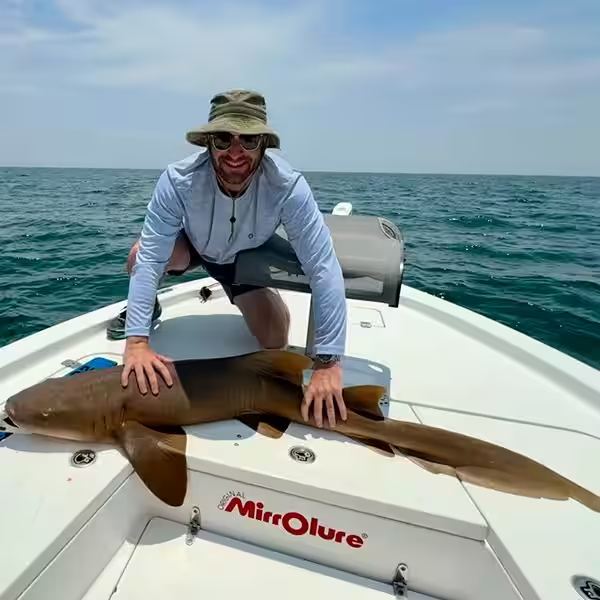
Nurse sharks are one of the most underrated sharks we catch along the North Carolina coast. They’re slow-moving, bottom-oriented sharks that spend most of their time tight to structure on our nearshore reefs, ledges, wrecks, and hard-bottom areas. They aren’t flashy on the surface, but once you hook one, you quickly find out how stubborn and unbelievably strong they are. The Nurse Shark shown here was caught in Summer 2025 on one of my shark fishing charters in Ocean Isle Beach, NC.
Around North Carolina, Nurse Sharks are most commonly encountered on nearshore artificial reefs, wrecks, live-bottom areas, and deeper inlet channels. They like to stay glued to the bottom and often show up while we’re fishing for blacktips, sandbars, tiger sharks, and other species on bottom rigs. When a Nurse Shark eats, it usually feels like you’ve just hooked the bottom — right up until it starts slowly but steadily pulling away and refuses to come up.
Most of the Nurse Sharks we see along the NC coast are in the 4–8 foot range, but larger fish easily push past the 200-pound mark, especially around deeper structure and AR reefs near the inlets. They’re incredibly strong, notorious for rolling, twisting, and refusing to come off the bottom — so when you hook into one, you’re in for a long, stubborn fight.
This page breaks down everything you need to know if you’re trying to identify a Nurse Shark or understand how they behave along the NC coast. Whether you’re learning the species for the first time or checking off sharks you’ve caught over the years, this guide will walk you through the key traits, where they show up, and what makes them such a unique part of our fishery.
Looking for other shark species found in NC? View our full NC Shark Species Identification Guide.

Fish With the Captain Who Wrote This Guide
I’m Captain Harvey Wall, the author of this guide and the owner/operator of Salty Dawg Fishing Charters in Ocean Isle Beach, NC. If you’d rather skip the learning curve and book a NC Shark Fishing Charter so you can experience shark fishing for Nurse Sharks firsthand, join me on the water.
Nurse Shark Fishing ChartersNurse Shark Identification
Nurse Sharks have a thick, heavy body and a broad, rounded head that give them a very different profile from many of the sleeker coastal sharks we see in North Carolina. They’re classic bottom-dwellers, usually resting on or right above the bottom near structure. Once you know what to look for — especially the blunt head and the barbels on the underside of the snout — identifying a Nurse Shark becomes pretty straightforward.
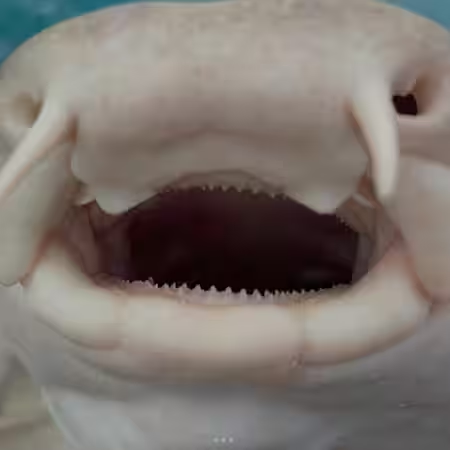
- Head & barbels: Nurse Sharks have a wide, blunt head with a relatively small mouth set underneath the snout and a pair of short, fleshy barbels between the nostrils. Those barbels are a key giveaway and help separate them from many other bottom-oriented sharks.
- Body & fins: Their body is thick and stocky with two similar-sized, rounded dorsal fins set well back on the body. The fins aren’t tall and dramatic like a hammerhead’s — they’re more modest in height and shape, matching the slow, cruising style of the fish.
- Tail shape: The tail has a very long upper lobe that extends well past the lower lobe, with a gentle curve. This long upper lobe is another helpful field mark when you see the fish from the side.
- Body color: Nurse Sharks are usually a uniform tan, gray-brown, or chocolate-brown on top with a lighter underside. They often look like a solid, earthy color rather than having distinct bands or strong markings.
- Skin & behavior: Their skin is extremely rough and coarse, and they’re commonly seen resting on the bottom or slowly cruising right along structure. You won’t typically see Nurse Sharks rocketing around on the surface like blacktips or spinners.
- Most common in NC: Along our coast, we see Nurse Sharks most often on AR reefs, wrecks, and natural live-bottom in the nearshore zone and around deeper inlet channels, especially when we’re fishing bottom baits for other shark species.
Where to Catch Nurse Sharks in North Carolina
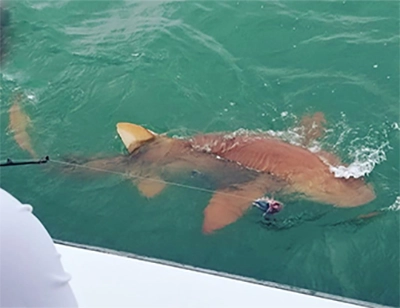
The video here is a quick clip of one of my shark fishing charter customers about to land a 5 foot nurse shark in Ocean Isle Beach NC in the summer of 2025.
Nurse Sharks are strongly structure-oriented and spend most of their time glued to the bottom. In North Carolina, that means they show up most consistently anywhere you’ve got a combination of depth, hard structure, and steady current. We don’t usually run trips “just” for Nurse Sharks, but we hook them regularly while targeting other sharks on bottom rigs in the same areas.
- Nearshore reefs & wrecks (2–10+ miles): This is where we encounter Nurse Sharks most often. Artificial reefs, wrecks, and live-bottom areas near the inlets are prime territory, especially when there’s good current and bait holding tight to the structure.
- Live-bottom & ledges: Subtle rock patches, ledges, and broken bottom just off the beach can hold Nurse Sharks, particularly where you’ve also got other bottom fish like sea bass, grunts, and triggerfish. They use these areas as ambush points and resting spots.
- Deeper inlet channels: In some of the larger inlets and shipping channels, Nurse Sharks will stage along deeper bends, drop-offs, and edges. These spots are less consistent than reef complexes, but they do produce fish, especially on strong tides.
Across most of North Carolina, the peak window for encountering Nurse Sharks on my charters runs from late spring through early fall, when water temperatures are warm and shark fishing in general is at its best. Some fish may hang around deeper structure in cooler months, but most of our encounters line up with the core summer shark season.
Best Shark Rigs & Baits for Nurse Sharks in NC
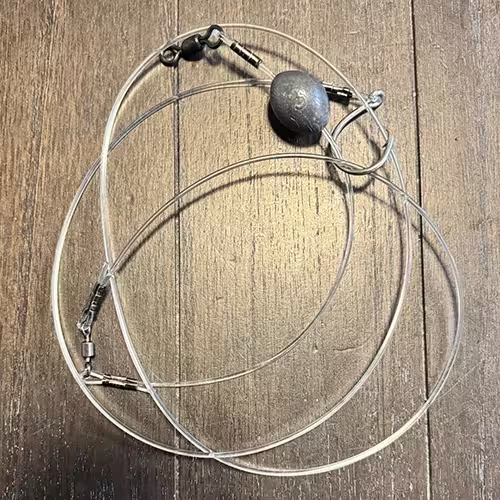
My Go-To Shark Fishing Rig:
This rig is a five-foot modified Carolina rig built in two sections: an upper section with a heavy, fixed sinker locked between two ball-bearing swivels, and a lower section consisting of roughly four feet of 400-pound monofilament leader running to a non-stainless inline circle hook.
This shark fishing rig keeps the bait close to the bottom while still allowing natural movement, reduces tangles, and gives you a clean, strong connection when a Nurse Shark slowly powers away from the structure and starts that steady, grinding run off the bottom.
The shark rig shown above is the exact one I use on most of my NC Shark Fishing Charters, and you can see how I build it step-by-step here: How to Make the Shark Fishing Rig I Use on My Charters.
My Go-To Baits for Nurse Sharks:
Nurse Sharks feed heavily by scent and are classic suction feeders, so fresh, oily bait sitting right on or near the bottom is the name of the game.
- Bluefish chunks or fillets — tough, oily, and stays on the hook well. One of the best all-around shark baits on our coast.
- Menhaden / Pogies / Bunker — fresh cut or whole. Great scent and a natural match to what sharks are already feeding on.
- Mullet (whole or large chunks) — very effective on the bottom around inlets and reefs.
- Spanish Mackerel — excellent option offshore or on deeper reefs with a strong, long-lasting scent trail.
- Use chum when possible — it dramatically improves your odds of drawing Nurse Sharks and other species to your baits.
- Note: Always check local bait and bait-fishing regulations before fishing.
Captain's Note: I like using Bluefish for bait when fishing for Nurse Sharks, which I catch by trolling Yo-Zuri deep divers about 5–10 feet down at 3–4 MPH. I'll troll just off the beaches early in the morning and then set up to shark fish in nearby areas as soon as I have the bait I need. It’s a quick, consistent way to load up on fresh, lively bait before a shark fishing trip.
Best Gear for NC Shark Fishing
You don’t need giant offshore reels and broomstick rods to catch sharks along the NC coast — but you do need gear that can handle long runs, rough mouths, and abrasive skin without failing. Here’s the kind of setup I trust day in and day out on my charter boat.
Shark Fishing Rod / Reel
- Surf Setup: Penn Pursuit V LE 9 Foot Rod-Reel Combo
- Pier Setup: Penn Spinfisher VII 7 Foot Rod Reel Combo
- Boat Setup: Penn Spinfisher VII 7 Foot Rod Reel Combo
Line & Leader Setup
- Main Line: PowerPro SS V2 80 LB Test Braided Fishing Line
- Mono Leader: HI-SEAS Grand Slam 400 LB Mono Fishing Leader
- Wire Leader: AFW 400 LB Stainless Steel Cable Leader
Terminal Tackle
- Swivels: Dr Fish Stainless Steel Swivel #8 390 LB
- Circle Hooks: Mustad Demon Perfect Circle 10/0 Hook
- Drift Sinkers: Egg Sinker 4 Ounce
- Anchored Sinkers: Bank Sinker 6 Ounce
- Pier / Surf Sinkers: Pyramid Sinker 8 Ounce
Shark Fishing Accessories
- De-Hooker: Bubba De-Hooker
- Shark Measuring Tape: Bluewing 96" Waterproof Fishing Ruler
- Fish Handling Gloves: Lindy Fish Handling Gloves
- Crimping Kit: Basic Crimping Kit
- Premium Crimping Kit: Hi-Seas Rigging Kit
Note: Make sure you’re using inline (non-offset) circle hooks that are not stainless steel to stay legal when targeting sharks.
Fighting & Handling Nurse Sharks
Nurse Sharks fight differently than many of the other sharks we catch in North Carolina. Instead of wild surface runs and big jumps, they tend to hunker down on the bottom, make slow, powerful surges, and use their weight and leverage against you. A lot of anglers describe the fight as “hooked to a cinder block that’s slowly swimming away.” Once they get broadside in the current, they can feel incredibly heavy — especially in the 6–8 foot class.
Nurse Sharks are also famous for rolling and twisting, especially when they get close to the boat, which can put a lot of torque on leaders and terminal tackle. Here are a few tips I teach my charter clients when we hook into a Nurse Shark:
- Use steady, consistent drag — no need to “lock down” the reel unless the fish is running toward structure or another hazard. Let the drag and rod do the work.
- Lift smooth, reel down smart — big, jerky pumps just wear you out and can actually encourage the shark to roll. A smooth, steady rhythm keeps constant pressure on the fish.
- Be ready for rolling at the leader — Nurse Sharks will often twist and corkscrew when they get close. Keep the line tight, avoid wrapping it around the body or tail, and be prepared to pause reeling while the fish settles.
- Have your release tools ready ahead of time — de-hookers, cutters, gloves, and a clear plan for how the release will go. Talk through the release between the angler and anyone helping before the shark is boat-side.
- Keep the shark in the water whenever possible — it reduces stress and is safer for both the shark and the angler.
- Minimize fight time — Nurse Sharks are slow-growing fish. Land and release them quickly and efficiently to give them the best shot at swimming away strong.
Nurse Shark Regulations in North Carolina
Nurse Sharks fall under the broader Large Coastal Shark category and are regulated through both federal Highly Migratory Species (HMS) rules and North Carolina state requirements. Regulations can change quickly, so it’s important to check the most current information before deciding whether a shark is legal to keep. Most anglers release Nurse Sharks regardless, as they are slow-growing, long-lived, and highly valued as a sporting catch.
Official Shark Regulations & Identification Resources
For the most accurate, up-to-date shark regulations and species identification tools, use these official resources:
- NC Division of Marine Fisheries (NCDMF) Size and Bag Limits
- NOAA Recreational Size and Bag Limits for HMS Species
- NOAA HMS Shark Identification Placard (PDF)
- NOAA HMS Prohibited Shark Identification Placard (PDF)
- NOAA Highly Migratory Species (HMS) Permits
Below is a quick overview of how Nurse Shark regulations are structured here in North Carolina and what anglers should expect on the water.
Nurse Shark Regulations at a Glance
- Management Group: Nurse Sharks are part of the federally authorized Large Coastal Shark group (non-hammerhead LCS), managed under HMS rules and North Carolina’s recreational shark proclamations.
- Minimum Size: Nurse Sharks fall under the general 54-inch fork-length minimum size for non-hammerhead Large Coastal Sharks when harvest is permitted. Many regulatory tables list them alongside other “all other” large coastal shark species with this same 54-inch FL minimum.
- Bag Limit: If a Nurse Shark is legal to keep, it counts toward the one shark per vessel per day bag limit from the allowed species list (in addition to any Atlantic sharpnose and bonnethead that may be allowed per angler under current rules).
- Common Reality: Many of the Nurse Sharks we encounter along the NC coast are large, mature fish. Even when they meet the size requirement, most anglers — myself included — choose to release them due to their slow growth and sporting value.
- Hook Requirement: When targeting or catching sharks on natural bait, NC and federal law require non-stainless, inline circle hooks for all recreational shark fishing.
- Identification Responsibility: Anglers are required to properly identify the shark species before harvest. Misidentification of prohibited or undersized species carries serious penalties.
- Best Practice: Unless you are 100% certain the shark meets HMS size rules and retention criteria — and you truly plan to keep it — treat Nurse Sharks as catch-and-release only. Release the fish quickly, keep it in the water, and minimize handling time.
For reference, the current North Carolina state record Nurse Shark is 163 lbs 0 oz, caught off Wrightsville Beach in 2003. The IGFA all-tackle world record Nurse Shark weighs 263 lbs 12 oz, caught in Port St. Joe, Florida, in 2007. You don’t have to hook one anywhere near that size to appreciate just how powerful these sharks really are.
More NC Shark Species Guides
Want to explore more sharks found along the North Carolina coast? Here are the other species we regularly encounter on my shark fishing charters out of Ocean Isle Beach.
Nurse Shark FAQs
Are Nurse Sharks common in North Carolina?
Nurse Sharks aren’t our most common shark, but we do see them regularly each year — especially on nearshore reefs, wrecks, and live-bottom areas in the summer and early fall. Most of the Nurse Sharks we catch are in the 4–8 foot range, hooked while we’re targeting other shark species on bottom baits around structure.
Where is the best place to catch Nurse Sharks in NC?
The most consistent places to encounter Nurse Sharks in North Carolina are nearshore artificial reefs, wrecks, and natural live-bottom within 2–15 miles of the beach. Deeper inlet channels and ledges near major inlets can also produce fish. On my charters, most of our Nurse Sharks come from AR reefs and hard-bottom areas near the inlets while fishing bottom rigs for mixed shark species.
What bait works best for catching Nurse Sharks?
Fresh, oily bottom baits are best. Bluefish, menhaden, mullet, and Spanish mackerel all put off strong scent trails that Nurse Sharks key in on as they work around structure. Bluefish is my #1 choice because it’s tough, oily, and stays on the hook well. Chumming around reefs and ledges greatly increases your odds of drawing in Nurse Sharks and other species.
Can you keep a Nurse Shark in North Carolina?
Under current HMS and NC rules, Nurse Sharks are an authorized species but are subject to a 54-inch fork-length minimum size and fall under the one legal shark per vessel per day bag limit from the allowed species list. In practice, most large Nurse Sharks in NC are released due to their slow growth, age, and sporting quality. When in doubt — or if you aren’t absolutely sure of the current regulations — the safest choice is to release the fish in good condition.
Are Nurse Sharks dangerous to swimmers in NC?
Nurse Sharks have a calm reputation, but they still have a powerful crushing bite and should be treated with respect. Most encounters happen around structure, reefs, and deeper channels — not in the shallow surf where most people swim. Problems typically occur when sharks are grabbed, cornered, or stepped on. Giving sharks plenty of space, never harassing them, and exercising caution around jetties and structure is the safest approach.
Reserve Your North Carolina Shark Fishing Charter Today!
Don't miss your chance to experience the best Shark fishing charter in North Carolina!. Book your fishing charter now for an unforgettable day on the water!
To Book Your Shark Fishing Charter:
- NC Shark Fishing Charter Info
- Call or text Captain Harvey at (910) 250-8459
- Click / tap the "Book My Trip" button below to view my availability calendar and choose your booking options.
BOOK MY TRIP
Tight Lines,
Captain Harvey Wall
Salty Dawg Fishing Charters
Updated: February 23, 2026

How to Book Your Fishing Charter
Booking your Shark Fishing Charter with Salty Dawg Fishing Charters is easy! Here’s how:
- Option 1:
BOOK MY TRIP - Option 2: (If you have questions or don't want to book online)
Call / text Captain Harvey directly at (910) 250-8459
Have questions? Feel free to Contact Captain Harvey or call anytime. He is happy to help you plan the perfect fishing trip for you!