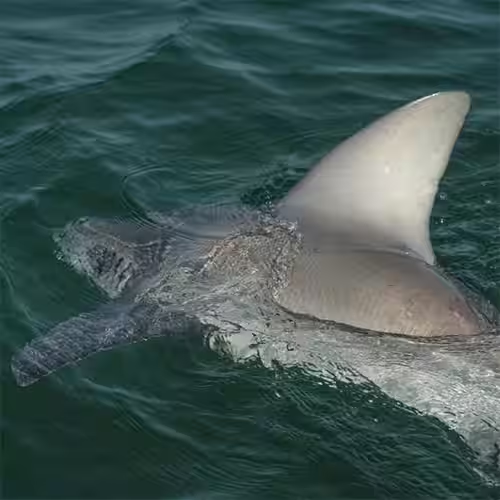
Sandbar Sharks are one of the most classic “big, brown reef sharks” we see along the North Carolina coast. They’re thick-bodied, broad-shouldered fish with a tall first dorsal fin and a stubborn, grinding fight that feels completely different from our smaller coastal sharks. When a Sandbar digs in over a ledge or reef, you know you’re connected to a serious shark.
Around North Carolina, Sandbars are most commonly encountered on nearshore reefs, ledges, hardbottom areas, and deep inlet channels, usually tight to the bottom around bait. They love depth changes and structure, and they spend a lot of time patrolling the edges of reefs and drop-offs where baitfish and small bottom species stack up in the current.
Most of the Sandbar Sharks we see in NC fall in the 4–7 foot range, with some larger individuals showing up offshore or around deeper structure. They’re legitimately big sharks — heavy enough to put a deep bend in the rod, but common enough on the right spots that they’re one of the most frequently encountered large sharks on our nearshore reefs.
Sandbars sit in an unusual place when it comes to records and regulations. They were historically recorded by North Carolina, but because retention is now prohibited, the state saltwater records table no longer posts a sandbar-specific category. Any older listings came from years when harvest was allowed. On the world stage, the IGFA all-tackle world record Sandbar Shark weighs 529 lbs 1 oz, caught by angler Patrick Sebile on April 5, 2002, in the Archipelago des Bijagos, Guinea-Bissau — proof of just how big this species can get under the right conditions.
This page breaks down everything you need to know if you’re trying to identify a Sandbar Shark or understand how they behave along the NC coast. Whether you’re learning the species for the first time or checking off sharks you’ve caught over the years, this guide will walk you through the key traits, where they show up, and what makes them such a defining part of our reef and inlet shark fishery.
Sandbars are often confused with other big, brown “ridgeback” coastal sharks — especially Dusky Sharks and Bull Sharks — but they have their own distinct look and lifestyle. That tall, triangular first dorsal fin, relatively short snout, and preference for deeper structure make them stand out once you know what to look for.
For anglers interested in Sandbar Shark fishing in North Carolina, most of our encounters happen around nearshore reefs, ledges, and deeper inlet drop-offs when bait, current, and water temperature all line up. Even though they’re a fully protected species that must be released, they’re one of the most memorable sharks you can hook on nearshore gear.
Looking for other shark species found in NC? View our full NC Shark Species Identification Guide.

Fish With the Captain Who Wrote This Guide
I’m Captain Harvey Wall, the author of this guide and the owner/operator of Salty Dawg Fishing Charters in Ocean Isle Beach, NC. If you’d rather skip the learning curve and book a NC Shark Fishing Charter so you can experience shark fishing for Sandbar Sharks firsthand, join me on the water.
Sandbar Shark Fishing ChartersSandbar Shark Identification
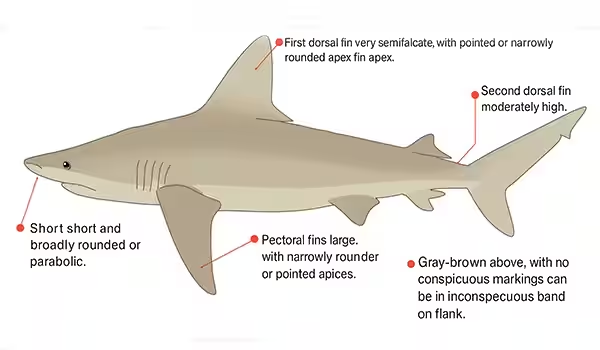
Sandbar Sharks are thick-bodied coastal sharks with a tall first dorsal fin and a relatively short, rounded snout. They’re built more like a heavyweight than a sprinter — deep through the shoulders, heavy along the back, and designed for powerful, stubborn pulls rather than blazing-fast runs. Once you learn the dorsal fin shape, body build, and snout profile, Sandbar identification gets much easier.
- Head & snout: Sandbars have a broad, rounded snout that’s shorter than many other large coastal sharks. It doesn’t look as blunt as a Bull Shark’s head, but it’s noticeably shorter and rounder than the long, pointed snouts of species like Blacktips and Spinners.
- First dorsal fin: One of the best ID features — the first dorsal fin is tall, triangular, and prominent, often appearing oversized compared to the rest of the body. It originates roughly over, or just slightly behind, the rear edge of the pectoral fin base and has a clean, upright look when the shark is cruising.
- Body & ridge: The body is thick, deep, and muscular, especially over the shoulders. Sandbars also have a noticeable interdorsal ridge running between the first and second dorsal fins — a key feature shared with only a few other large coastal species and an important clue for ID.
- Tail shape: The tail (caudal fin) has a strong upper lobe built for powerful, grinding runs and big circles over structure. They’re not as scythe-like as some pelagic sharks, but the tail looks solid and capable of moving a lot of water when they dig in over a ledge or reef.
- Color & markings: Sandbar Sharks are usually a brownish-gray to bronze-gray on top with a lighter, whitish underside. Adults typically lack strong fin markings — you don’t see the black tips or black edges you’d expect on Blacktips or Spinners. Juveniles may show subtle shading on the fins, but it’s usually not bold.
- Most common in NC: Along our coast, Sandbars are most often encountered around nearshore reefs, ledges, hardbottom areas, and deep inlet channels where bait is concentrated near the bottom. If you’re anchored or drifting over a good reef in 40–80 feet of water with plenty of life on the screen, a Sandbar is always in play.
Sandbar Shark Identification Resources
Where to Catch Sandbar Sharks in North Carolina
Sandbars are classic reef and structure-oriented sharks that thrive anywhere depth changes, hardbottom, and baitfish intersect. In North Carolina, that means they’re strongly associated with nearshore reefs and ledges, deeper inlet channels, and some offshore structure where food and current come together. We encounter them regularly while bottom fishing for a mixed bag of reef species.
- Nearshore reefs & ledges: Artificial reefs, natural hardbottom, and small ledges within sight of the beach are prime Sandbar territory. These areas concentrate baitfish, bottom species, and current — and Sandbars will work the edges, rises, and drop-offs picking off easy meals.
- Deep inlet channels & bar edges: The deeper bends and drop-offs around major inlets can also hold Sandbars, especially where channels swing close to bars or hardbottom. Fishing heavy bottom baits along those deeper edges gives you a realistic shot at a Sandbar bite.
- Offshore structure: Farther offshore, Sandbars show up around ledges, wrecks, and other bottom features that concentrate bait. They’re not strictly an “off-the-beach” shark — they’re comfortable roaming a wide swath of structured habitat wherever the food is.
Across most of North Carolina, the prime window for encountering Sandbar Sharks lines up with the late spring through early fall warm-water season, similar to many of our other coastal sharks. The most consistent encounters often happen in summer and early fall when bait is thick over the reefs and inlet channels. On my charters, we treat Sandbars as a big, hard-fighting bonus anytime we’re fishing heavy bottom rigs over good structure.
Best Shark Rigs & Baits for Sandbar Sharks in NC
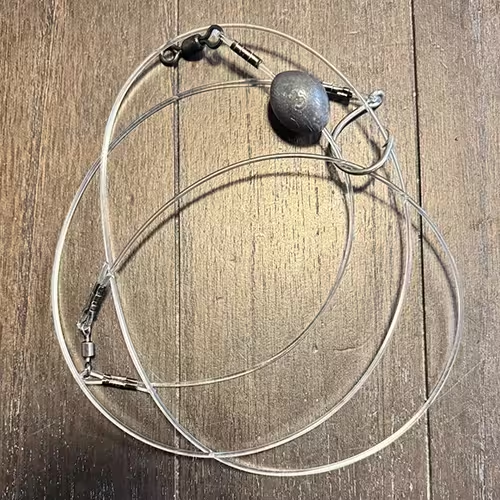
My Go-To Shark Fishing Rig:
When Sandbars are in the mix, I rely on the same heavy bottom rig I use for our larger coastal sharks — a five-foot modified Carolina rig built in two sections: an upper section with a heavy, fixed sinker locked between two ball-bearing swivels, and a lower section consisting of roughly four feet of 400-pound monofilament leader running to a non-stainless inline circle hook.
That rig keeps your bait close to the bottom where Sandbars like to feed, reduces tangles in current, and gives you a clean, strong connection when a heavy shark settles in over a ledge or channel edge. It’s overkill for smaller species, but right on target for a 5–7 foot Sandbar digging hard in 60–80 feet of water.
The shark rig shown above is the exact one I use on most of my NC Shark Fishing Charters, and you can see how I build it step-by-step here: How to Make the Shark Fishing Rig I Use on My Charters.
My Go-To Baits for Sandbar Sharks:
Sandbar Sharks are opportunistic, bottom-oriented feeders that key in on scent and vulnerable prey holding around structure. Fresh, meaty baits that can withstand current and smaller pickers are your best bet.
- Bluefish chunks or fillets — tough, oily, and durable, perfect for reefs and ledges with plenty of current.
- Menhaden / Pogies / Bunker — whole or butterflied, fished tight to the bottom around reef edges, drop-offs, and hardbottom.
- Mullet (whole or large sections) — especially effective when mullet are already thick in the area and moving across structure with the tide.
- Bonito, false albacore, or other small tunas — excellent big-fish baits when Sandbars are hanging around deeper structure or ledges on the edge of the nearshore zone.
- Chum helps: A steady chum line over a reef or ledge can significantly improve your odds, drawing Sandbars and other sharks in from down-current.
- Note: Always check local bait and bait-fishing regulations before fishing, and size your baits realistically for the tackle you’re using and the anglers on board.
Captain's Note: When we’re fishing reefs off Ocean Isle Beach and the Sandbar Sharks are around, I like to stagger baits at slightly different distances and positions on the structure. One right on the edge, one just off the drop, and one a little farther down-current gives those cruising Sandbars multiple chances to find something they like.
Best Gear for NC Shark Fishing
You don’t need giant offshore reels and broomstick rods to catch sharks along the NC coast — but you do need gear that can handle long runs, rough mouths, and abrasive skin without failing. Here’s the kind of setup I trust day in and day out on my charter boat.
Shark Fishing Rod / Reel
- Surf Setup: Penn Pursuit V LE 9 Foot Rod-Reel Combo
- Pier Setup: Penn Spinfisher VII 7 Foot Rod Reel Combo
- Boat Setup: Penn Spinfisher VII 7 Foot Rod Reel Combo
Line & Leader Setup
- Main Line: PowerPro SS V2 80 LB Test Braided Fishing Line
- Mono Leader: HI-SEAS Grand Slam 400 LB Mono Fishing Leader
- Wire Leader: AFW 400 LB Stainless Steel Cable Leader
Terminal Tackle
- Swivels: Dr Fish Stainless Steel Swivel #8 390 LB
- Circle Hooks: Mustad Demon Perfect Circle 10/0 Hook
- Drift Sinkers: Egg Sinker 4 Ounce
- Anchored Sinkers: Bank Sinker 6 Ounce
- Pier / Surf Sinkers: Pyramid Sinker 8 Ounce
Shark Fishing Accessories
- De-Hooker: Bubba De-Hooker
- Shark Measuring Tape: Bluewing 96" Waterproof Fishing Ruler
- Fish Handling Gloves: Lindy Fish Handling Gloves
- Crimping Kit: Basic Crimping Kit
- Premium Crimping Kit: Hi-Seas Rigging Kit
Note: Make sure you’re using inline (non-offset) circle hooks that are not stainless steel to stay legal when targeting sharks.
Fighting & Handling Sandbar Sharks
Sandbar Sharks fight with a mix of raw power and stubbornness that makes them feel every bit like the heavyweight reef sharks they are. They’re not usually blisteringly fast, but they make deep, grinding runs, long circles, and heavy, dogged pulls that use both their weight and the current to their advantage. On appropriate tackle, a good Sandbar is a serious workout.
Because of their size, structure-oriented habits, and fully protected status, we take extra care when fighting and handling Sandbars. Here are a few key points I emphasize with my charter clients whenever we hook into one:
- Use smooth, reliable drag — you want enough pressure to turn the fish and keep it out of trouble, but not so much that something fails when it surges in heavy current.
- Short, efficient lifts — avoid exaggerated rod pumps. A steady rhythm of lifting and reeling down keeps constant pressure on the fish and conserves your energy on longer fights.
- Watch structure and boat position — Sandbars are often hooked around reefs, ledges, and deep edges. Angle the rod and use the boat to keep the fish off the worst snags and keep the line clear of the hull.
- Plan the release early — have de-hookers, heavy cutters, gloves, and any measuring tools ready before the shark comes boat-side so you can make a quick, clean release.
- Keep the shark in the water — large Sandbars should not be dragged into the boat. Handling them at the rail with their body supported by the water is safer for both the shark and everyone on board.
- Minimize fight and handling time — even tough sharks burn a lot of energy during a long battle. Fight them efficiently, get your quick photos if conditions allow, and send them off strong.
Sandbar Shark Regulations in North Carolina
Sandbar Sharks are one of the most tightly protected species in our coastal shark fishery. They’re managed as part of a prohibited category under federal Highly Migratory Species (HMS) rules and are fully protected in all North Carolina waters. That means no harvest, no possession, and no retention — every Sandbar you catch must be released immediately.
Official Shark Regulations & Identification Resources
For the most accurate, up-to-date shark regulations and species identification tools, use these official resources:
- NC Division of Marine Fisheries (NCDMF) Size and Bag Limits
- NOAA Recreational Size and Bag Limits for HMS Species
- NOAA HMS Shark Identification Placard (PDF)
- NOAA HMS Prohibited Shark Identification Placard (PDF)
- NOAA Highly Migratory Species (HMS) Permits
Below is a quick overview of how Sandbar Shark regulations are structured here in North Carolina and what anglers should expect on the water.
Sandbar Shark Regulations at a Glance
- Management Group: Sandbars fall within a prohibited shark category under federal HMS rules due to historic overfishing, slow growth, and late maturity. They’re managed very conservatively to help the population rebuild and stay healthy.
- Retention Status: In North Carolina waters, Sandbar Sharks are completely off-limits for harvest. Recreational anglers may not keep or possess them under normal HMS rules — every Sandbar must be released.
- Bag Limit: Because Sandbars are prohibited, there is effectively a zero-fish bag limit for this species for recreational anglers. They do not count toward the normal “one legal shark per vessel per day” bag — they simply cannot be retained.
- Hook Requirement: When targeting or catching sharks on natural bait, NC and federal law require non-stainless, inline circle hooks for all recreational shark fishing. This is especially important for protected species like Sandbars to reduce deep-hooking and release mortality.
- Identification Responsibility: Anglers are required to properly identify shark species before harvest. Because Sandbars can be confused with other large brown “ridgeback” sharks, having a good handle on ID is critical to staying legal and protecting the resource.
- Best Practice: Treat every Sandbar Shark as a catch-and-release trophy. Fight them efficiently, keep them in the water at boat-side, use good tools, and send them away strong so they can continue playing their role in the reef ecosystem.
While Sandbars no longer have an active, stand-alone category on the North Carolina state saltwater records table, the IGFA all-tackle world record Sandbar Shark — the 529 lb 1 oz giant landed by Patrick Sebile — gives you an idea of their true size potential. Most of our NC fish are smaller than that benchmark, but they still feel every bit like a “real” shark when you’re hooked up over a reef.
If you’d like a shot at tangling with Sandbar Sharks along the Ocean Isle Beach and Brunswick County coast, we occasionally encounter them on my shark fishing charters while working nearshore reefs and inlet channels. They’re a fantastic reminder of why careful handling and strong conservation measures matter in our shark fishery.
More NC Shark Species Guides
Want to explore more sharks found along the North Carolina coast? Here are the other species we regularly encounter on my shark fishing charters out of Ocean Isle Beach.
Sandbar Shark FAQs
Are Sandbar Sharks common in North Carolina?
Sandbar Sharks are one of the more frequently encountered large sharks on North Carolina’s nearshore reefs and deeper inlet edges. You won’t typically see them in skinny water like Bonnetheads, but if you spend much time bottom fishing over good structure in the 40–80 foot range, it’s only a matter of time before you hook into one. Many anglers remember their first Sandbar because of that tall dorsal fin and the heavy, grinding fight.
Where is the best place to catch Sandbar Sharks in NC?
The most consistent places to encounter Sandbars in North Carolina are nearshore reefs, ledges, hardbottom areas, and deep inlet channels with plenty of bait and current. On my charters, most Sandbars are hooked while we’re fishing heavy bottom rigs over structure — often while we’re targeting a mixed bag of grouper, sea bass, and other bottom fish and a big shark moves in on the commotion.
What bait works best for catching Sandbar Sharks?
Fresh, durable baits are the key. Bluefish, menhaden, mullet, and small tunas (like bonito or false albacore) are all excellent Sandbar baits, especially when they’re fished tight to the bottom around reef edges, ledges, and drop-offs. I like baits that match what’s already in the area and can hold up to current and smaller pickers long enough for a Sandbar to find them.
Can you keep a Sandbar Shark in North Carolina?
No. Sandbar Sharks are part of a prohibited shark category under federal HMS rules and are fully protected in all North Carolina waters. Recreational anglers may not harvest, possess, or retain Sandbars — every fish must be released as quickly and safely as possible. Violations can carry serious penalties, so it’s important to know the rules and treat Sandbars strictly as a catch-and-release species.
Are Sandbar Sharks dangerous to swimmers in NC?
Sandbars are large, powerful sharks and should always be treated with respect, but most of our encounters happen over reefs, ledges, and deeper inlet channels — not right up in the shallow surf where most families are playing. As with any shark, giving them space, avoiding chumming near swimmers, and using common sense around bait schools and heavy current goes a long way toward keeping everyone safe while enjoying our coastal waters.
How can you tell a Sandbar Shark from a Bull Shark or Dusky Shark?
This is one of the most important ID questions for reef anglers. Sandbars have a very tall, upright first dorsal fin and a shorter, more rounded snout than many other sharks. They also have a noticeable interdorsal ridge between the first and second dorsal fins and typically lack strong black markings on their fins. Bulls, by comparison, have a much blunter head and a stockier, heavier look, while Duskies have a more elongated body and different fin proportions. Studying a good ID placard before you fish is the best way to build confidence.
When is the best time of year to catch Sandbar Sharks in North Carolina?
Our prime Sandbar window in North Carolina usually runs from late spring through early fall, with some of the most consistent action in summer and early fall when bait is thick over the reefs and inlet channels. The best days often line up with good water temperatures, strong but manageable current, and plenty of life showing on the bottom machine.
Reserve Your North Carolina Shark Fishing Charter Today!
Don't miss your chance to experience the best Shark fishing charter in North Carolina!. Book your fishing charter now for an unforgettable day on the water!
To Book Your Shark Fishing Charter:
- NC Shark Fishing Charter Info
- Call or text Captain Harvey at (910) 250-8459
- Click / tap the "Book My Trip" button below to view my availability calendar and choose your booking options.
BOOK MY TRIP
Tight Lines,
Captain Harvey Wall
Salty Dawg Fishing Charters
Updated: February 23, 2026

How to Book Your Fishing Charter
Booking your Shark Fishing Charter with Salty Dawg Fishing Charters is easy! Here’s how:
- Option 1:
BOOK MY TRIP - Option 2: (If you have questions or don't want to book online)
Call / text Captain Harvey directly at (910) 250-8459
Have questions? Feel free to Contact Captain Harvey or call anytime. He is happy to help you plan the perfect fishing trip for you!